
Allen-Bradley
In Stock OK
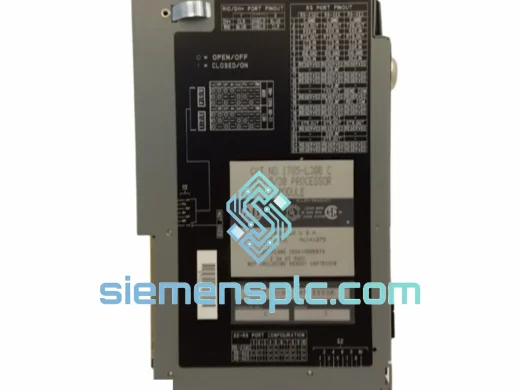
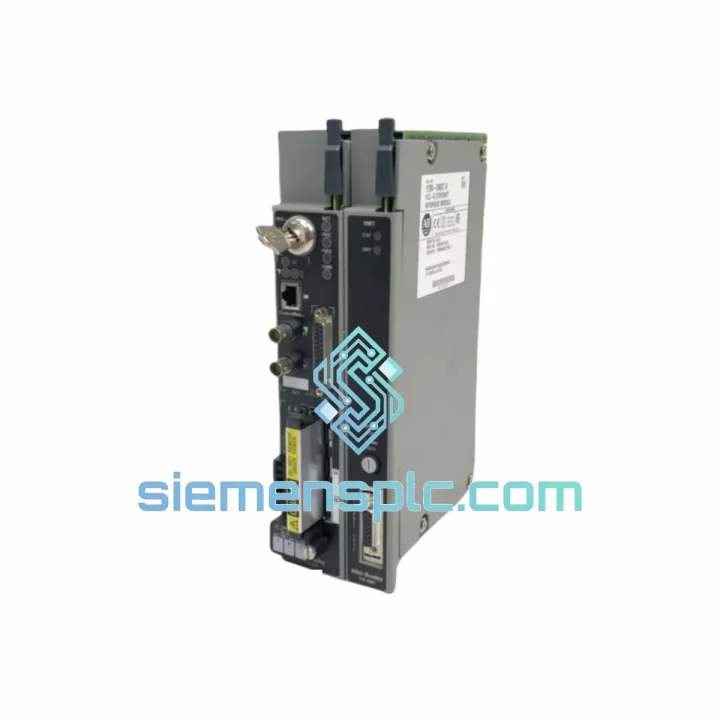
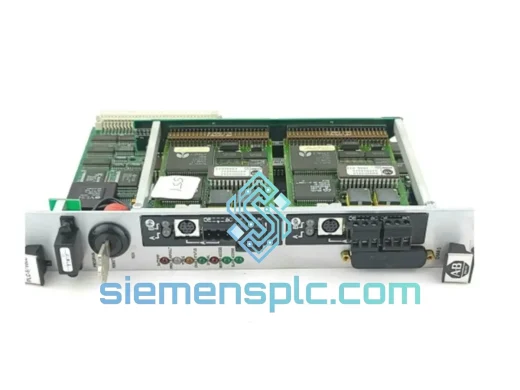
Allen-Bradley 1785-L80C15/F PLC Processor Module – PLC-5/80 Series
Request verified availability, condition, replacement risk review, packing options and courier lead time for 1785-L80C15/F.
BrandAllen-Bradley
Part Number1785-L80C15/F
ConditionAvailability Check
Lead TimeRFQ Confirmation
DocumentsDatasheet / photos by RFQ
ShippingExport packing available
Auto-filled RFQ
1785-L80C15/F
Click Request Quote and the part number is inserted into the inquiry form automatically.
- Reply by email: [email protected]
- WhatsApp / Tel: +86 18359268345
- Mon-Sat 9:00-18:00 GMT+8
Procurement Data
Key Product Information
Core fields for model confirmation and RFQ routing. Detailed product narrative remains below.
- Brand
- Allen-Bradley
- Primary Part Number
- 1785-L80C15/F
- Product Type
- PLC Processor Module
- Series / Family
- PLC-5
- Country of Origin
- US
- Catalog Category
- PLCs & Controllers
- Operating Temp.
- 0 °C to +60 °C
- Warranty
- 12 months from shipment date
Model confirmed for inquiry
1785-L80C15/F
Send quantity, destination and urgency. The RFQ form keeps this part number attached.
Request Quote
Product Overview
Allen-Bradley 1785-L80C15/F: ControlNet-Integrated Processor at the Apex of the PLC-5/80 Architecture
The 1785-L80C15/F is the highest-capacity processor in the Allen-Bradley PLC-5 family, combining a 32-bit RISC-based execution engine with an onboard dual-port ControlNet interface. Unlike mid-range PLC-5 variants that rely on external communication modules to reach the ControlNet backplane, the L80C15 integrates the ControlNet MAC/PHY layer directly onto the processor board, eliminating one chassis slot and reducing the inter-module latency that would otherwise be introduced by a bridge device. This architectural decision has direct consequences for scan-time determinism: the processor can schedule ControlNet scheduled transfers (NUT — Network Update Time) as low as 2 ms without competing for backplane bandwidth with a separate communication module.
The “/F” suffix designates Series F hardware — the sixth major PCB revision of the L80C15 product line. Each series revision in the PLC-5 family addressed specific field-reported issues: Series F resolved a documented EEPROM write-cycle fatigue issue present in Series D and E units under high-frequency program-save operations, and introduced a revised power regulation circuit that tightens the +5 VDC backplane rail tolerance from ±5% to ±3%, improving noise margin for adjacent analog I/O modules. Firmware Revision 15 is the final production firmware for this hardware series, incorporating all Rockwell Automation field patches through the product’s end-of-life notification date.
Real-time Stock & RFQ: [email protected] | WhatsApp: +86 18359268345
Technical Parameters
| Parameter | Specification |
|---|---|
| Catalog Number | 1785-L80C15/F |
| Platform | Allen-Bradley PLC-5/80 |
| Series / Firmware | Series F / Revision 15 |
| Processor Architecture | 32-bit RISC |
| Maximum Discrete I/O Points | 3,072 |
| Maximum Analog I/O Points | 768 |
| User Memory | 100K words (data + program) |
| ControlNet Interface | Dual-port BNC, onboard MAC/PHY |
| ControlNet NUT (min.) | 2 ms |
| DH+ Port | 1 × RS-485, 57.6 kbps max |
| RS-232 Port | 1 × DB-9, programming / HMI |
| Backplane Current Draw | 2.0 A @ +5 VDC |
| Operating Temperature | 0 °C to +60 °C |
| Relative Humidity | 5% to 95% non-condensing |
| Vibration (IEC 68-2-6) | 2 g, 10–500 Hz |
| Shock (IEC 68-2-27) | 30 g, 11 ms half-sine |
| EMC Immunity | IEC 61000-4-2/3/4/5/6 |
| Certifications | UL, CE, CSA |
| Weight | Approx. 220 g |
| Warranty | 12 months from shipment date |
Hardware Logical Analysis
The 1785-L80C15/F processor board is organized around three functional domains that operate with a degree of hardware independence: the CPU execution domain, the ControlNet communication domain, and the backplane I/O scan domain.
CPU Execution Domain: The 32-bit RISC core executes ladder logic, function block, and structured text programs from a battery-backed SRAM array. The SRAM is organized in dual-bank configuration, allowing the processor to write the next scan’s output image table to Bank B while the backplane DMA controller reads the current output image from Bank A — a technique that eliminates the output-image write-back stall that was present in earlier 16-bit PLC-5 variants. Program execution time for a 1K-rung ladder file with mixed Boolean and arithmetic instructions is approximately 0.37 ms, measured at 25 °C ambient.
ControlNet Communication Domain: The onboard ControlNet ASIC implements the CTDMA (Concurrent Time Domain Multiple Access) media access protocol independently of the CPU clock. The ASIC maintains its own 1 ms internal timebase synchronized to the ControlNet network time master. Scheduled connection data (I/O transfers) are handled entirely within the ASIC’s local buffer, and the CPU is interrupted only at the end of each NUT cycle to exchange the updated I/O image — a design that prevents ControlNet jitter from propagating into ladder scan-time variation. The dual BNC ports implement media redundancy at the physical layer: if the primary coax segment loses continuity, the ASIC switches to the secondary port within one NUT cycle without generating a controller fault.
EMC Design: The PCB uses a six-layer stackup with dedicated ground planes on layers 2 and 5, providing a continuous low-impedance return path for high-frequency switching currents from the backplane power converter. All I/O signal lines crossing the board boundary pass through common-mode chokes rated at 100 µH, and the ControlNet BNC connectors are chassis-grounded through a 1 nF / 2 kV capacitor to divert ESD transients to the enclosure ground without creating a DC ground loop. This arrangement achieves ±4 kV contact discharge immunity per IEC 61000-4-2 Level 4.
Battery-Backed Retention: A lithium coin cell (CR2032, 3 V, 220 mAh) maintains SRAM content and the real-time clock during power loss. The battery circuit includes a low-battery detection comparator that asserts the BAT LED and sets a status bit in the processor status file (S:11/9) when cell voltage drops below 2.75 V, providing advance warning before data retention is compromised. Typical battery life under normal operating conditions is 3–5 years.
System Integration Benefits
- Deterministic I/O Scan via ControlNet CTDMA: Scheduled ControlNet connections deliver I/O data at a fixed, repeatable interval (NUT) regardless of unscheduled traffic load, providing the scan-time predictability required for closed-loop motion and process control.
- Slot-Efficient Architecture: Onboard ControlNet eliminates the need for a 1785-CHBM or 1771-ACN15 bridge module, freeing one chassis slot for additional I/O capacity — a meaningful advantage in fully populated 16-slot chassis configurations.
- Transparent Fault Diagnostics: The processor populates 32 status file words (S:0–S:31) with real-time fault codes, I/O fault table entries, and communication status bits accessible from any RSLogix 5 workstation on the DH+ network without interrupting ladder execution.
- Dual-Port ControlNet Redundancy: Physical-layer media redundancy at the processor level protects against single-cable faults without requiring a separate redundancy module, reducing BOM cost and enclosure space.
- Exact Firmware Compatibility: Firmware Rev 15 maintains backward compatibility with all RSLogix 5 program files created under Rev 10 and above, eliminating re-validation overhead when replacing an older Series D or E unit.
- High I/O Density: 3,072 discrete and 768 analog I/O points accommodate large-scale process cells — paper machine drives, automotive body shops, chemical reactor trains — within a single processor domain without requiring peer-to-peer messaging overhead.
- DH+ Network Coexistence: The integrated DH+ port allows simultaneous connection to legacy HMI panels (PanelView 550/900/1400) and SCADA gateways (1784-PKTX) while ControlNet handles real-time I/O, preserving existing HMI investments during partial system upgrades.
- Unscheduled Messaging Bandwidth: ControlNet unscheduled bandwidth (the portion of each NUT not consumed by scheduled I/O) supports MSG instructions for peer-to-peer data exchange, recipe downloads, and historian uploads without impacting I/O determinism.
- Chassis Compatibility: Operates in all 1771-series chassis (A1B through A4B) without hardware modification, allowing direct installation into existing enclosures with no mechanical rework.
- Extended Temperature Tolerance: 0–60 °C operating range covers standard industrial panel environments without forced-air cooling in most ambient conditions, reducing maintenance requirements for cooling systems.
Quality Assurance & Global Logistics
Every 1785-L80C15/F unit dispatched from our Xiamen, China facility undergoes a structured pre-shipment verification process. Visual inspection confirms PCB condition, series letter marking, firmware label, and connector integrity against the Rockwell Automation catalog specification. Power-on functional testing verifies backplane communication, ControlNet port activity, and DH+ port response. Battery voltage is measured and recorded; units with cell voltage below 2.9 V are fitted with a new CR2032 cell prior to shipment. Each unit is packed in anti-static shielding bag, foam-lined carton, and outer corrugated box with desiccant sachets to protect against humidity during transit.
Shipment from Xiamen reaches major industrial hubs on the following typical transit schedules: DHL Express to Europe 3–5 business days; FedEx International Priority to North America 4–6 business days; TNT Economy to Southeast Asia 2–4 business days. Sea freight consolidation is available for bulk orders exceeding 10 units. All shipments include a commercial invoice, packing list, and certificate of conformance. Export classification is handled under HS Code 8537.10 (programmable controllers). A 12-month warranty covers functional defects attributable to manufacturing or component failure under normal operating conditions.
Contact Information
Email: [email protected]
WhatsApp: +86 18359268345
Web: siemensplc.com
Location: Xiamen, China
© 2026 siemensplc.com. All rights reserved.
Ready to quote
[email protected]
Send This Part Number to Sales
RFQ workflow
Quality workflow ->
Confirmation Process
01Model confirmation
We check the full part number, brand, series and visible nameplate information before quotation.
02Availability reply
Sales confirms stock path, condition option, quantity and realistic lead time for export dispatch.
03Packing & courier
DHL, FedEx, UPS or buyer courier arrangements can be reviewed with packing requirements.
Continue sourcing
Browse full catalog ->
Related Automation Parts
Similar brand or category products for fast comparison and multi-item RFQ lists.
Allen-Bradley
RFQ Ready
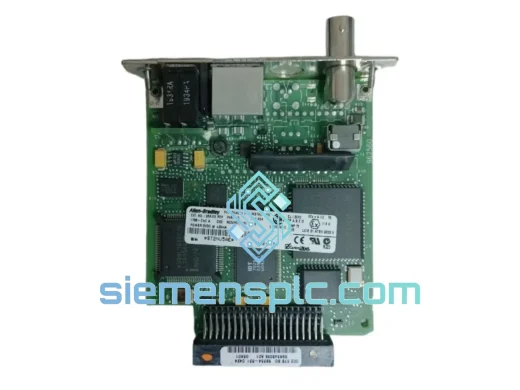
Allen-Bradley 1788-CNC CNC Interface Card – ControlNet Series
PLC-5
Origin US
CNC Interface Card
Allen-Bradley
RFQ Ready
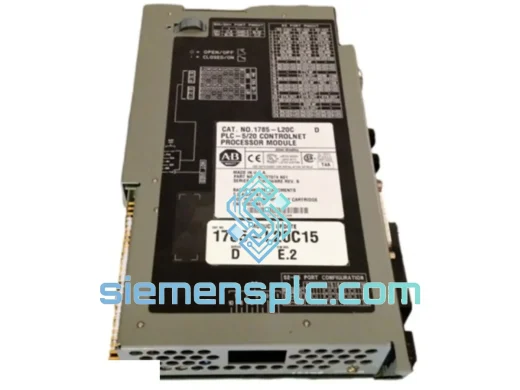
Allen-Bradley 1785-V40V CPU Module – PLC-5 Series
PLC-5
Origin US
CPU Module