
Allen-Bradley
In Stock OK
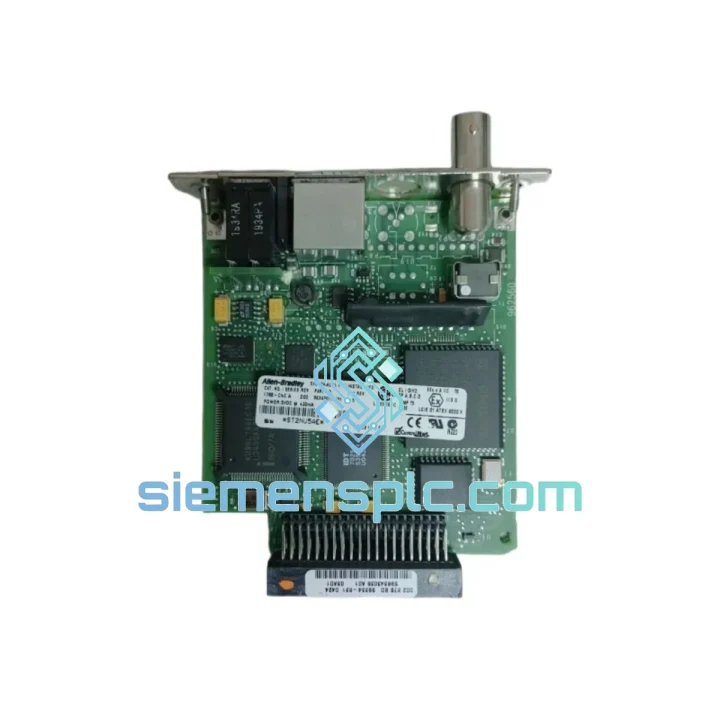
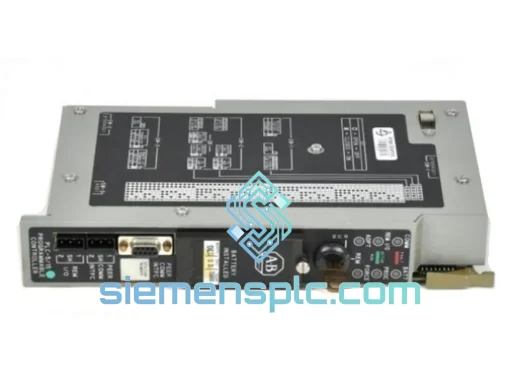
Allen-Bradley 1788-CNC CNC Interface Card – ControlNet Series
Request verified availability, condition, replacement risk review, packing options and courier lead time for 1788-CNC.
BrandAllen-Bradley
Part Number1788-CNC
ConditionAvailability Check
Lead TimeRFQ Confirmation
DocumentsDatasheet / photos by RFQ
ShippingExport packing available
Auto-filled RFQ
1788-CNC
Click Request Quote and the part number is inserted into the inquiry form automatically.
- Reply by email: [email protected]
- WhatsApp / Tel: +86 18359268345
- Mon-Sat 9:00-18:00 GMT+8
Procurement Data
Key Product Information
Core fields for model confirmation and RFQ routing. Detailed product narrative remains below.
- Brand
- Allen-Bradley
- Primary Part Number
- 1788-CNC
- Product Type
- CNC Interface Card
- Series / Family
- PLC-5
- Manufacturer
- Allen-Bradley (Rockwell Automation)
- Country of Origin
- US
- Catalog Category
- PLCs & Controllers
- Operating Temp.
- 0 °C to +60 °C (IEC 68-2-1/2)
- Warranty
- 12 months from date of shipment (genuine OEM units)
Model confirmed for inquiry
1788-CNC
Send quantity, destination and urgency. The RFQ form keeps this part number attached.
Request Quote
Product Overview
Allen-Bradley 1788-CNC ControlNet CNC Interface Card: Deterministic Motion Control at the Backplane Level
The Allen-Bradley 1788-CNC is a dedicated ControlNet CNC Interface Card engineered to serve as the hard-wired communication bridge between Rockwell Automation’s PLC-5 and SLC-500 processor families and CNC motion control subsystems. Unlike generic fieldbus adapters, this module is architected specifically for the timing-critical demands of multi-axis CNC coordination, where scan-cycle jitter exceeding a few microseconds can translate directly into dimensional error at the spindle. Its role in the control loop is not peripheral — it is the deterministic arbitration layer that synchronizes PLC ladder execution with real-time CNC interpolation commands, ensuring that axis position data, feedrate overrides, and M-code handshakes are exchanged within guaranteed time windows defined by the ControlNet scheduled bandwidth allocation.
The 1788-CNC occupies a dedicated slot in the PLC-5 or SLC-500 chassis and communicates over the ControlNet backplane at the physical layer, using the IEEE 802.3-derived coaxial or RG-6 topology that ControlNet specifies. Its internal firmware manages the Network Update Time (NUT) negotiation, ensuring that scheduled connections — those carrying axis command and feedback data — are allocated fixed time slots in every NUT cycle, while unscheduled connections handle diagnostic and configuration traffic without disrupting motion-critical bandwidth.
Real-time Stock & RFQ: [email protected] | WhatsApp: +86 18359268345
Technical Parameters
| Manufacturer | Allen-Bradley (Rockwell Automation) |
| Part Number | 1788-CNC |
| Module Category | CNC Interface Card |
| Communication Protocol | ControlNet (ANSI/IEC 61158 Type 2) |
| Physical Medium | RG-6 coaxial cable, BNC connectors; optional fiber via repeater |
| Network Update Time (NUT) | 2 ms – 100 ms (configurable in RSNetWorx for ControlNet) |
| Scheduled Bandwidth | Up to 5 Mbps dedicated to scheduled connections |
| Compatible PLC Platforms | PLC-5 (1785 series), SLC-500 (1747 series) |
| Chassis Slot Requirement | Single slot, standard PLC-5 / SLC-500 backplane |
| Operating Voltage | Supplied via backplane (5 VDC, 800 mA typical) |
| Operating Temperature | 0 °C to +60 °C (IEC 68-2-1/2) |
| Storage Temperature | -40 °C to +85 °C |
| Relative Humidity | 5% to 95% non-condensing |
| Vibration Resistance | 2 g, 10–500 Hz (IEC 68-2-6) |
| Shock Resistance | 30 g, 11 ms half-sine (IEC 68-2-27) |
| EMC Compliance | CE (EN 61000-4 series), UL 508 |
| Certifications | UL Listed, CE Marked, cUL |
| Country of Origin | United States |
| Module Weight | Approx. 400 g |
| Warranty | 12 months from date of shipment (genuine OEM units) |
Hardware Logical Analysis
The 1788-CNC’s internal architecture is built around a dual-port memory (DPM) scheme that decouples the PLC-5 backplane read/write cycle from the ControlNet media access cycle. The PLC processor writes axis command data into one port of the DPM during its output scan; the ControlNet ASIC reads from the second port and transmits the data in the next scheduled NUT slot. This asynchronous buffering eliminates the need for the PLC scan to be phase-locked to the ControlNet NUT, which would otherwise impose severe constraints on ladder program length and I/O scan configuration.
EMC hardening on the 1788-CNC is implemented at three levels. First, the ControlNet transceiver circuitry uses differential signaling with common-mode rejection ratios exceeding 60 dB, which suppresses the high-frequency noise generated by variable-frequency drives (VFDs) and servo amplifiers that are invariably co-located in CNC machine tool cabinets. Second, the module’s PCB layout isolates the ControlNet analog front-end from the digital logic section using a split ground plane with a single-point star connection, preventing ground loop currents from coupling into the signal path. Third, the chassis connector interface includes transient voltage suppression (TVS) diodes rated at 600 W peak pulse power, protecting the module against the fast transients (IEC 61000-4-4, 4 kV) that occur when contactors and relay coils switch in the same enclosure.
The module’s ControlNet ASIC implements the full CTDMA (Concurrent Time Domain Multiple Access) media access protocol in hardware, not firmware. This means that scheduled connection timing is enforced at the silicon level with sub-microsecond precision, independent of any software interrupt latency. The result is a guaranteed worst-case delivery latency for scheduled data that is bounded by the NUT period — a property that no Ethernet-based fieldbus can match without hardware timestamping extensions.
System Integration Benefits
- Deterministic real-time response: Scheduled ControlNet connections deliver axis command and feedback data within a fixed NUT window (as low as 2 ms), providing the bounded latency that CNC interpolation algorithms require for closed-loop position control.
- Zero-impact diagnostic traffic: Unscheduled connections carry fault codes, module status, and configuration data without consuming any scheduled bandwidth, so diagnostic polling never perturbs motion performance.
- Transparent fault diagnostics: The module maintains a 32-entry fault log accessible via RSNetWorx, recording connection timeouts, NUT violations, and media errors with millisecond timestamps — enabling root-cause analysis without oscilloscope-level instrumentation.
- Seamless RSLogix integration: The 1788-CNC appears as a standard I/O module in RSLogix 5 and RSLogix 500, with its input and output data tables mapped directly into the PLC data file structure, eliminating the need for custom MSG instructions or explicit network polling logic.
- Multi-node network scalability: A single ControlNet segment supports up to 99 nodes, allowing the 1788-CNC to coexist with other ControlNet devices — drives, HMIs, remote I/O adapters — on a shared physical medium without bandwidth contention for scheduled connections.
- Redundant media support: When paired with a ControlNet repeater or dual-media tap, the 1788-CNC operates over redundant coaxial paths, providing automatic media failover in under one NUT cycle — a critical capability for continuous-production machining environments.
- Backward compatibility with legacy infrastructure: The module integrates without modification into existing PLC-5 and SLC-500 chassis, preserving the capital investment in proven control hardware while adding ControlNet connectivity to CNC subsystems.
- Reduced wiring complexity: By consolidating CNC command, feedback, and diagnostic data onto a single ControlNet coaxial trunk, the 1788-CNC eliminates the point-to-point wiring harnesses that legacy RS-232 or parallel CNC interfaces required, reducing installation time and long-term maintenance overhead.
Quality Assurance & Global Logistics
Every 1788-CNC unit supplied through siemensplc.com is sourced as genuine Allen-Bradley OEM hardware through verified industrial distribution channels. Prior to shipment, each module undergoes a structured pre-delivery inspection: visual examination for physical damage, connector integrity check, and where test equipment permits, a powered functional verification against known-good reference data. Units are packed in anti-static ESD bags, placed in foam-lined cartons, and sealed with tamper-evident tape. A Certificate of Conformance (COC) is available upon request for quality-system documentation purposes.
Logistics operations are based in Xiamen, China — a major port city with direct access to international express freight networks. Standard shipment is via DHL Express, FedEx International Priority, or UPS Worldwide Express, with typical transit times of 3–5 business days to Europe, 4–6 business days to North America, and 2–4 business days to Southeast Asia. For time-critical requirements, same-day dispatch is available for orders confirmed before 14:00 CST. All shipments include full tracking, commercial invoice, and packing list documentation to support customs clearance. Import duty and HS code guidance is provided on request.
A 12-month warranty covers all genuine OEM units against manufacturing defects. In the event of a warranty claim, the RMA process is initiated within one business day of fault confirmation, and a replacement unit is dispatched before the defective unit is returned, minimizing production downtime.
Contact Information
Email: [email protected]
WhatsApp: +86 18359268345
Web: siemensplc.com
Location: Xiamen, China
© 2026 siemensplc.com. All rights reserved.
Ready to quote
[email protected]
Send This Part Number to Sales
RFQ workflow
Quality workflow ->
Confirmation Process
01Model confirmation
We check the full part number, brand, series and visible nameplate information before quotation.
02Availability reply
Sales confirms stock path, condition option, quantity and realistic lead time for export dispatch.
03Packing & courier
DHL, FedEx, UPS or buyer courier arrangements can be reviewed with packing requirements.
Continue sourcing
Browse full catalog ->
Related Automation Parts
Similar brand or category products for fast comparison and multi-item RFQ lists.
Allen-Bradley
RFQ Ready
Allen-Bradley 1785-V40V CPU Module – PLC-5 Series
PLC-5
Origin US
CPU Module
Allen-Bradley
RFQ Ready
Allen-Bradley 1785-LT/B PLC Processor Module – PLC-5 Series
PLC-5
Origin US
PLC Processor Module