Allen-Bradley
RFQ Ready
Allen-Bradley 1788-CN2DN Network Interface Module – 1788 Series
1788 Series
Origin US
Network Interface Module
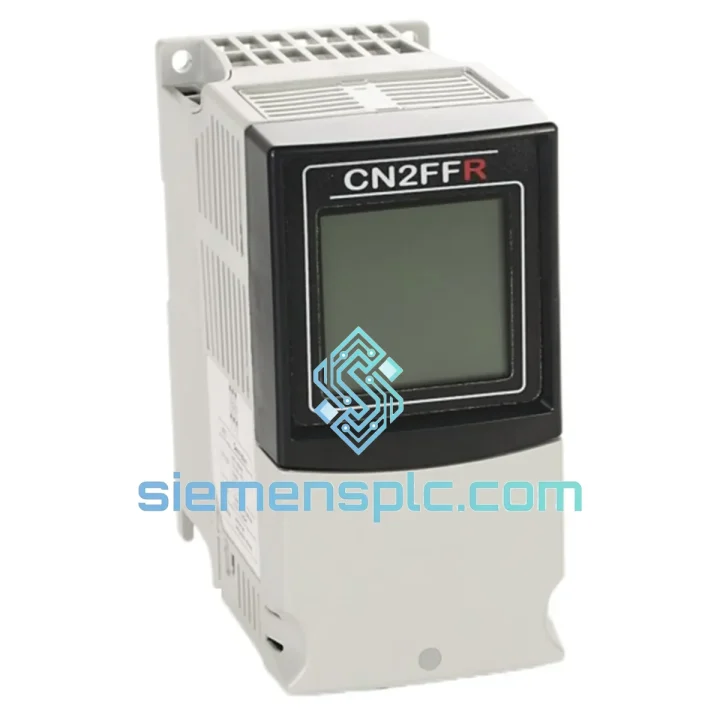
Request verified availability, condition, replacement risk review, packing options and courier lead time for 1788-CNET.
Click Request Quote and the part number is inserted into the inquiry form automatically.
Core fields for model confirmation and RFQ routing. Detailed product narrative remains below.
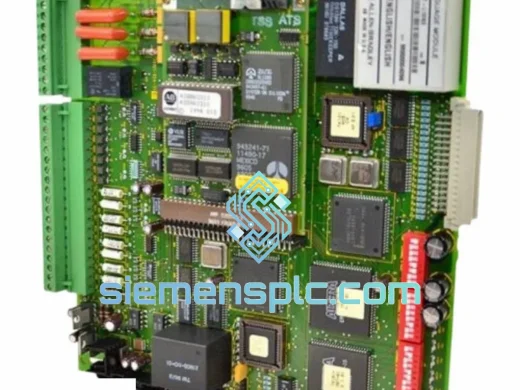
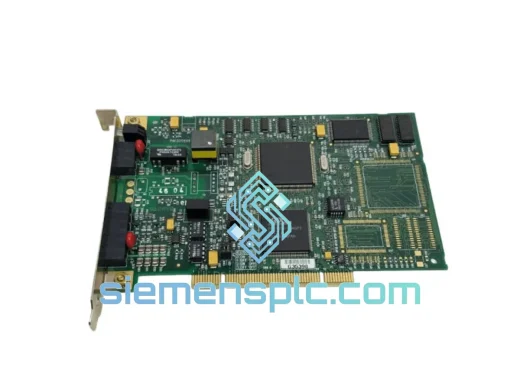
The Allen-Bradley 1788-CNET is a plug-in ControlNet communication card engineered for integration into Rockwell Automation’s 1788-series bridge and gateway platforms. Its primary function within a control loop is to serve as a deterministic, scheduled data highway between ControlLogix backplane resources and a ControlNet trunk — translating time-critical I/O scan data and peer-to-peer messaging into a 5 Mbps coaxial network fabric that operates independently of Ethernet congestion or TCP/IP stack latency. In process and discrete manufacturing environments where scan-cycle jitter above ±1 ms is operationally unacceptable, the 1788-CNET provides the physical and protocol layer necessary to enforce network-level determinism across distributed I/O racks, remote adapter nodes, and inter-controller data links.
Unlike general-purpose fieldbus adapters, the 1788-CNET participates in the ControlNet Network Update Time (NUT) scheduling mechanism. The NUT — configurable from 2 ms to 100 ms via RSNetWorx for ControlNet — defines a repeating time window within which all scheduled connections are guaranteed bandwidth. The 1788-CNET’s onboard scheduler arbitrates between scheduled (implicit, time-critical) and unscheduled (explicit, on-demand) traffic within each NUT cycle, ensuring that I/O data arrives at the controller backplane within a bounded, predictable interval regardless of unscheduled message load.
📦 Real-time Stock & RFQ: [email protected] | WhatsApp: +86 18359268345
| Parameter | Value |
|---|---|
| Manufacturer | Allen-Bradley / Rockwell Automation |
| Part Number | 1788-CNET |
| Series | 1788 Communication Bridge |
| Network Protocol | ControlNet (ANSI/IEC 61158 Type 2) |
| Data Rate | 5 Mbps (fixed) |
| Physical Medium | RG-6 coaxial cable, BNC connectors (dual-port for redundant media) |
| Max Nodes per Segment | 99 (UMAX) |
| Max Cable Length (per segment) | 1,000 m (RG-6, without repeaters) |
| Scheduled Connections | Supported (NUT-based, 2–100 ms configurable) |
| Unscheduled Connections | Supported (explicit messaging, UCMM) |
| Backplane Interface | 1788-series bridge backplane |
| Operating Temperature | 0 °C to +60 °C |
| Storage Temperature | −40 °C to +85 °C |
| Relative Humidity | 5 % to 95 % non-condensing |
| Vibration (operating) | 2 g @ 10–500 Hz per IEC 60068-2-6 |
| Shock (operating) | 30 g, 11 ms half-sine per IEC 60068-2-27 |
| EMC Emissions | CE (EN 55011 Class A), FCC Part 15 Class A |
| Safety Certifications | UL Listed, cUL, CE |
| Weight (module only) | Approx. 320 g |
| Warranty | 12 months from date of shipment |
The 1788-CNET’s internal architecture is structured around three functional layers that operate concurrently without shared-bus contention.
Media Access Control (MAC) and NUT Arbitration: The card implements a token-passing MAC layer compliant with ControlNet’s CTDMA (Concurrent Time Domain Multiple Access) protocol. A dedicated ASIC handles NUT boundary detection and token custody, offloading all time-critical arbitration from the host bridge processor. This hardware separation means that even under heavy unscheduled message load, the scheduled I/O window is never pre-empted — the ASIC enforces the NUT boundary in silicon, not in firmware.
Dual-Port Coaxial Interface and Redundant Media: The module exposes two BNC ports wired to independent receive paths but a single transmit driver. In a redundant media topology, both cable runs carry identical data; the receiver logic selects the first valid frame and discards the duplicate. This passive redundancy scheme adds zero latency to the primary data path — failover is frame-level, not connection-level, so the controller never sees a missed scan cycle due to a single cable fault.
EMC Design and Isolation: The coaxial interface is transformer-coupled, providing galvanic isolation between the network cable shield and the module’s internal ground plane. This eliminates ground-loop currents that would otherwise inject common-mode noise into the receive path — a critical design consideration in environments with large motor drives, welding equipment, or high-current bus bars in proximity to the control cabinet. The PCB layout routes the analog front-end on a separate ground island, with a single-point star connection to the digital ground, suppressing high-frequency switching noise from the backplane power rails.
Onboard Diagnostics Register: The module maintains a set of hardware-accessible diagnostic counters — CRC error count, media error count, node address conflict flag, and NUT synchronization loss events — readable via explicit messaging without interrupting scheduled I/O traffic. This allows a SCADA or MES layer to poll network health data asynchronously, providing continuous visibility into cable degradation trends before they escalate to connection timeouts.
Every 1788-CNET unit dispatched from our Xiamen facility undergoes a structured intake and verification process. Physical inspection covers label authenticity, firmware revision markings, BNC connector condition, and PCB cosmetic integrity against known-good reference units. Communication modules are powered and verified for basic initialization and network handshake response prior to packaging. Each unit ships with an inspection record documenting the verification steps completed.
Packaging uses anti-static bags, foam-lined cartons, and moisture-barrier sealing appropriate for international air freight. Standard export documentation — commercial invoice, packing list, and certificate of origin — is prepared for each shipment. DHL Express, FedEx International Priority, and UPS Worldwide are the primary carriers for single-unit and small-quantity orders; sea freight consolidation is available for bulk procurement. In-stock units typically ship within 1–3 business days of payment confirmation. All units carry a 12-month warranty from the date of shipment covering manufacturing defects and DOA conditions.
📧 Email: [email protected]
💬 WhatsApp: +86 18359268345
🌐 Web: siemensplc.com
📍 Location: Xiamen, China
© 2026 siemensplc.com. All rights reserved.
We check the full part number, brand, series and visible nameplate information before quotation.
Sales confirms stock path, condition option, quantity and realistic lead time for export dispatch.
DHL, FedEx, UPS or buyer courier arrangements can be reviewed with packing requirements.
Similar brand or category products for fast comparison and multi-item RFQ lists.