Allen-Bradley
RFQ Ready
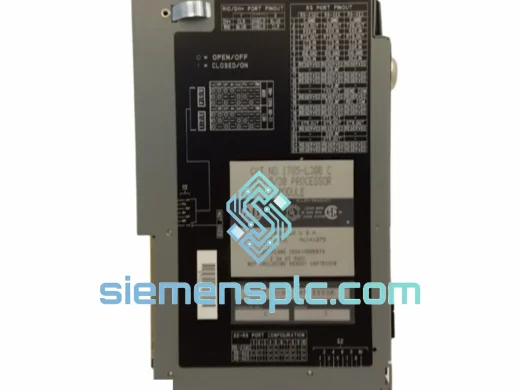
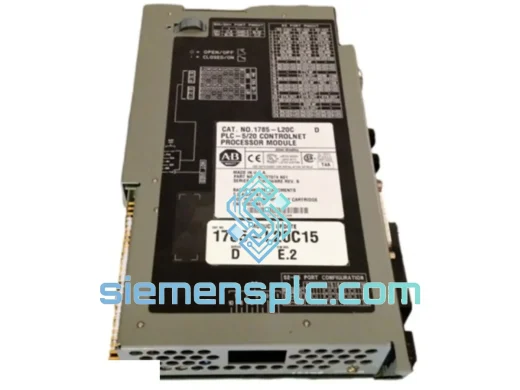
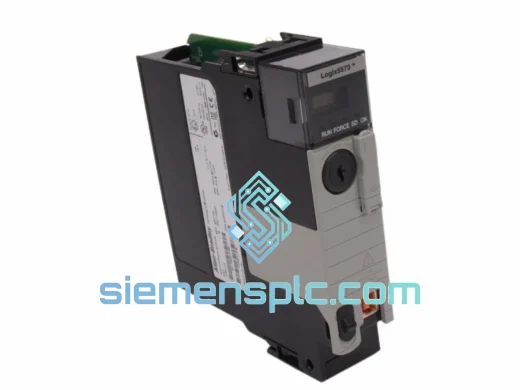
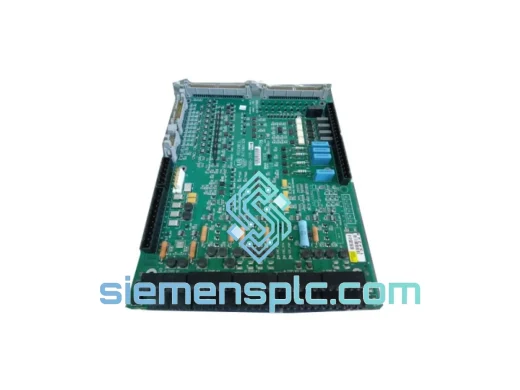
Allen-Bradley 80190-600-01-R OIBB Backplane Board
Origin US
PLC Backplane Board
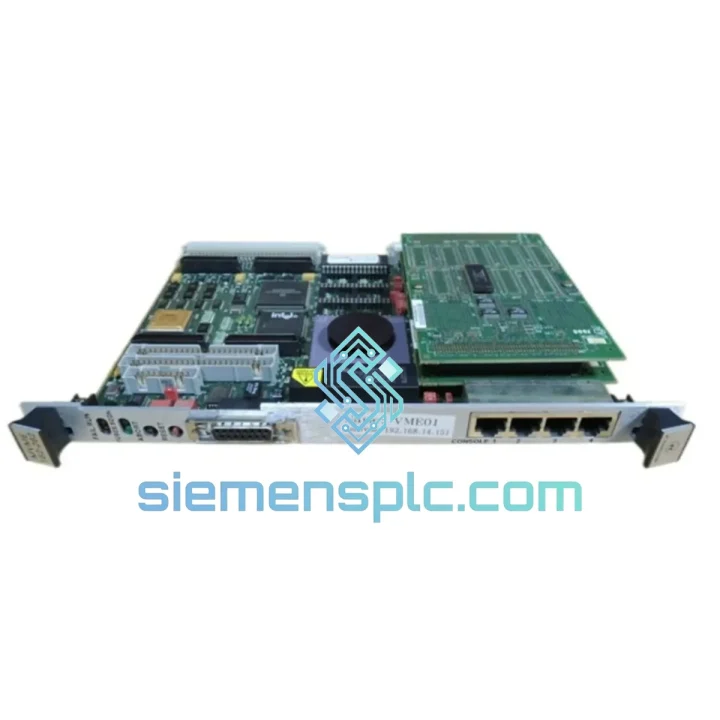
Request verified availability, condition, replacement risk review, packing options and courier lead time for MVME162-262.
Click Request Quote and the part number is inserted into the inquiry form automatically.
Core fields for model confirmation and RFQ routing. Detailed product narrative remains below.
Your VMEbus rack just threw a fault. The MVME162-262 is dead. Production is stopped. You’ve already called three distributors and gotten the same answer: 6–14 weeks lead time. That’s not acceptable when your line is bleeding $10,000+ per hour.
We stock the Allen-Bradley MVME162-262 in Xiamen, China. Verified, tested, ready to pull from the shelf. DHL Express to your dock in 3–5 business days — anywhere on the planet. We’ve done this hundreds of times. We know what you need and we move fast.
Don’t let a single board kill your quarter. Contact us now.
⚡ URGENT REQUIREMENT?
Email: [email protected]
WhatsApp: +86 18359268345
| Manufacturer | Allen-Bradley (Rockwell Automation / Motorola heritage) |
| Part Number | MVME162-262 |
| Module Type | VMEbus Single-Board Embedded Controller (6U) |
| CPU | Motorola MC68040 @ 25 MHz (integrated FPU + MMU) |
| Bus Standard | VMEbus IEEE 1014-1987, A32/A24/A16, D32/D16/D8 |
| DRAM | 4 MB onboard (expandable via mezzanine) |
| SRAM | 512 KB battery-backed (retains data through power loss) |
| Flash / EPROM | 1 MB Flash for firmware / boot image |
| Serial Ports | 4× RS-232 / RS-422 async (Z85230 ESCC) |
| Ethernet | 10BASE-T / AUI (Intel 82596 LAN controller) |
| SCSI | NCR 53C710 SCSI-2 (for local disk / tape) |
| VMEbus Chip | VMEchip2 ASIC — bus arbitration, interrupt routing, DMA |
| Interrupt Levels | 7-level VMEbus IRQ, programmable priority |
| Power | +5 VDC @ 5.5 A (typ); ±12 VDC @ 0.1 A |
| Operating Temp | 0°C to +55°C |
| Storage Temp | -40°C to +85°C |
| Humidity | 5–95% RH non-condensing |
| Form Factor | 6U × 160 mm VMEbus single slot |
| Weight | 460 g |
| Certifications | UL, CE |
| Stock Status | ✅ READY TO SHIP — Xiamen, China |
After replacing hundreds of these boards in the field, here are the failure modes and swap gotchas that will save you hours:
Top Failure Modes on the MVME162-262:
Step-by-Step Hot-Swap Replacement Procedure:
Common Fault Codes & What They Mean:
The MVME162-262 was designed for environments where consumer-grade electronics simply die. The 68040 processor runs at a conservative 25 MHz clock — not because Motorola couldn’t go faster, but because thermal headroom and long-term reliability in industrial enclosures demanded it. The result is a board that runs cool, runs stable, and runs for decades.
The VMEchip2 ASIC handles all bus arbitration in hardware — no software overhead, no timing jitter from OS scheduling. In vibration-heavy environments (compressor rooms, press lines, marine applications), the 6U VMEbus mechanical standard provides a rigid, fully guided card-edge connection that doesn’t work loose under shock loads that would crack a DIN-rail module’s plastic housing.
The battery-backed SRAM uses a low-drain lithium cell with a self-discharge rate measured in microamps. Even in a facility that loses power weekly, the SRAM will hold its data for years between battery changes. The Flash EPROM stores the firmware in non-volatile memory with a rated endurance of 100,000 write cycles — in practice, most boards are flashed fewer than 10 times in their service life.
Operating temperature ceiling of +55°C means this board survives inside a sealed steel enclosure on a summer day in a non-air-conditioned plant — a scenario that kills most modern embedded platforms within months. Storage down to -40°C means it survives unheated warehouses and cold-chain logistics without component stress.
Every unit we ship has been visually inspected under magnification, powered on, and verified to complete its self-test sequence. We don’t ship boards that fail. If it leaves our warehouse, it works.
Our warehouse is in Xiamen, China — one of China’s primary export hubs with direct DHL and FedEx gateway access. Here’s exactly what happens after you place your order:
We’ve shipped to automotive plants in Germany, petrochemical facilities in Saudi Arabia, food processing lines in the US, and power stations in Southeast Asia. Customs clearance, export compliance, and carrier coordination are handled by our logistics team — not outsourced.
Email: [email protected]
WhatsApp: +86 18359268345
Web: siemensplc.com
© 2026. All rights reserved.
We check the full part number, brand, series and visible nameplate information before quotation.
Sales confirms stock path, condition option, quantity and realistic lead time for export dispatch.
DHL, FedEx, UPS or buyer courier arrangements can be reviewed with packing requirements.
Similar brand or category products for fast comparison and multi-item RFQ lists.