Omron
RFQ Ready
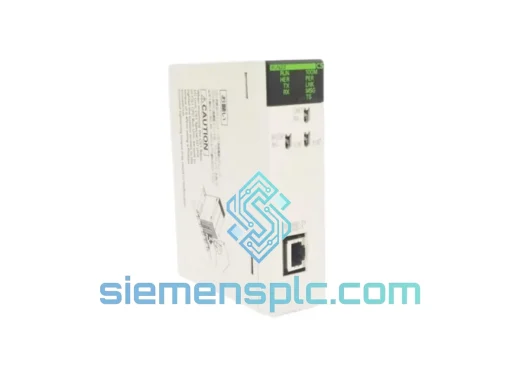
Omron CS1W-FLN22 PLC Communication Module
CS1 Series
Origin JP
PLC Communication Module
Request verified availability, condition, replacement risk review, packing options and courier lead time for CK3W-AX1111N.
Click Request Quote and the part number is inserted into the inquiry form automatically.
Core fields for model confirmation and RFQ routing. Detailed product narrative remains below.
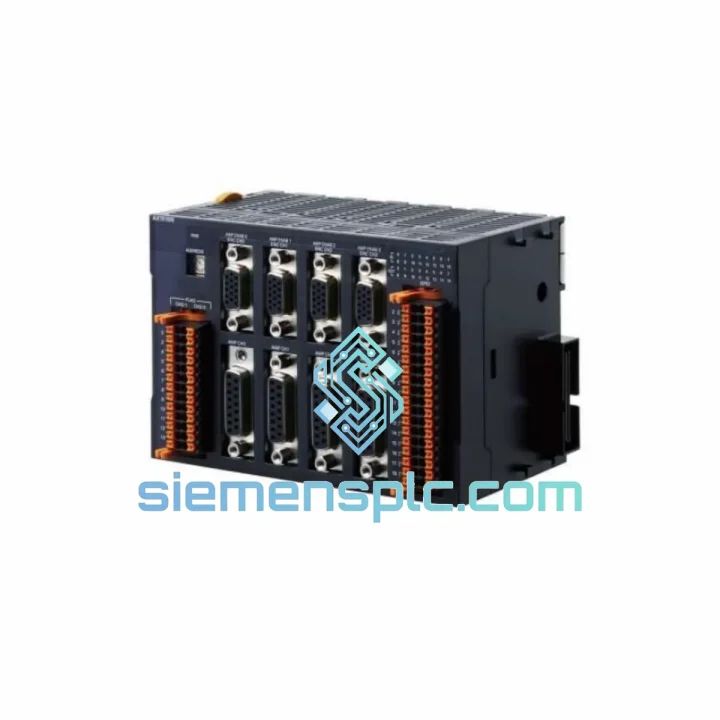
The OMRON CK3W-AX1111N is a hardware axis interface module engineered for installation within the CK3W modular chassis, where it performs the signal conditioning, galvanic isolation, and timing arbitration functions required to couple OMRON NJ-series and NX-series Machine Automation Controllers to field-level servo drive networks. Its functional position in the control loop sits between the CPU’s motion task output and the physical servo drive command input — a layer where timing determinism and signal integrity are not optional attributes but mandatory engineering constraints.
In multi-axis coordinated motion applications — five-axis machining centers, gantry pick-and-place systems, continuous-path robotic welding cells — the axis interface layer must deliver command data and return encoder feedback within a fixed, repeatable time window on every EtherCAT communication cycle. Any jitter at this layer accumulates as following-error variance across synchronized axes. At a servo velocity of 3,000 RPM with a 2,500-pulse-per-revolution encoder, a 2 µs timing deviation at the interface produces approximately 0.25 encoder counts of position uncertainty per axis per cycle — a figure that compounds across axes in electronic gearing configurations. The CK3W-AX1111N eliminates this variable by anchoring its internal data latching to the EtherCAT distributed clock hardware reference, not to the CPU’s software task scheduler.
The module occupies a dedicated slot in the CK3W chassis backplane and communicates with the NJ/NX CPU over a proprietary synchronous serial bus whose clock is phase-locked to the EtherCAT sync pulse. This architecture ensures that axis set-point data written by the CPU’s motion task is transferred to the module’s output stage, and encoder feedback is returned to the CPU’s input buffer, within a bounded latency window that does not vary with CPU load, task queue depth, or operating system scheduling state. The result is a hardware-guaranteed cycle time floor that Sysmac Studio’s motion engine can commit to when configuring electronic cam, electronic gearing, and multi-axis linear interpolation profiles.
Real-time Stock & RFQ: [email protected] | WhatsApp: +86 18359268345
| Parameter | Specification |
|---|---|
| Model Number | CK3W-AX1111N |
| Manufacturer | OMRON Corporation |
| Product Series | CK3W Modular Backplane Platform |
| Module Function | Servo axis command output and encoder feedback interface unit |
| Compatible Controllers | OMRON NJ501, NJ301, NX701, NX102 Machine Automation Controllers |
| Communication Bus | EtherCAT (IEC 61158 Type 12), distributed clock synchronization |
| Minimum Motion Cycle Time | 500 µs (system configuration dependent) |
| Backplane Interface | CK3W proprietary synchronous serial bus, phase-locked to EtherCAT DC |
| Encoder Feedback Interface | Incremental and absolute encoder input (axis-dependent configuration) |
| Isolation Voltage | 500 V DC minimum, encoder field side to backplane logic domain |
| Operating Temperature Range | 0 °C to +55 °C |
| Storage Temperature Range | −20 °C to +75 °C |
| Relative Humidity | 10% to 95% RH, non-condensing |
| Vibration Resistance | 10–57 Hz: 0.075 mm amplitude; 57–150 Hz: 9.8 m/s² |
| Shock Resistance | 147 m/s², 3 times each axis (X/Y/Z) |
| EMC Compliance | CE (EMC Directive 2014/30/EU), UL/cUL listed |
| Country of Origin | Japan |
| Approximate Weight | 5,300 g (with original factory packaging) |
| Warranty Period | 12 months from confirmed shipment date |
The CK3W-AX1111N separates its internal processing into two independent hardware planes: the motion command plane, which receives set-point data from the NJ/NX CPU over the backplane bus, and the encoder feedback plane, which accumulates and decodes position data from field-connected servo encoders. These planes operate on dedicated hardware logic — implemented in an embedded FPGA-class signal processing core — and do not share execution resources with the CPU’s software task scheduler. Encoder pulse accumulation, quadrature decoding, and communication error detection run on fixed hardware interrupt periods, which is the physical basis for the module’s timing determinism.
Galvanic Isolation Topology: All encoder input signal lines pass through optocoupler-based isolation barriers rated at a minimum of 500 V DC between the field-side servo signals and the CK3W backplane logic domain. This isolation topology breaks the ground loop current paths that form in large servo drive cabinets where multiple drive chassis share a common protective earth conductor. Ground loop currents in such environments can reach tens of milliamperes at frequencies from DC to several kilohertz — sufficient to corrupt differential encoder signals on cables longer than 5 m without isolation. Differential line receivers compliant with RS-422 electrical specifications further suppress common-mode interference, maintaining signal integrity on encoder cable runs up to 30 m without external signal conditioning repeaters.
Encoder Supply Regulation: The encoder excitation voltage regulation stage uses low-dropout linear regulators rather than switching-mode converters. This design choice eliminates switching-frequency ripple — typically 100 kHz to 500 kHz in SMPS topologies — from the encoder supply rail. In high-resolution incremental encoder interfaces, supply ripple at these frequencies appears as spurious count pulses that the quadrature decoder cannot distinguish from legitimate position increments, introducing systematic position error. The linear regulator topology removes this noise source at the hardware level, without requiring software filtering that would introduce phase lag into the feedback path.
PCB Signal Routing and EMC Architecture: Encoder signal traces on the module PCB are routed with guard traces referenced to analog ground, physically separated from digital power planes by clearances consistent with IPC-2221 Class B requirements. The board stack-up places the analog signal layer between ground reference planes, providing passive shielding against radiated interference from the digital logic layers. Connector housings are bonded to chassis ground at the PCB mounting point, providing a low-impedance path for shield drain currents that bypasses the signal ground plane — a standard EMC practice that prevents shield currents from injecting common-mode noise into the differential signal pairs.
Each CK3W-AX1111N unit dispatched from siemensplc.com is sourced through verified OMRON-authorized distribution channels. Every module carries OMRON’s original factory label, holographic authenticity seal, and batch traceability code cross-referenceable against OMRON’s production records. Prior to dispatch, units undergo a physical inspection protocol covering connector pin integrity, label accuracy, anti-static packaging condition, and the absence of mechanical damage indicators consistent with counterfeit or refurbished goods.
All shipments originate from our warehouse in Xiamen, China — a primary export hub with direct access to international freight forwarders serving North America, Europe, Southeast Asia, the Middle East, and Oceania. Standard export documentation — commercial invoice, packing list, certificate of origin, and HS code declaration (8537.10) — is prepared for every international consignment. For time-critical MRO requirements, DHL Express and FedEx International Priority services deliver to major industrial centers globally within 3–5 business days. Air freight consolidation is available for multi-unit orders requiring cost-optimized logistics. Units are packed in anti-static foam-lined cartons with calibrated shock-indicator labels to verify handling integrity throughout the transit chain.
A 12-month warranty is provided from the confirmed shipment date, covering manufacturing defects and component failures under rated operating conditions as defined in OMRON’s published environmental specifications. Warranty replacement units are dispatched within 5 business days of fault confirmation and return authorization.
Email: [email protected]
WhatsApp: +86 18359268345
Web: siemensplc.com
Location: Xiamen, China
© 2026 siemensplc.com. All rights reserved.
We check the full part number, brand, series and visible nameplate information before quotation.
Sales confirms stock path, condition option, quantity and realistic lead time for export dispatch.
DHL, FedEx, UPS or buyer courier arrangements can be reviewed with packing requirements.
Similar brand or category products for fast comparison and multi-item RFQ lists.