Mitsubishi Electric
RFQ Ready
Mitsubishi SD1T0A-A SD-1T0A-08 PLC Memory Module – MELSEC iQ-R Series
MELSEC
Origin JP
PLC Memory Module
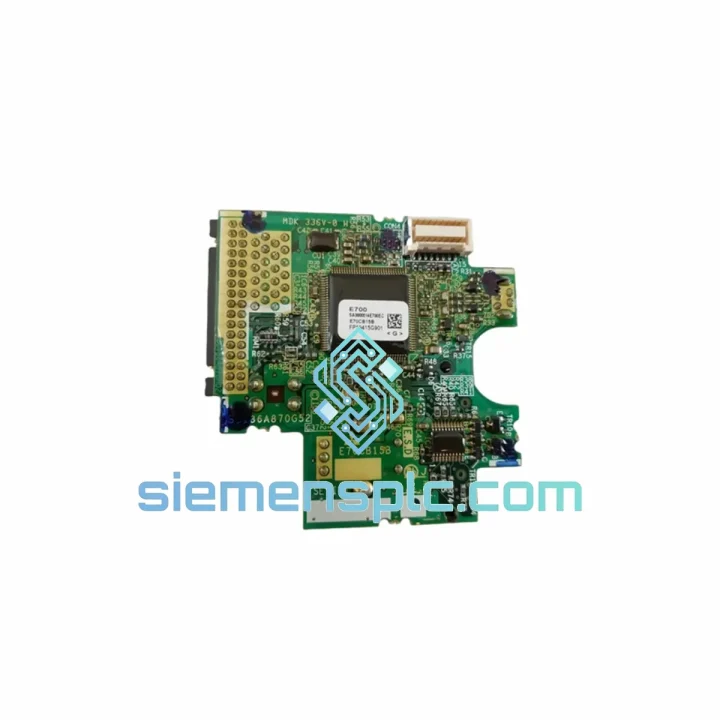
Request verified availability, condition, replacement risk review, packing options and courier lead time for E70CB15B.
Click Request Quote and the part number is inserted into the inquiry form automatically.
Core fields for model confirmation and RFQ routing. Detailed product narrative remains below.
Your MELDAS 70 Series controller is dead. The screen is blank, the axes won’t initialize, and your machining center is a very expensive paperweight. You’ve already pulled the CPU board and confirmed it’s the E70CB15B that’s failed. Now you need one — fast. Not in six weeks. Not “subject to availability.” Now.
We stock the Mitsubishi Electric E70CB15B CPU Motherboard and ship from Xiamen within 24 hours of order confirmation. DHL Express to most destinations in Europe, North America, and Southeast Asia lands in 3–5 business days. That’s the difference between a week of downtime and getting your line back up before the next shift.
URGENT REQUIREMENT?
📧 [email protected] | 📱 WhatsApp: +86 18359268345
| Parameter | Detail |
|---|---|
| Part Number | E70CB15B |
| Manufacturer | Mitsubishi Electric |
| Series | MELDAS 70 Series CNC Control |
| Component Role | CPU Motherboard — Central Processing Unit Board |
| Compatible Controllers | MELDAS 70, 70A, 70B Series |
| Typical Applications | VMC, HMC, CNC Lathes, Multi-Axis Machining Centers |
| Origin | Japan |
| Weight | 4,460 g (approx.) |
| Condition Available | New / Tested-Refurbished — specify on inquiry |
| Stock Status | ✅ Ready to Ship — Xiamen Warehouse |
| Lead Time | Ships within 24 hrs of payment confirmation |
| Warranty | 90-day functional warranty on tested units |
The E70CB15B is the brain of the MELDAS 70 controller. When it fails, symptoms are rarely subtle. Here’s what you’ll typically see and what to check before you pull the trigger on a replacement:
Common Failure Symptoms:
Pre-Replacement Checklist:
Post-Installation Verification:
The MELDAS 70 platform was engineered for the factory floor, not a server room. The E70CB15B CPU Motherboard reflects that design philosophy. Mitsubishi Electric built this board to operate continuously in environments that would kill consumer-grade electronics within weeks.
The board is rated for an operating temperature range of 0°C to 55°C, with humidity tolerance up to 90% RH non-condensing — covering the full spectrum of conditions found in automotive stamping plants, foundry support areas, and coastal manufacturing facilities where salt air accelerates corrosion on lesser components. The PCB substrate uses a conformal coating process on critical signal traces, providing a barrier against airborne particulates, cutting fluid mist, and humidity ingress that are endemic to machining environments.
Vibration resistance is a non-negotiable requirement for any component mounted inside a CNC controller cabinet that sits on the same floor as a 50-ton press or a high-speed spindle running at 12,000 RPM. The E70CB15B’s component mounting and PCB layer stack are designed to withstand continuous vibration in the 10–55 Hz range at 0.5G amplitude — consistent with IEC 60068-2-6 test profiles for industrial control equipment.
Thermal cycling is another silent killer of industrial electronics. The E70CB15B is designed to survive repeated power-on/power-off cycles across its full temperature range without solder joint fatigue — a common failure mode in boards that use cheaper tin-lead-free solder formulations not optimized for thermal cycling. Mitsubishi’s manufacturing process for MELDAS series boards uses controlled-atmosphere reflow soldering with post-reflow X-ray inspection to catch voids in critical BGA and QFP joints before the board ever leaves the factory.
Every unit we ship from our Xiamen warehouse is stored in climate-controlled conditions with anti-static racking. Long-term storage in improper conditions degrades electrolytic capacitors and battery-backed SRAM — we rotate stock and test units before dispatch to ensure you receive a board that performs, not one that fails on first power-up.
Downtime doesn’t respect time zones. Our logistics process is built around one objective: getting the E70CB15B into your hands as fast as physically possible.
Dispatch Process — Xiamen to Worldwide:
For genuinely critical situations — plant shutdown, automotive line stoppage, contractual penalty exposure — contact us directly on WhatsApp. We have arranged same-day courier handoffs and next-flight-out shipments for customers facing six-figure daily downtime costs. We understand the stakes.
📧 Email: [email protected]
📱 WhatsApp: +86 18359268345
🌐 Web: siemensplc.com
© 2026 siemensplc.com. All rights reserved.
We check the full part number, brand, series and visible nameplate information before quotation.
Sales confirms stock path, condition option, quantity and realistic lead time for export dispatch.
DHL, FedEx, UPS or buyer courier arrangements can be reviewed with packing requirements.
Similar brand or category products for fast comparison and multi-item RFQ lists.