Mitsubishi Electric
RFQ Ready
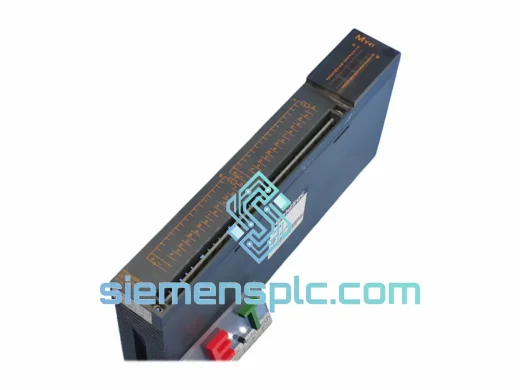
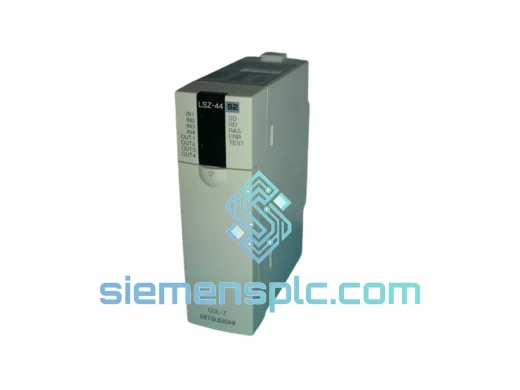
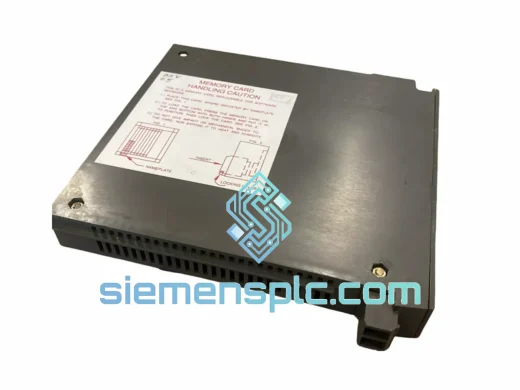
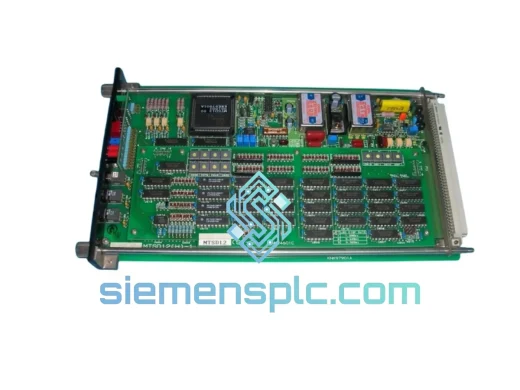
Mitsubishi MTSD12 PLC Control Board
MELSEC
Origin JP
PLC Control Board
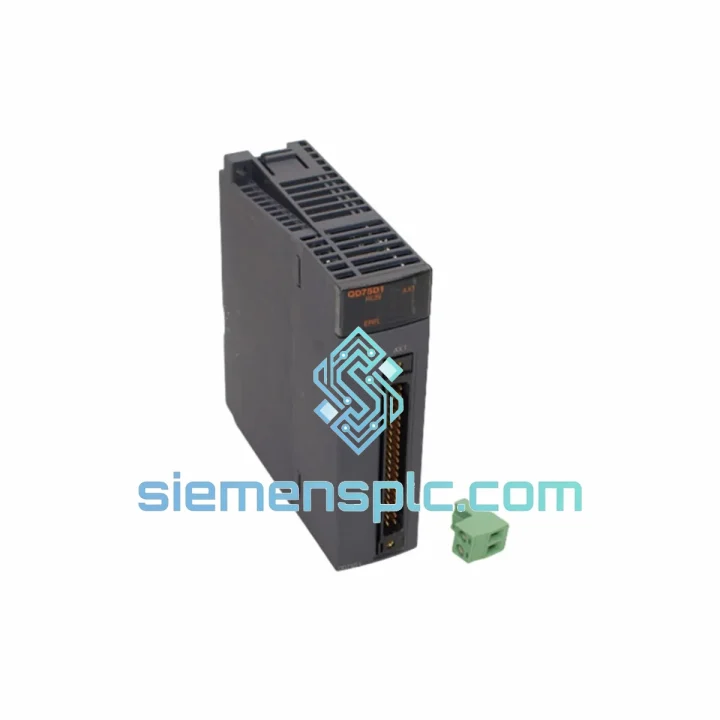
Request verified availability, condition, replacement risk review, packing options and courier lead time for SD1T0A-A.
Click Request Quote and the part number is inserted into the inquiry form automatically.
Core fields for model confirmation and RFQ routing. Detailed product narrative remains below.
In deterministic control architectures, the integrity of the program storage medium is not a peripheral concern — it is a foundational constraint. The Mitsubishi Electric SD1T0A-A (catalog alias: SD-1T0A-08) is a 1 GB industrial-grade SD memory card certified for deployment within MELSEC iQ-R and MELSEC-Q Series CPU modules. Its role within the control loop is threefold: persistent non-volatile program retention across power cycles, structured data logging for process traceability, and autonomous boot-from-card initialization that eliminates dependency on manual program reload after hardware replacement events.
Within the MELSEC iQ-R platform’s CPU architecture, the SD card slot interfaces directly with the CPU’s internal file system controller via a dedicated SPI or SD bus lane, isolated from the main program execution bus. This physical separation ensures that concurrent data logging operations — writing process variable snapshots, alarm records, or recipe parameters — do not introduce latency jitter into the scan cycle. The iQ-R CPU’s firmware manages SD card I/O through a buffered write queue, meaning burst logging events are absorbed without stalling the ladder logic execution engine. For applications where scan time determinism is a contractual requirement — servo synchronization, press brake control, or pharmaceutical batch sequencing — this architecture is not optional; it is the correct engineering choice.
The SD1T0A-A carries Mitsubishi Electric’s OEM certification, meaning it has been validated against the MELSEC iQ-R hardware specification for write endurance, operating temperature range, and electrical interface tolerance. Consumer-grade SD cards, even those with identical capacity ratings, are not tested to these parameters and introduce undefined failure modes in industrial thermal cycling environments. The SD1T0A-A eliminates that variable.
Real-time Stock & RFQ: [email protected] | WhatsApp: +86 18359268345
| Parameter | Value |
|---|---|
| Part Number | SD1T0A-A (SD-1T0A-08) |
| Manufacturer | Mitsubishi Electric Corporation |
| Compatible Platform | MELSEC iQ-R Series, MELSEC-Q Series (SD slot-equipped CPUs) |
| Storage Capacity | 1 GB |
| Card Form Factor | SD (Secure Digital), standard SD slot |
| Interface Bus | SD/SPI bus via CPU SD card controller |
| File System | FAT32 (managed by MELSEC CPU firmware) |
| Operating Temperature | 0 °C to +55 °C (per MELSEC iQ-R environmental spec) |
| Storage Temperature | -25 °C to +85 °C |
| Vibration Resistance | Compliant with IEC 61131-2 mechanical environment class |
| Write Endurance | Industrial-grade; validated for sustained logging cycles |
| Certification | Mitsubishi Electric OEM specification; CE marking applicable |
| Warranty | 12 months from date of shipment |
The SD1T0A-A’s hardware design advantage begins at the electrical interface level. The MELSEC iQ-R CPU’s SD card controller implements a dedicated power rail for the card slot, decoupled from the main 5 V backplane supply through an LC filter network. This decoupling prevents backplane switching transients — generated by high-density I/O modules toggling output transistors at millisecond intervals — from propagating into the SD card’s supply voltage. Voltage ripple on the SD card supply is held within ±50 mV, which is within the SD specification’s operating window and prevents data corruption during write operations.
From an EMC perspective, the SD card slot on MELSEC iQ-R CPUs is routed with controlled impedance traces and shielded by the CPU module’s metal housing. The SD1T0A-A’s PCB substrate and contact geometry are matched to this impedance environment, ensuring signal integrity at the SD bus clock frequencies used by the iQ-R firmware. In high-EMI environments — motor drive panels, arc welding cells, or induction heating installations — this matched impedance design prevents bus errors that would otherwise manifest as file system corruption or card detection failures.
The card’s NAND flash memory controller implements wear-leveling algorithms that distribute write operations across the available memory cells, extending the functional write endurance beyond what a static write pattern would achieve. For applications logging at 100 ms intervals across 16 process variables, the SD1T0A-A’s endurance profile supports multi-year continuous operation without approaching the NAND cell wear threshold. The controller also implements error correction code (ECC) at the page level, detecting and correcting single-bit errors transparently without CPU intervention.
Boot-from-card operation on compatible MELSEC iQ-R CPUs is governed by a hardware boot flag register. On power-up, the CPU’s boot ROM checks this register and, if set, transfers program execution to the SD card’s boot partition before loading the user program into RAM. This sequence is deterministic and completes within the CPU’s specified boot time window, ensuring that the control system reaches operational state within the plant’s defined startup sequence timing.
Every SD1T0A-A unit supplied by siemensplc.com is sourced as genuine Mitsubishi Electric OEM product. Incoming units are inspected against Mitsubishi Electric’s published part marking standards, including holographic authenticity features, date code formatting, and contact plating appearance. Counterfeit SD cards are a documented problem in the industrial components market; our inspection protocol is designed to identify and reject non-genuine units before they reach our customers.
Functional verification is performed where applicable, confirming that the card is recognized by a MELSEC-compatible interface and that the file system structure is intact. Each shipment is accompanied by a packing list and, upon request, a certificate of origin for customs clearance purposes.
Our logistics operation is based in Xiamen, China — a major port city with direct air freight connections to Hong Kong, Singapore, Frankfurt, Los Angeles, and Dubai. Standard international shipments are dispatched via DHL Express or FedEx International Priority, with transit times of 3–7 business days to most destinations in Asia, Europe, and North America. For time-critical orders, same-day dispatch is available for orders confirmed before 14:00 CST. Full tracking information is provided at the time of dispatch, and export documentation — including commercial invoice, packing list, and HS code declaration — is prepared in compliance with destination country import requirements.
All products carry a 12-month warranty from the date of shipment, covering manufacturing defects and OEM specification non-conformance. Warranty claims are processed with a target response time of 2 business days.
Email: [email protected]
WhatsApp: +86 18359268345
Web: siemensplc.com
Location: Xiamen, China
© 2026 siemensplc.com. All rights reserved.
We check the full part number, brand, series and visible nameplate information before quotation.
Sales confirms stock path, condition option, quantity and realistic lead time for export dispatch.
DHL, FedEx, UPS or buyer courier arrangements can be reviewed with packing requirements.
Similar brand or category products for fast comparison and multi-item RFQ lists.