Yokogawa
In Stock OK
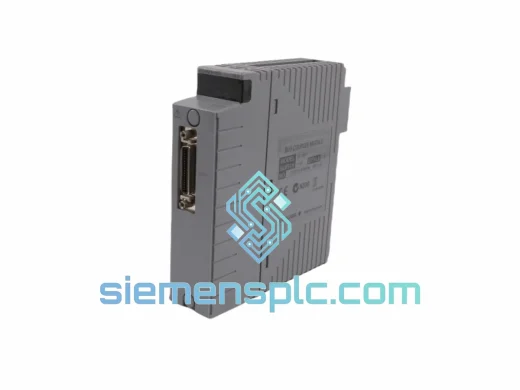
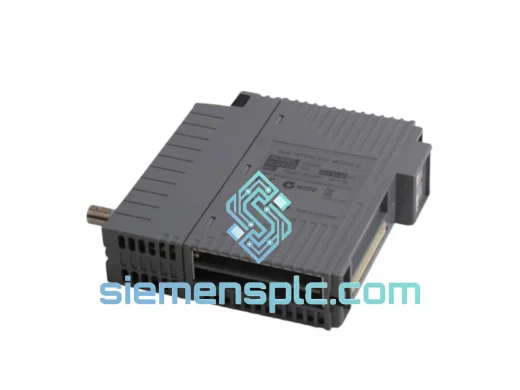
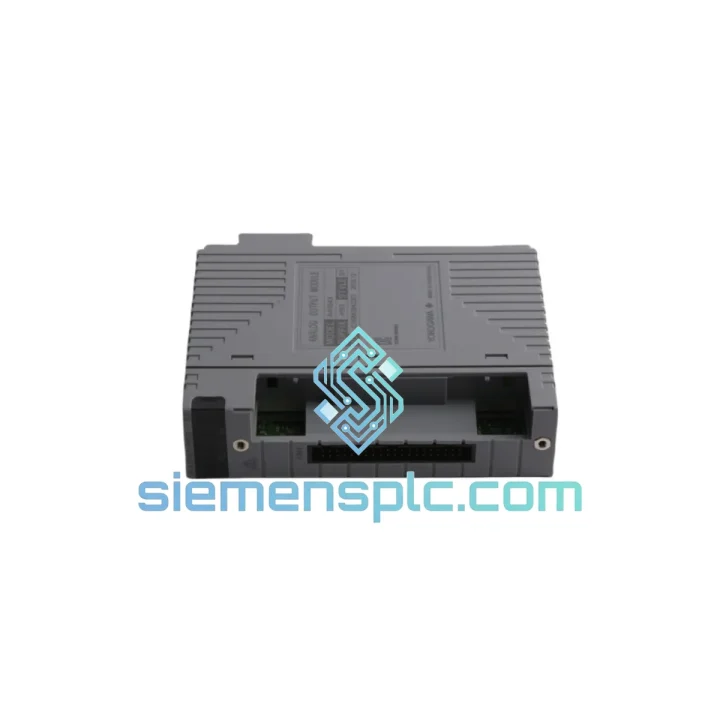
YOKOGAWA EC402-50 S1 ESB Bus Coupler Module – CENTUM VP/CS
Request verified availability, condition, replacement risk review, packing options and courier lead time for EC402-50.
BrandYokogawa
Part NumberEC402-50
ConditionAvailability Check
Lead TimeRFQ Confirmation
DocumentsDatasheet / photos by RFQ
ShippingExport packing available
Auto-filled RFQ
EC402-50
Click Request Quote and the part number is inserted into the inquiry form automatically.
- Reply by email: [email protected]
- WhatsApp / Tel: +86 18359268345
- Mon-Sat 9:00-18:00 GMT+8
Procurement Data
Key Product Information
Core fields for model confirmation and RFQ routing. Detailed product narrative remains below.
- Brand
- Yokogawa
- Primary Part Number
- EC402-50
- Product Type
- ESB Bus Coupler Module
- Series / Family
- CENTUM VP
- Manufacturer
- YOKOGAWA Electric Corporation
- Country of Origin
- JP
- Catalog Category
- DCS & Safety Modules
- Operating Temp.
- 0°C to +55°C
- Warranty
- 12 months from date of shipment
Model confirmed for inquiry
EC402-50
Send quantity, destination and urgency. The RFQ form keeps this part number attached.
Request Quote
Product Overview
YOKOGAWA EC402-50 S1: ESB Bus Coupler Module for CENTUM VP/CS Field Control Stations
The EC402-50 S1 is a dedicated ESB (Extended Serial Backplane) Bus Coupler Module manufactured by YOKOGAWA Electric Corporation for deployment within CENTUM CS and CENTUM VP distributed control system architectures. Its primary function is to bridge the high-speed serial ESB bus between adjacent Field Control Station (FCS) nests, extending the physical reach of the backplane communication fabric without introducing latency penalties or protocol overhead. In multi-nest FCS configurations — common in large-scale refinery, chemical, and power generation plants — the EC402-50 S1 acts as the deterministic data relay that preserves the timing integrity of the entire control loop.
Unlike generic bus extenders, the EC402-50 S1 is engineered specifically for YOKOGAWA’s proprietary ESB protocol, which operates at a fixed baud rate optimized for synchronous I/O scanning. This tight hardware-software co-design eliminates the jitter accumulation that would otherwise degrade scan cycle consistency across extended nest chains. For process engineers managing tight PID loop tuning in high-throughput applications, this determinism is not optional — it is a hard system requirement.
Real-time Stock & RFQ: [email protected] | WhatsApp: +86 18359268345
Technical Parameters
| Parameter | Specification |
|---|---|
| Part Number / SKU | EC402-50 S1 |
| Manufacturer | YOKOGAWA Electric Corporation |
| Series | CENTUM CS / CENTUM VP |
| Module Function | ESB Bus Coupler (Extended Serial Backplane) |
| Bus Interface | Proprietary YOKOGAWA ESB high-speed serial bus |
| Supported FCS Types | CENTUM CS 1000, CS 3000, VP FCS |
| Mounting Compatibility | CENTUM FCS nest (rack-mount, DIN-rail compatible) |
| Operating Temperature | 0°C to +55°C |
| Storage Temperature | -20°C to +70°C |
| Relative Humidity | 5% to 95% RH (non-condensing) |
| Power Consumption | Supplied via FCS nest backplane |
| Country of Origin | Japan |
| Approximate Weight | 300 g |
| Warranty | 12 months from date of shipment |
Hardware Logical Analysis
The EC402-50 S1 implements a point-to-point ESB bus coupling topology that maintains signal integrity across the inter-nest cable segment. At the physical layer, the module employs differential signal transmission to suppress common-mode noise — a critical design choice in industrial environments where variable-frequency drives, high-current contactors, and transformer switching generate broadband electromagnetic interference across the 10 kHz–100 MHz spectrum.
The coupler’s internal signal conditioning circuitry includes impedance-matched termination networks that prevent standing wave reflections on the ESB cable. Unterminated or improperly terminated bus segments are a well-documented failure mode in multi-nest DCS installations; the EC402-50 S1 eliminates this risk by integrating termination logic directly into the module hardware rather than relying on external resistor packs.
From an EMC compliance standpoint, the module’s PCB layout follows YOKOGAWA’s internal shielding guidelines, with ground planes segmented to isolate the digital bus logic from the nest power rail. This partitioning reduces conducted emissions and improves immunity to electrostatic discharge (ESD) events — relevant in environments where maintenance personnel may contact the module during live system operation.
The ESB protocol itself uses a master-slave polling architecture where the FCS CPU acts as bus master and each I/O nest responds within a fixed time window. The EC402-50 S1 preserves this timing relationship across the inter-nest boundary by introducing a fixed, deterministic propagation delay — typically sub-microsecond — that the FCS firmware accounts for in its scan cycle calculation. This is architecturally distinct from asynchronous bus bridges, which introduce variable latency that must be compensated through software buffering.
System Integration Benefits
- Deterministic scan cycle extension: Maintains fixed propagation delay across nest boundaries, preserving FCS scan cycle integrity for PID and sequence control loops operating at 100 ms or faster intervals.
- Zero protocol conversion overhead: Native ESB bus compatibility means no protocol translation layer, eliminating the CPU overhead and latency associated with gateway-based nest expansion approaches.
- Plug-compatible nest expansion: Drop-in installation within existing CENTUM CS/VP FCS nest infrastructure requires no firmware modification or system reconfiguration beyond standard engineering station commissioning steps.
- Differential signal immunity: Common-mode noise rejection on the inter-nest cable segment reduces nuisance communication faults in high-EMI plant environments, improving overall system availability metrics.
- Integrated bus termination: Eliminates field-wiring errors associated with external termination resistors, reducing commissioning time and the risk of signal integrity degradation post-installation.
- Diagnostic transparency: The FCS CPU can detect ESB bus communication faults at the coupler level, enabling the engineering station to isolate the fault to a specific inter-nest segment rather than requiring physical inspection of the entire bus chain.
- Thermal operating margin: Rated to +55°C continuous operation, providing adequate thermal headroom for installation in non-air-conditioned marshalling cabinets in tropical and desert climates.
- Reduced spare parts complexity: A single EC402-50 S1 SKU covers both CS and VP FCS nest configurations, simplifying spare parts inventory management for multi-generation DCS installations.
Quality Assurance & Global Logistics
Every EC402-50 S1 unit supplied by siemensplc.com is sourced as genuine YOKOGAWA OEM hardware. Each module undergoes a structured incoming inspection protocol: label and serial number verification against YOKOGAWA’s part numbering conventions, visual inspection of connector pins and PCB edge connectors for oxidation or mechanical damage, and where test fixtures are available, functional bus communication verification prior to dispatch.
Packaging follows anti-static handling requirements: modules are sealed in conductive poly bags with desiccant packs, placed in foam-lined cartons rated for international air freight handling. This packaging specification meets YOKOGAWA’s own spare parts shipping standards and protects against ESD damage during transit.
Shipments originate from Xiamen, China, with access to DHL Express, FedEx International Priority, and TNT Economy Express services. Typical transit times: 3–5 business days to Southeast Asia and East Asia; 5–8 business days to Europe and the Middle East; 6–10 business days to North America and South America. All shipments include a commercial invoice, packing list, and certificate of origin. Export documentation for customs clearance is prepared in compliance with applicable trade regulations. A 12-month warranty covers manufacturing defects and verified DOA (Dead on Arrival) conditions from the date of shipment.
Contact Information
Email: [email protected]
WhatsApp: +86 18359268345
Web: siemensplc.com
Location: Xiamen, China
© 2026 siemensplc.com. All rights reserved.
Ready to quote
[email protected]
Send This Part Number to Sales
RFQ workflow
Quality workflow ->
Confirmation Process
01Model confirmation
We check the full part number, brand, series and visible nameplate information before quotation.
02Availability reply
Sales confirms stock path, condition option, quantity and realistic lead time for export dispatch.
03Packing & courier
DHL, FedEx, UPS or buyer courier arrangements can be reviewed with packing requirements.
Continue sourcing
Browse full catalog ->
Related Automation Parts
Similar brand or category products for fast comparison and multi-item RFQ lists.