Siemens
In Stock OK
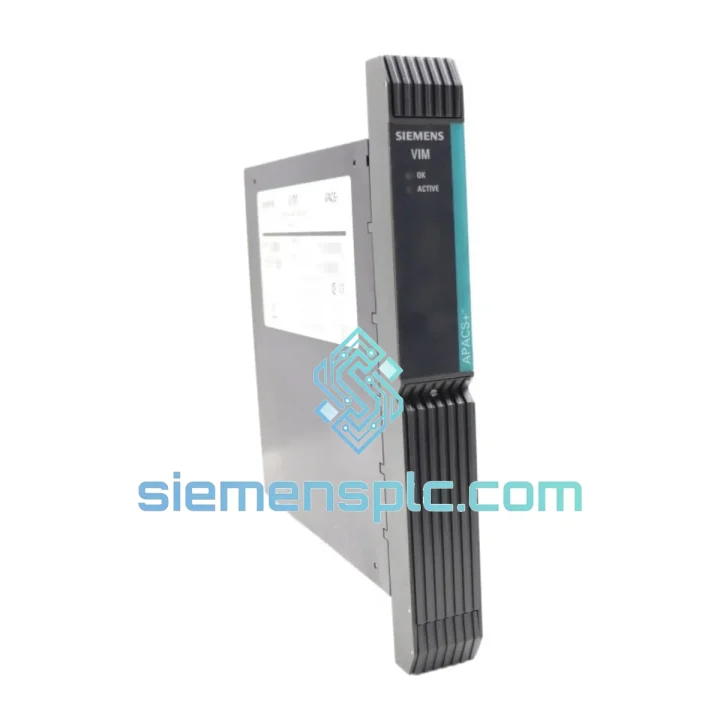
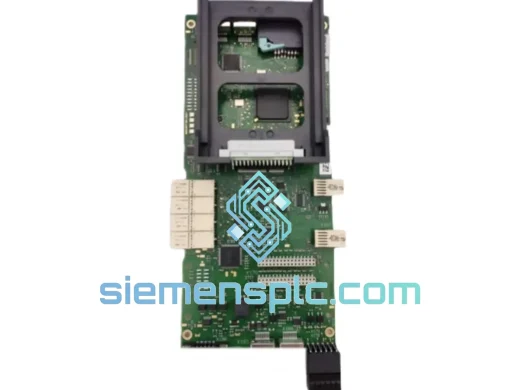
Siemens 39VIMCCN Voltage Input Module
Request verified availability, condition, replacement risk review, packing options and courier lead time for 39VIMCCN.
BrandSiemens
Part Number39VIMCCN
ConditionAvailability Check
Lead TimeRFQ Confirmation
DocumentsDatasheet / photos by RFQ
ShippingExport packing available
Auto-filled RFQ
39VIMCCN
Click Request Quote and the part number is inserted into the inquiry form automatically.
- Reply by email: [email protected]
- WhatsApp / Tel: +86 18359268345
- Mon-Sat 9:00-18:00 GMT+8
Procurement Data
Key Product Information
Core fields for model confirmation and RFQ routing. Detailed product narrative remains below.
- Brand
- Siemens
- Primary Part Number
- 39VIMCCN
- Product Type
- DCS I/O Module
- Product Family
- Other series
- Manufacturer
- Siemens
- Country of Origin
- DE
- Catalog Category
- I/O Modules
- Operating Temp.
- 0 °C to +60 °C
- Humidity
- 5–95% RH, non-condensing
- Compliance
- CE, UL (per APACS+ platform certification)
Model confirmed for inquiry
39VIMCCN
Send quantity, destination and urgency. The RFQ form keeps this part number attached.
Request Quote
Product Overview
Siemens 39VIMCCN: Stop the Bleeding — Get Your Process Loop Back Online Now
Every minute your APACS+ rack sits with a dead voltage input module, you’re burning money. A single unplanned shutdown in a refinery or power plant can cost anywhere from $10,000 to $100,000 per hour in lost throughput, emergency labor, and contractual penalties. The Siemens 39VIMCCN is on our shelf in Xiamen right now. We’ve shipped this exact module to plants in Southeast Asia, the Middle East, and Europe — same-day dispatch, DHL Express door-to-door. No waiting on factory lead times. No broker runaround.
URGENT REQUIREMENT? Contact: [email protected] | WhatsApp: +86 18359268345
Quick Technical Datasheet
| Part Number | 39VIMCCN ✅ Ready to Ship |
| Manufacturer | Siemens |
| Module Type | Analog Voltage Input Module (VIM) |
| Compatible Platform | APACS+ / QUADLOG DCS |
| Input Signal Ranges | 0–5 V, 0–10 V, ±10 V (configurable per channel) |
| Input Channels | 8 differential analog voltage channels |
| A/D Resolution | 16-bit |
| Isolation | Channel-to-channel galvanic isolation; channel-to-backplane isolation |
| Backplane Interface | APACS+ standard I/O bus (direct carrier slot) |
| Operating Temperature | 0 °C to +60 °C |
| Humidity | 5–95% RH, non-condensing |
| Mounting | APACS+ I/O carrier rack (hot-swap capable) |
| Compliance | CE, UL (per APACS+ platform certification) |
| Country of Origin | Germany |
| Stock Status | ✅ In Stock — Ships within 24 hours |
Troubleshooting & Replacement Tips
Pulled from real field experience. Follow this sequence and you’ll avoid the most common commissioning headaches:
Step 1 — Confirm the fault is the module, not the carrier. Before you pull the 39VIMCCN, check the I/O carrier slot for bent pins, corrosion, or a blown fuse on the carrier board. A bad carrier will kill a new module within minutes of insertion. Swap to a known-good carrier slot first if one is available.
Step 2 — Record the channel configuration before removal. Open the APACS+ System Manager and export the I/O configuration for this slot. The 39VIMCCN stores no configuration internally — all channel range settings (0–10 V, ±10 V, etc.) live in the controller database. If you don’t have a backup, you’ll be re-entering eight channels of range and scaling data manually. Don’t skip this.
Step 3 — Check for address conflicts. APACS+ I/O modules are slot-addressed by physical position on the carrier. The replacement 39VIMCCN will auto-inherit the slot address — no DIP switch or jumper setting required on this module. However, if the carrier has been physically moved or the rack has been reconfigured since the original installation, verify the slot address in System Manager matches the physical slot before going live.
Step 4 — Firmware compatibility. The 39VIMCCN does not carry user-upgradeable firmware. It is factory-programmed. Ensure your APACS+ controller firmware revision is compatible with the VIM generation you are installing. Mismatched generations (early APACS vs. APACS+) will result in the module appearing as “Unknown I/O” in the system manager. Check the controller PCM firmware version against the Siemens APACS+ compatibility matrix.
Common fault codes to know:
- I/O Comm Fault — Loss of communication between VIM and PCM. First suspect: carrier slot contact failure or backplane ribbon cable. Reseat the module. If fault persists after reseating a new module, the carrier or backplane is the culprit.
- Channel Over-Range — Input voltage exceeds configured range. Check field wiring for shorts to supply rail. Verify transmitter output range matches the configured channel range in System Manager.
- Channel Under-Range / Open Wire — Input reads below 0 V on a unipolar channel. Typically a broken field wire or failed transmitter. Confirm with a calibrated voltage source at the terminal block.
- Module Hardware Fault — Internal self-test failure. The module is defective. Replace immediately. This is the fault that brings you here.
Step 5 — Hot-swap procedure. The APACS+ I/O carrier supports live insertion. Inform the control room operator before pulling the module — eight analog inputs will go to their configured fault state (typically last value or zero) during the swap. Insert the replacement 39VIMCCN firmly until the ejector clips engage. System Manager should recognize the module within one controller scan cycle (typically 100–500 ms). Verify all eight channels return to valid readings before releasing the loop to automatic.
Reliability in Harsh Conditions
The 39VIMCCN was not designed for a climate-controlled server room. It was built for the kind of environments where things go wrong: offshore platforms with salt-laden air, petrochemical plants with ambient temperatures pushing 55 °C, and steel mills where the floor vibrates at 10–150 Hz continuously.
The module’s PCB is conformally coated to resist moisture ingress and corrosive atmospheres — a non-negotiable requirement for APACS+ deployments in coastal and tropical installations. The onboard A/D converter and signal conditioning circuitry are specified for operation across the full 0–60 °C range without derating. Galvanic isolation between channels and between the field side and the backplane bus provides robust protection against ground loops and transient voltage spikes that are endemic to heavy industrial field wiring.
Vibration tolerance meets IEC 60068-2-6 test profiles, covering the resonance frequencies common to rotating machinery environments. Units we ship have been stored in controlled-humidity, ESD-safe conditions and inspected for physical integrity before dispatch. You are not getting a module that has been sitting in a damp warehouse for five years.
Global Express Logistics
Our warehouse is in Xiamen, China — one of the country’s primary export hubs with direct access to DHL Express, FedEx International Priority, and UPS Worldwide Express gateways. Here is exactly what happens after you confirm your order:
- Same-day dispatch for orders confirmed before 15:00 CST. Orders confirmed after cutoff ship the following business morning.
- ESD-safe packaging: The 39VIMCCN is wrapped in anti-static foam, sealed in a moisture barrier bag, and double-boxed in a rigid carton rated for air freight handling.
- Export documentation: Commercial invoice, packing list, and certificate of conformance generated same day. HS code 8537.10 declared for customs clearance. We handle the paperwork — you handle the installation.
- Transit times: Europe 2–3 business days via DHL Express. Middle East 2–3 days. Southeast Asia 1–2 days. North America 3–4 days. Australia 3–4 days.
- Full tracking: AWB number sent to you within 2 hours of dispatch. Real-time tracking link provided. We monitor shipments and proactively flag any customs holds.
- Duty and import advisory: We can provide HS code documentation and origin certificates to support your import clearance. For destinations with complex import requirements (India, Brazil, Indonesia), contact us before ordering so we can advise on the correct documentation package.
We have shipped Siemens APACS+ modules to refineries in Saudi Arabia, power plants in Vietnam, and manufacturing facilities in Germany. The logistics process is proven. Your module will arrive intact, on time, and ready to install.
Contact Information
Email: [email protected]
WhatsApp: +86 18359268345
Web: siemensplc.com
© 2026 siemensplc.com. All rights reserved.
Ready to quote
[email protected]
Send This Part Number to Sales
RFQ workflow
Quality workflow ->
Confirmation Process
01Model confirmation
We check the full part number, brand, series and visible nameplate information before quotation.
02Availability reply
Sales confirms stock path, condition option, quantity and realistic lead time for export dispatch.
03Packing & courier
DHL, FedEx, UPS or buyer courier arrangements can be reviewed with packing requirements.
Continue sourcing
Browse full catalog ->
Related Automation Parts
Similar brand or category products for fast comparison and multi-item RFQ lists.
Siemens
RFQ Ready
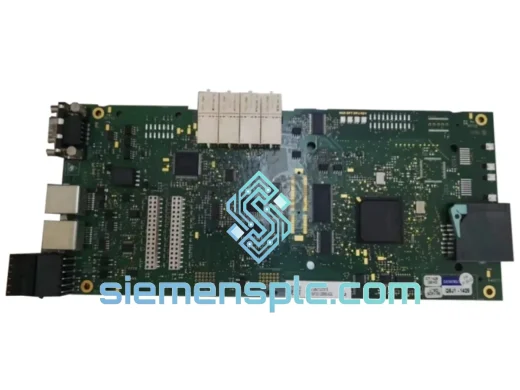
Siemens 6RY1803-0AA05-0AA1 Digital Output Module
SIMOREG
Origin DE
Digital Output Module