Siemens PLC sourcing desk · Multi-brand automation spares [email protected] +86 18359268345
Request Quote
Bently Nevada In Stock OK

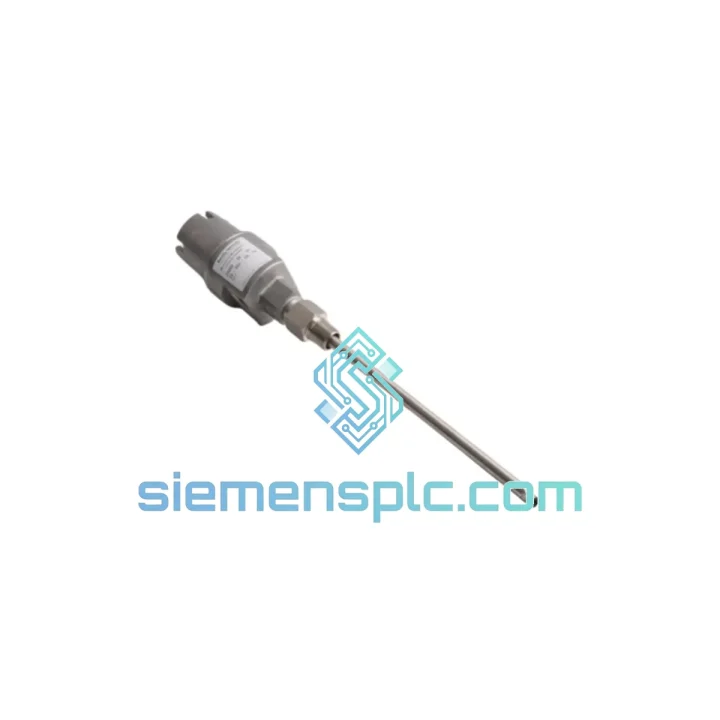
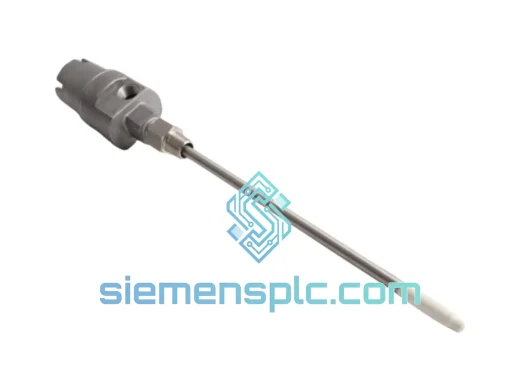
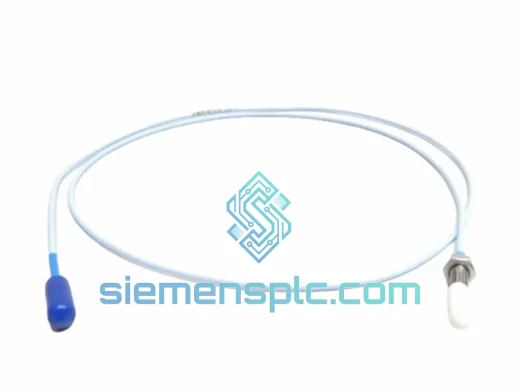
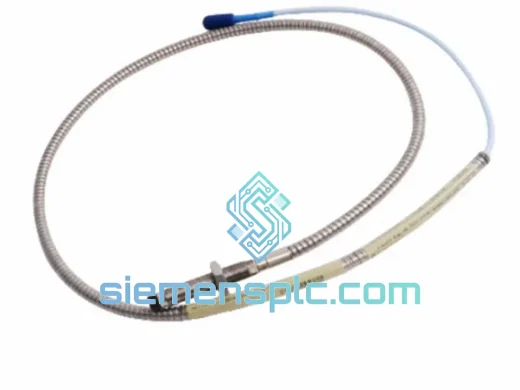
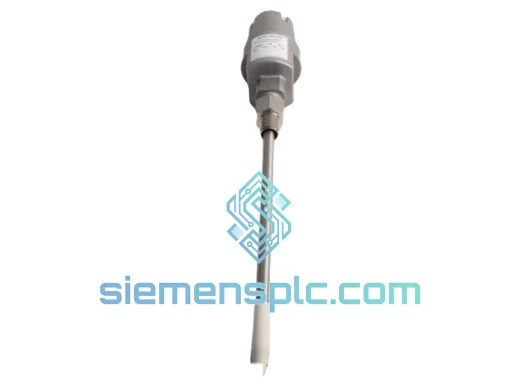
Bently Nevada 21000-16-05-15-084-03-02 Proximity Transducer

Request verified availability, condition, replacement risk review, packing options and courier lead time for 21000-16-05-15-084-03-02.

Exact part21000-16-05-15-084-03-02 RFQ auto-fillPart number attached Export packingDHL / FedEx / UPS Sales replyEmail or WhatsApp
BrandBently Nevada Part Number21000-16-05-15-084-03-02 ConditionAvailability Check Lead TimeRFQ Confirmation DocumentsDatasheet / photos by RFQ ShippingExport packing available
Auto-filled RFQ 21000-16-05-15-084-03-02

Click Request Quote and the part number is inserted into the inquiry form automatically.

Procurement Data

Key Product Information

Core fields for model confirmation and RFQ routing. Detailed product narrative remains below.

Brand
Bently Nevada
Primary Part Number
21000-16-05-15-084-03-02
Product Type
Proximity Transducer
Series / Family
21000 Series
Manufacturer
Bently Nevada (Baker Hughes)
Country of Origin
US
Catalog Category
Sensors & Switches
Compliance
API 670, IEC 61511, ATEX/IECEx compatible
Model confirmed for inquiry 21000-16-05-15-084-03-02 Send quantity, destination and urgency. The RFQ form keeps this part number attached.
Request Quote
Product Overview

21000-16-05-15-084-03-02 — Your Turbine Is Down. Every Hour Costs You. We Ship Today.

A proximity channel goes Not OK at 02:30. The 3500 rack trips the unit. Your machinery protection system has done its job — now yours begins. The question isn’t whether you need a replacement Bently Nevada 21000-16-05-15-084-03-02. The question is whether you can get one before the next shift meeting turns into a boardroom conversation about production losses.

We stock this exact part number in Xiamen. Not a substitute. Not a compatible alternative. The 21000-16-05-15-084-03-02: 16 mm probe, 5 m integral cable, 15 m extension, stainless armor (-03), 084 connector series, standard mounting thread (-02). Inspected, bias-verified, ESD-packed, and ready to move on the same day you confirm the order.

URGENT REQUIREMENT? Contact: [email protected] | WhatsApp: +86 18359268345

Quick Technical Datasheet

Parameter Specification
Part Number 21000-16-05-15-084-03-02
Stock Status ✔ Ready to Ship — Xiamen Warehouse
Manufacturer Bently Nevada (Baker Hughes)
Series 21000 Proximity Transducer System
Probe Tip Diameter 16 mm
Integral Cable Length 5 m
Extension Cable Length 15 m
Cable Armor Stainless Steel (suffix -03)
Connector Series 084
Mounting Configuration Suffix -02 (standard thread)
Compatible Monitor Bently Nevada 3500 / 3300 XL Series
Output Bias Voltage −24 VDC nominal; linear range −2 to −18 VDC
Sensitivity 7.87 V/mm (200 mV/mil)
Frequency Response DC to 10,000 Hz
Linear Measurement Range 0.25 mm – 2.25 mm (10 – 90 mil)
Target Material (Nominal) AISI 4140 Steel
Probe Operating Temperature −35°C to +177°C
Driver Operating Temperature −35°C to +66°C
Compliance API 670, IEC 61511, ATEX/IECEx compatible
Weight (System) 1,380 g
Country of Origin United States

Troubleshooting & Replacement Tips

Most field teams lose time not on sourcing the part, but on the swap itself. Here is what repeated proximity transducer replacements across gas turbine trains, centrifugal compressors, and steam turbine bearing pedestals actually looks like when you strip away the manual language.

Reading the Fault Before You Touch Anything

  • OK LED extinguished, Not OK relay energized: Measure DC bias at the Proximitor® output terminal. Normal operating range is −10 VDC to −18 VDC at running gap. A reading near 0 V indicates an open circuit — broken probe tip, severed cable, or failed connector. A reading at the −24 V rail indicates a short. Swap the probe assembly first; condemn the Proximitor® only after confirming the new probe still fails.
  • OK/Not OK cycling intermittently: The connector junction between the integral cable and extension cable is the first place to look. Stainless armored cable is mechanically stiff. Repeated thermal cycling and vibration fatigue the internal conductors at the connector boot — the armor holds the cable rigid while the wire inside works itself to failure. Wiggle the connector under power and watch the bias voltage on a meter. If it drops or spikes, you have found your fault.
  • Correct gap voltage, elevated vibration reading at rest: Shield integrity failure. A broken or floating shield on the extension cable couples 50/60 Hz power-frequency noise directly into the signal. The 3500 rack interprets this as shaft motion. Verify shield continuity from probe body to Proximitor® chassis ground with the system powered down.
  • Gap voltage correct, sensitivity out of tolerance after shaft replacement: Target material correction required. If the journal was replaced with a different steel grade, the eddy-current response curve shifts. Apply the Target Material Correction Factor (TMCF) procedure per Bently Nevada document 141536-01 before declaring the probe defective.

Replacement Procedure — Field-Verified Sequence

  1. Inhibit the channel at the 3500 rack before disconnecting any cable. Use the front-panel keyswitch or software inhibit via System 1 / Orbit. Skipping this step on a running machine will generate a spurious trip — and explaining that to operations is a conversation nobody wants.
  2. Record the existing bias voltage at the Proximitor® output before removing the probe. This is your gap reference for the new installation. Write it down. Do not rely on memory during a midnight outage.
  3. Remove the probe with the correct spanner on the probe body — never grip the cable armor. The armor is structural, not a handle. Thread the replacement 21000-16-05-15-084-03-02 in by hand for the first three turns to confirm thread engagement before applying torque. Torque to OEM specification (typically 20–25 N·m; verify against the bracket material and thread insert type on your specific installation).
  4. Set the gap by monitoring Proximitor® output in real time. Adjust probe depth until bias voltage matches your recorded baseline ±0.5 VDC. For most journal bearing applications this corresponds to a physical gap of 1.0–1.5 mm.
  5. Route the extension cable with attention to minimum bend radius — 50 mm for the -03 armored variant. Secure with stainless clamps at 300 mm intervals. Keep the cable away from high-voltage power conductors; parallel routing over more than 1 m will induce noise regardless of shield integrity.
  6. Remove the inhibit, confirm OK status, and verify the vibration reading is within the historical baseline for that bearing before releasing the unit for restart. A reading that is 20% higher than pre-outage baseline warrants investigation before the machine goes back on load.
  7. Log the replacement in your CMMS with the new probe serial number, installation gap voltage, and date. This record is the foundation for the next planned outage comparison and for any future API 670 audit.

Configuration Notes — No Firmware, No Addressing

  • The 21000 series probe is a passive analog device. There is no firmware to match, no DIP switch to set, and no address to configure on the probe itself. All channel configuration — gap, sensitivity, alert/danger setpoints — is managed at the 3500 rack card level via Rack Configuration Software (RCS).
  • If installing on a 3300 XL system, confirm the Proximitor® model is calibrated for a 16 mm probe. Some 3300 XL Proximitor® units are factory-set for 8 mm probes; the label on the Proximitor® housing specifies the probe diameter. Mixing probe diameter and Proximitor® calibration produces a sensitivity error that will not generate a fault code — it will simply give you wrong vibration numbers.
  • For ATEX Zone 1 installations: the probe is passive and presents no ignition risk. The Proximitor® must be located in a safe area or behind a certified IS barrier. Do not substitute the barrier model without re-certifying the loop — the entity parameters must be re-verified against the new barrier’s output characteristics.

Reliability in Harsh Conditions

The operating environment for this probe is not a control room. It is inside a bearing housing on a machine that runs at 3,000 or 3,600 RPM, generates continuous broadband vibration, cycles between cold ambient and 177°C probe-tip temperature every time the unit starts and stops, and is occasionally subjected to the mechanical impact of maintenance work in confined bearing pedestals.

The stainless steel armor on the -03 suffix cable is the specification detail that matters most in that environment. Standard catalog variants use a polymer-jacketed cable that survives the datasheet conditions but degrades under sustained mechanical abuse. The armor absorbs the micro-vibration that fatigues unprotected cable over 18–24 months of continuous operation. It also provides a degree of crush resistance when cables are routed through tight conduit runs or clamped against structural steel.

The eddy-current measurement principle itself contributes to long-term reliability in a way that contact-based sensors cannot match: there is no wear mechanism at the sensing element. The probe tip does not touch the shaft. Sensitivity does not degrade from shaft rotation. What fails in service is the cable system and the connectors — which is precisely why the -03 armor and the 084 connector series were specified for this configuration rather than the lighter-duty alternatives.

Units dispatched from our Xiamen stock undergo dimensional inspection against OEM drawings, bias voltage and sensitivity verification on calibrated test equipment, connector integrity confirmation, and ESD-safe packaging in foam-lined transit cases with probe tip protection caps fitted. The goal is simple: the part that arrives at your site should be ready to install, not ready for incoming inspection.

Global Express Logistics

Xiamen is one of China’s primary export gateways, with direct access to DHL Express, FedEx International Priority, and UPS Worldwide Express. For urgent replacement orders, the dispatch timeline works as follows:

  • Order confirmed before 14:00 CST: Same-day dispatch. Tracking number issued within 4 hours of payment confirmation.
  • Southeast Asia (Singapore, Malaysia, Thailand, Indonesia, Vietnam): DHL Express, 1–2 business days door-to-door.
  • Middle East (UAE, Saudi Arabia, Qatar, Kuwait, Oman): DHL / FedEx IP, 2–3 business days.
  • Europe (Germany, Netherlands, UK, France, Italy, Norway): FedEx International Priority, 2–4 business days.
  • Americas (USA, Canada, Brazil, Mexico, Colombia): DHL / FedEx, 3–5 business days.
  • Customs documentation: Commercial invoice, packing list, and HS code declaration prepared for every shipment. DDP (Delivered Duty Paid) available for select destinations — confirm at time of order.
  • Export classification: EAR99 — no export license required for standard commercial destinations.

For plant shutdowns where production loss is accumulating by the hour, contact us directly on WhatsApp before placing the online order. We can confirm physical stock, prepare the shipment documentation, and have the package moving before the formal order is processed. Speed is the only metric that matters when your unit is down.

Contact Information

Email: [email protected]
WhatsApp: +86 18359268345
Web: siemensplc.com
© 2026 siemensplc.com. All rights reserved.

Ready to quote

Send This Part Number to Sales

[email protected]
RFQ workflow

Confirmation Process

Quality workflow ->
01Model confirmation

We check the full part number, brand, series and visible nameplate information before quotation.

02Availability reply

Sales confirms stock path, condition option, quantity and realistic lead time for export dispatch.

03Packing & courier

DHL, FedEx, UPS or buyer courier arrangements can be reviewed with packing requirements.