Bently Nevada
RFQ Ready
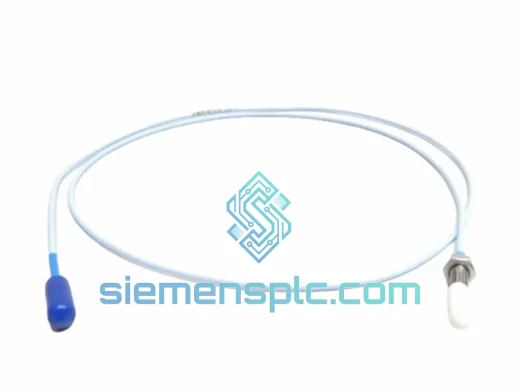
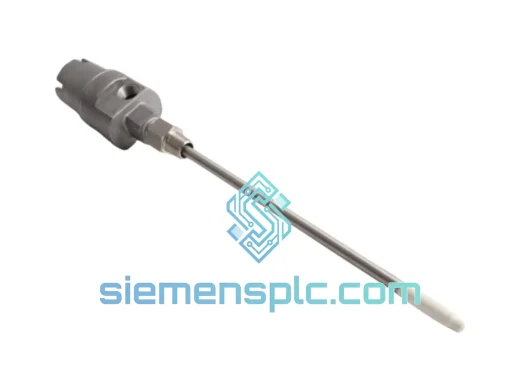
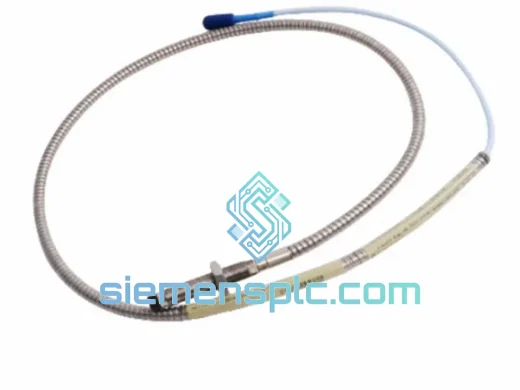
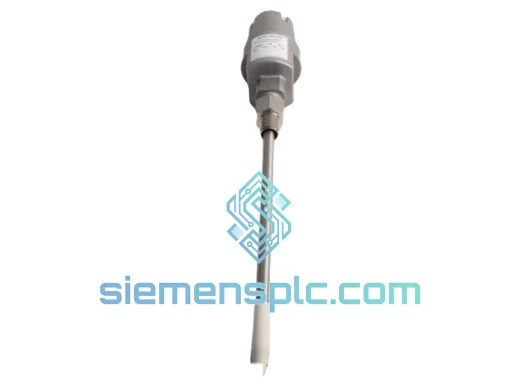
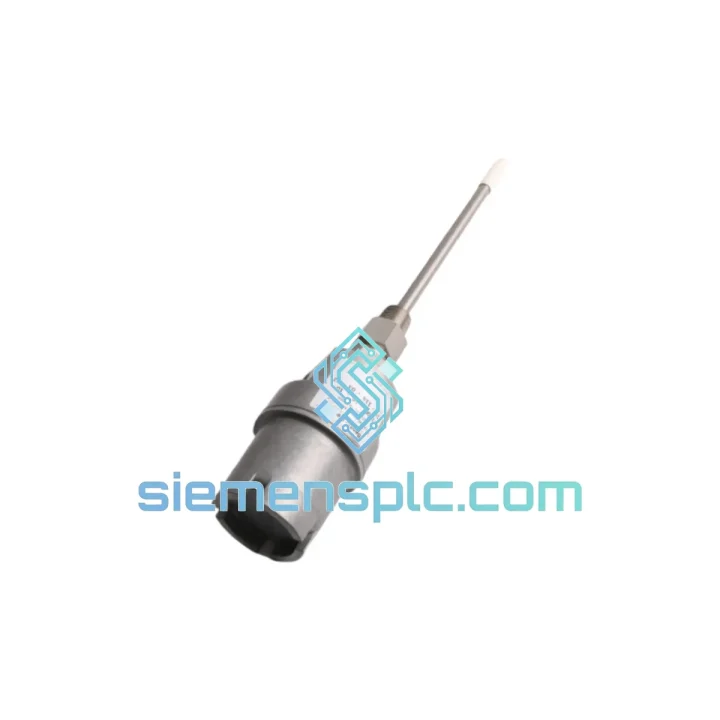
Bently Nevada 21000-34-10-00-085-04-02 Proximity Probe Housing Assembly
21000 Series
Origin US
Proximity Probe Housing Assembly
Request verified availability, condition, replacement risk review, packing options and courier lead time for 21000-28-05-00-105-04-026.
Click Request Quote and the part number is inserted into the inquiry form automatically.
Core fields for model confirmation and RFQ routing. Detailed product narrative remains below.
The Bently Nevada 21000-28-05-00-105-04-026 is a rack-mounted vibration monitor module within the 21000 Series Machinery Protection System (MPS). Its primary function is continuous, real-time acquisition and processing of shaft radial vibration signals sourced from eddy-current proximity probes, converting raw transducer output into calibrated displacement values that feed both alarm/trip logic and condition monitoring software. In rotating machinery protection architectures — where a bearing failure on a 40 MW steam turbine or a high-speed centrifugal compressor can result in catastrophic mechanical damage within seconds — this module occupies the critical signal-processing layer between the field sensor and the safety-rated trip relay.
Unlike general-purpose I/O modules, the 21000-28-05-00-105-04-026 is purpose-engineered for the deterministic, low-latency demands of API 670-compliant protection loops. Its internal signal chain is optimized for the 200 mV/mil (7.87 V/mm) sensitivity characteristic of Bently Nevada proximity transducer systems, maintaining measurement accuracy across the full operating temperature range without external signal conditioning hardware.
Real-time Stock & RFQ: [email protected] | WhatsApp: +86 18359268345
| Parameter | Value / Specification |
|---|---|
| Part Number | 21000-28-05-00-105-04-026 |
| Series | Bently Nevada 21000 Machinery Protection System |
| Module Function | Shaft Radial Vibration Monitor / Proximity Transducer Interface |
| Manufacturer | Bently Nevada (Baker Hughes) |
| Transducer Compatibility | Bently Nevada 3300 XL / 7200 Series Proximity Probes (200 mV/mil) |
| Measurement Range | 0–80 mil pp (0–2,032 µm pp) radial displacement |
| Frequency Response | DC to ≥10 kHz (flat within ±3 dB) |
| Alert / Danger Setpoints | Independently configurable via front-panel or System 1 software |
| Output Signal | 4–20 mA analog retransmission; relay contact outputs (SPDT) |
| Power Supply | 24 VDC nominal (18–32 VDC operating range) from 21000 rack backplane |
| Power Consumption | ≤4 W per module slot |
| Operating Temperature | –20 °C to +65 °C |
| Storage Temperature | –40 °C to +85 °C |
| Relative Humidity | 5–95% RH, non-condensing |
| EMC Compliance | IEC 61000-4 series (ESD, EFT, surge, conducted/radiated immunity) |
| Safety Standard | API 670 (5th Edition); IEC 61511 SIL-capable loop |
| Chassis Compatibility | 21000 Series rack only (not interchangeable with 3500 Series) |
| Communication Interface | Bently Nevada System 1 software integration via rack gateway |
| Weight | Approx. 1,400 g |
| Country of Origin | United States |
| Warranty | 12 months from date of shipment |
The 21000-28-05-00-105-04-026 implements a three-stage signal processing architecture that distinguishes it from generic vibration transmitters used in condition monitoring-only applications.
Stage 1 — Transducer Drive & Signal Buffering: The module supplies the –24 VDC bias voltage required to drive Bently Nevada eddy-current proximity probes. An internal buffer amplifier with high input impedance (>1 MΩ) isolates the probe cable from downstream processing, preventing cable capacitance from attenuating high-frequency vibration components. This is particularly significant in installations where probe cable runs exceed 9 m (30 ft), where uncompensated capacitive loading would roll off the frequency response below the 10 kHz threshold required for detecting sub-synchronous instabilities in fluid-film bearings.
Stage 2 — Band-Selective Filtering & Peak Detection: The conditioned signal passes through selectable band-pass filters that isolate the 1× (synchronous), 2×, and broadband vibration components. The peak-to-peak detector circuit operates on a true analog hold architecture rather than a sampled-data approximation, ensuring that transient spike events — such as a rub event lasting fewer than two shaft revolutions — are captured and held long enough to trigger the alarm comparator. This hardware-level peak detection eliminates the missed-event risk inherent in software-polled architectures where scan cycle time may exceed the duration of a transient fault.
Stage 3 — Alarm/Trip Comparator with Voting Logic: Alert and Danger setpoints are implemented in dedicated hardware comparators, not firmware routines. This means the trip response time is independent of any software scan cycle or communication bus latency. The module supports 1-out-of-1 (1oo1) and, when paired with a redundant channel, 2-out-of-2 (2oo2) voting configurations. The relay output de-energizes on trip (fail-safe architecture), so a loss of module power or internal fault drives the relay to the protective state — a fundamental requirement of API 670 Section 5.3.
EMC Design: The module PCB employs a multi-layer ground plane with isolated analog and digital power domains. Opto-isolation is applied at the relay output stage to prevent ground loop currents from the field wiring from coupling into the measurement circuit. The front-panel connector uses shielded, impedance-controlled traces to the transducer input, and the module housing provides continuous 360° RF shielding when seated in the 21000 rack — a design that achieves IEC 61000-4-3 radiated immunity at 10 V/m across 80 MHz–1 GHz without external filtering.
Every Bently Nevada 21000-28-05-00-105-04-026 unit supplied by siemensplc.com is sourced through verified industrial supply channels and subjected to a structured incoming inspection protocol before dispatch:
Email: [email protected]
WhatsApp: +86 18359268345
Web: siemensplc.com
Location: Xiamen, China
© 2026 siemensplc.com. All rights reserved.
We check the full part number, brand, series and visible nameplate information before quotation.
Sales confirms stock path, condition option, quantity and realistic lead time for export dispatch.
DHL, FedEx, UPS or buyer courier arrangements can be reviewed with packing requirements.
Similar brand or category products for fast comparison and multi-item RFQ lists.