Honeywell
RFQ Ready
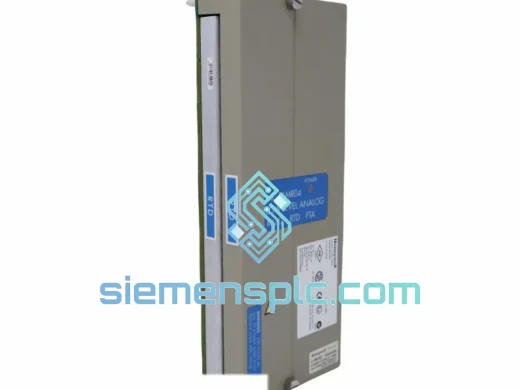
Honeywell DC-TAIX01 Analog Input Module
TDC 3000
Origin US
DCS Analog Input Module
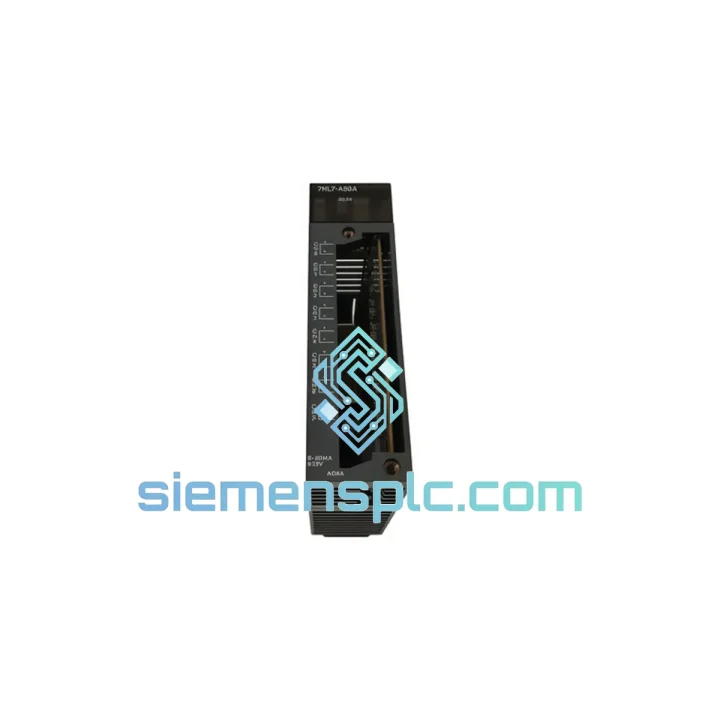
Request verified availability, condition, replacement risk review, packing options and courier lead time for 2MLF-AD8A.
Click Request Quote and the part number is inserted into the inquiry form automatically.
Core fields for model confirmation and RFQ routing. Detailed product narrative remains below.
The Honeywell 2MLF-AD8A is an 8-channel analog input (AI) module designed for deployment within Honeywell’s TDC 3000 and PlantScape distributed control system platforms. Its primary function is the acquisition, conditioning, and digitization of field-level process signals — converting 4–20 mA current loops or 1–5 V voltage signals into engineering-unit values that the process controller can act upon within a deterministic scan cycle. In process industries where analog measurement accuracy directly governs product quality, safety interlock response, and regulatory compliance, the signal integrity characteristics of this module carry operational weight that extends well beyond its physical footprint.
Within the TDC 3000 backplane architecture, the 2MLF-AD8A occupies a standard I/O slot and communicates with the High-Performance Process Manager (HPPM) or compatible controller via the Local Control Network (LCN) or Universal Control Network (UCN) bus. The module’s 8-channel density allows a single slot to service an entire instrument loop cluster — a practical advantage in high-density marshalling cabinets where rack space is a constrained resource. Each channel operates independently, meaning a fault condition or signal anomaly on one channel does not propagate to adjacent channels, preserving measurement continuity across the remaining seven inputs.
The analog front-end employs a 12-bit successive-approximation analog-to-digital converter (ADC), delivering a resolution of 1-in-4096 across the configured input span. For a 4–20 mA loop calibrated to a 0–100 bar pressure transmitter, this translates to a theoretical resolution of approximately 0.024 bar per count — sufficient for the majority of process variable monitoring applications in refining, chemical, and power generation environments. Signal conditioning circuitry upstream of the ADC includes input filtering to attenuate high-frequency noise components that are common in electrically noisy field environments, such as those adjacent to variable-frequency drives (VFDs) or high-current motor starters.
Channel-to-channel and channel-to-bus isolation is implemented at the hardware level. Optical isolation barriers between the field-side input circuitry and the backplane-side logic prevent ground potential differences — which can reach tens of volts in large industrial facilities with distributed earthing — from introducing common-mode errors or damaging the module’s input stage. This isolation architecture also provides a defined withstand voltage between field wiring and the control system bus, a requirement explicitly addressed in IEC 61511 functional safety assessments for SIL-rated loops.
The module supports hot-swap insertion and removal within a powered TDC 3000 chassis, provided the system software is configured to handle the I/O point transition. This capability is operationally significant in continuous-process facilities — refineries, ethylene crackers, LNG terminals — where planned shutdowns for module replacement are scheduled months in advance and unplanned outages carry measurable financial consequences. The ability to replace a suspect module during a brief process hold, rather than a full unit shutdown, directly reduces mean time to repair (MTTR) for I/O-related faults.
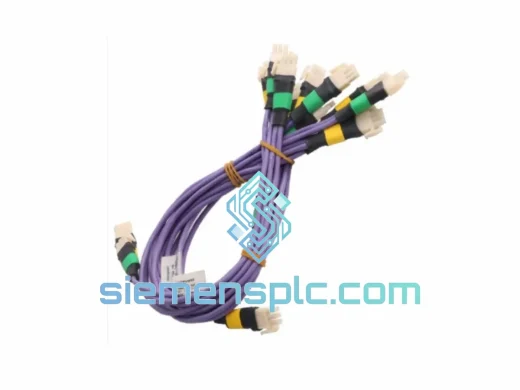
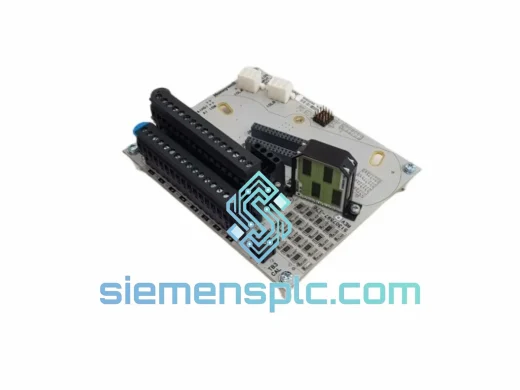
Field wiring connects to the module via a compatible Field Termination Assembly (FTA), which provides the physical terminal blocks and marshalling interface. The FTA-to-module connection uses a standardized ribbon or direct-mate connector, ensuring that field wiring remains undisturbed during module swap — a design choice that eliminates re-termination errors as a failure mode during maintenance activities.
Real-time Stock & RFQ: [email protected] | WhatsApp: +86 18359268345
| Part Number / SKU | 2MLF-AD8A |
| Manufacturer | Honeywell Process Solutions |
| Compatible Platform | TDC 3000, PlantScape DCS |
| Module Function | Analog Input (AI) |
| Number of Channels | 8 (independent) |
| Input Signal Types | 4–20 mA (current loop), 1–5 V (voltage) |
| ADC Resolution | 12-bit (1:4096) |
| Isolation | Channel-to-channel; channel-to-backplane bus (optical) |
| Communication Interface | TDC 3000 backplane (LCN / UCN compatible) |
| Hot-Swap Support | Yes (within powered chassis) |
| Field Wiring Interface | Via compatible Honeywell FTA (Field Termination Assembly) |
| Module Weight | 140 g |
| Country of Origin | United States |
| Condition Available | New / Tested Surplus (specify at inquiry) |
| Warranty | 12 months from date of shipment |
ADC Architecture and Scan Latency. The 12-bit successive-approximation ADC used in the 2MLF-AD8A completes a conversion cycle in microseconds, but the effective update rate presented to the controller is governed by the module’s internal multiplexer scan sequence across all 8 channels. The multiplexer cycles through each channel sequentially, applying the ADC to one channel at a time. The aggregate scan period — the time between successive updates of the same channel — is therefore a function of the per-channel conversion time multiplied by the number of active channels. In a fully populated 8-channel configuration, this scan latency must be accounted for in control loop tuning, particularly for fast-responding process variables such as pressure or flow where derivative action is employed.
EMC Design and Input Filtering. The analog front-end incorporates RC low-pass filtering on each input to attenuate electromagnetic interference (EMI) conducted along field cable runs. The filter cutoff frequency is selected to pass the DC and low-frequency AC components of the process signal while rejecting high-frequency noise from VFDs, relay switching transients, and radio-frequency sources. In installations where field cables run parallel to power conductors in shared cable trays — a common compromise in brownfield facilities — this hardware filtering provides a first line of defense against noise-induced measurement errors that would otherwise manifest as process variable instability or spurious alarm activations.
Optical Isolation Barrier. The galvanic isolation between field-side and logic-side circuitry is implemented using optocouplers rated for a defined isolation voltage. This barrier serves two functions: it prevents ground loop currents — driven by potential differences between field instrument earth references and the control room earth — from flowing through the measurement circuit and introducing offset errors; and it limits the fault energy that can propagate from a field wiring fault (short to high voltage, lightning-induced surge) into the backplane bus, protecting adjacent modules and the controller itself.
Backplane Bus Protocol Compliance. The module’s backplane interface is designed to the TDC 3000 I/O bus specification, which defines the electrical signaling levels, timing margins, and data framing required for reliable communication with the HPPM controller. The module presents its digitized channel data to the controller on demand within the controller’s configured I/O scan period. Any deviation from the expected response — due to module fault, power loss, or communication error — is flagged as a bad-quality indicator on the associated process variable tag, enabling the control strategy to execute configured fallback logic rather than acting on a stale or invalid measurement.
Every Honeywell 2MLF-AD8A unit dispatched from our Xiamen, China facility is sourced through verified supply channels and subjected to a documented pre-shipment inspection covering part number label integrity, connector condition, and physical examination for signs of counterfeit manufacture or unauthorized repair. Units offered as tested surplus are powered and verified against published I/O specifications prior to listing. A 12-month warranty from the date of shipment covers manufacturing defects and functional failures under normal operating conditions.
Shipments originate from Xiamen, China, with access to major international express carriers (DHL, FedEx, UPS) and sea-freight consolidation services for volume orders. Anti-static ESD-safe packaging with foam cushioning is standard for all module shipments. Export documentation — including commercial invoice, packing list, and certificate of origin — is prepared in compliance with destination country import requirements. Typical express transit times: 3–5 business days to Southeast Asia and the Middle East; 5–7 business days to Europe and North America. In-stock units ship within 1–2 business days of order confirmation.
Email: [email protected]
WhatsApp: +86 18359268345
Web: siemensplc.com
Location: Xiamen, China
© 2026 siemensplc.com. All rights reserved.
We check the full part number, brand, series and visible nameplate information before quotation.
Sales confirms stock path, condition option, quantity and realistic lead time for export dispatch.
DHL, FedEx, UPS or buyer courier arrangements can be reviewed with packing requirements.
Similar brand or category products for fast comparison and multi-item RFQ lists.