Honeywell
RFQ Ready
Honeywell DC-TAIX01 Analog Input Module
TDC 3000
Origin US
DCS Analog Input Module
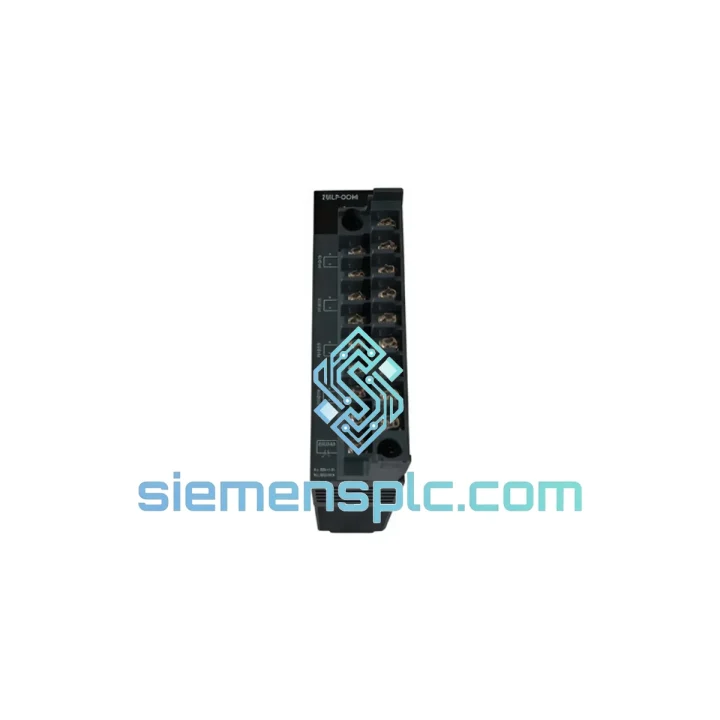
Request verified availability, condition, replacement risk review, packing options and courier lead time for 2MLF-DC4S.
Click Request Quote and the part number is inserted into the inquiry form automatically.
Core fields for model confirmation and RFQ routing. Detailed product narrative remains below.
The Honeywell 2MLF-DC4S is a four-channel analog output module designed for deployment within the Honeywell TDC 3000 and TotalPlant Solution (TPS) distributed control system architecture. In continuous process industries — petroleum refining, petrochemical production, power generation, and pharmaceutical manufacturing — the analog output stage is the terminal point of every closed-loop control calculation. The 2MLF-DC4S occupies that position with a 12-bit digital-to-analog conversion path, per-channel galvanic isolation, and a backplane interface that communicates directly with the TDC 3000 Local Control Network (LCN) or the TPS High-Performance Process Manager (HPPM). Each of its four output channels independently drives a 4–20 mA current loop to field actuators: control valves, I/P transducers, variable-frequency drives, and smart positioners. The module draws operating power exclusively from the DCS backplane, eliminating the need for external power supply wiring and reducing panel footprint.
From a control-loop perspective, the 2MLF-DC4S sits at the boundary between the digital domain of the controller and the analog domain of the field device. The controller resolves a PID output value — expressed as a percentage of full scale — and transmits it across the backplane data bus to the module’s onboard processor. The processor maps that percentage to a 12-bit integer (0–4095), feeds it to the DAC, and the DAC produces a proportional current between 4.00 mA (0%) and 20.00 mA (100%). At 12-bit resolution, the minimum addressable step is approximately 3.9 µA, which translates to a valve position resolution of roughly 0.024% of stroke — sufficient for tight composition and pressure control loops where coarse stepping would introduce limit cycling.
The module’s channel-to-channel and channel-to-backplane isolation architecture prevents ground potential differences between field devices from propagating into the DCS backplane. In large process plants, field wiring runs can span hundreds of meters across electrically noisy environments — motor control centers, high-voltage switchgear, and variable-frequency drives all generate conducted and radiated interference. Without isolation, a ground loop between two field devices sharing a common return path can inject milliamp-level error currents into the output signal, causing the actuator to deviate from setpoint. The 2MLF-DC4S eliminates this failure mode by providing each channel with its own isolated current source, referenced independently from the backplane ground plane.
Real-time Stock & RFQ: [email protected] | WhatsApp: +86 18359268345
| Parameter | Specification |
|---|---|
| Part Number / SKU | 2MLF-DC4S |
| Manufacturer | Honeywell Process Solutions |
| Compatible Platform | TDC 3000 / TotalPlant Solution (TPS) |
| Module Function | Analog Output (AO) |
| Number of Channels | 4 (independent) |
| Output Signal Range | 4–20 mA current loop |
| DAC Resolution | 12-bit (1-in-4096 steps) |
| Minimum Current Step | ≈ 3.9 µA |
| Maximum Loop Load | 750 Ω (typical, per Honeywell TDC 3000 I/O spec) |
| Channel Isolation | Channel-to-channel and channel-to-backplane galvanic isolation |
| Power Source | DCS backplane (no external PSU required) |
| Operating Temperature | 0 °C to +60 °C |
| Storage Temperature | −40 °C to +85 °C |
| Relative Humidity | 5% to 95% RH, non-condensing |
| Mounting Interface | Card-slot insertion into TDC 3000 / TPS I/O carrier |
| Backplane Protocol | TDC 3000 LCN / TPS HPPM data bus |
| Approvals | CE, UL (per original Honeywell certification) |
| Module Weight | Approx. 150 g |
| Form Factor | Standard Honeywell I/O card |
| Warranty | 12 months against manufacturing defects |
The 2MLF-DC4S implements a distributed DAC topology rather than a single shared converter with multiplexed outputs. Each channel maintains its own conversion path, which means a fault or calibration drift on one channel does not affect the output accuracy of the remaining three. This architectural choice is deliberate: in a process plant running four independent control loops through a single module — for example, four feed-forward trim signals on a distillation column — cross-channel interference would introduce correlated errors that are difficult to diagnose and impossible to compensate at the controller level.
The EMC design of the module addresses two distinct threat vectors. The first is conducted interference arriving via the 4–20 mA field wiring. The isolated current source topology means the output transistor’s collector is referenced to a floating supply rail, not to the DCS backplane ground. Any common-mode voltage imposed on the field loop — whether from capacitive coupling to a nearby power cable or from a ground potential difference between the control room and the field junction box — appears equally on both the source and return conductors and is rejected by the loop’s differential nature. The second threat vector is radiated interference coupling into the module’s internal circuitry. The PCB layout routes the DAC output traces away from the backplane data bus lines, and the analog output stage is physically separated from the digital logic section by a ground plane pour that acts as a Faraday shield within the card.
The backplane communication interface implements a watchdog mechanism: if the module does not receive a valid data frame from the controller within a configurable timeout window, it drives all four outputs to a pre-configured fail-safe value — typically 4 mA (0%), which corresponds to a closed valve or minimum drive signal. This behavior is deterministic and does not depend on the host controller issuing an explicit fail-safe command, which means the field devices reach a safe state even if the controller itself has faulted. The fail-safe value is stored in non-volatile memory on the module and survives power cycling.
Hot-swap compatibility with the TDC 3000 carrier allows the module to be removed and reinserted without de-energizing the backplane. During reinsertion, the module performs a self-test sequence — DAC linearity check, isolation integrity verification, and backplane communication handshake — before asserting its ready status to the controller. The controller withholds output updates until the ready flag is set, preventing a transient output spike from reaching the field device during the initialization window.
Every Honeywell 2MLF-DC4S unit supplied by siemensplc.com is sourced as genuine Honeywell hardware and passes a structured pre-shipment verification protocol before leaving our Xiamen, China facility. Visual inspection covers PCB surface condition, connector pin integrity, label authenticity, and firmware revision marking against Honeywell’s published revision history. Functional bench testing verifies DAC output accuracy at 4 mA, 12 mA, and 20 mA setpoints on all four channels, with measured values recorded in the inspection report that accompanies each shipment. Isolation integrity is verified with a 500 VDC hipot test between channel output terminals and the backplane connector ground pins.
Modules are packed in anti-static bags with desiccant, placed in foam-lined inner cartons, and shipped in double-wall corrugated outer cartons rated for international air freight handling. We ship via DHL Express, FedEx International Priority, and UPS Worldwide Expedited from Xiamen Gaoqi International Airport (XMN), with typical transit times of 3–5 business days to Europe, 4–6 business days to North America, and 2–3 business days to Southeast Asia. A 12-month warranty against manufacturing defects is provided on all units. Warranty claims are processed within 5 business days of receipt of the returned module, with replacement units dispatched from stock where available.
Email: [email protected]
WhatsApp: +86 18359268345
Web: siemensplc.com
Location: Xiamen, China
© 2026 siemensplc.com. All rights reserved.
We check the full part number, brand, series and visible nameplate information before quotation.
Sales confirms stock path, condition option, quantity and realistic lead time for export dispatch.
DHL, FedEx, UPS or buyer courier arrangements can be reviewed with packing requirements.
Similar brand or category products for fast comparison and multi-item RFQ lists.