Bently Nevada
RFQ Ready
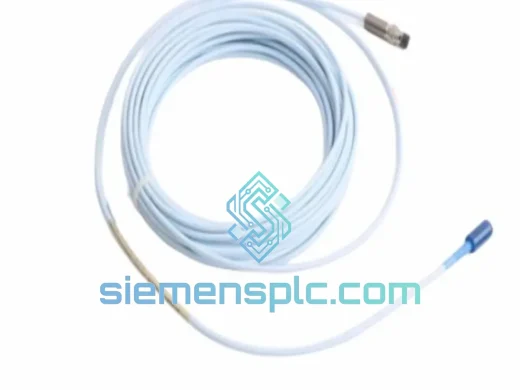
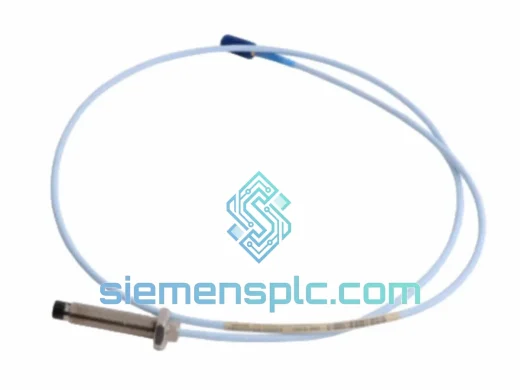
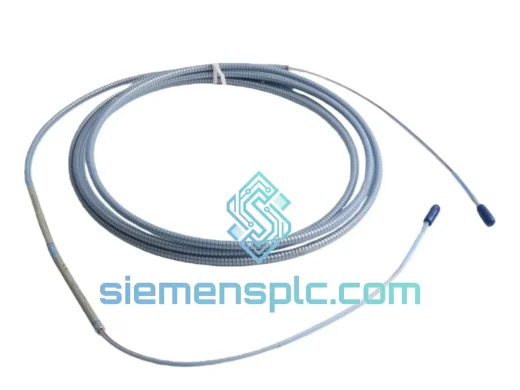
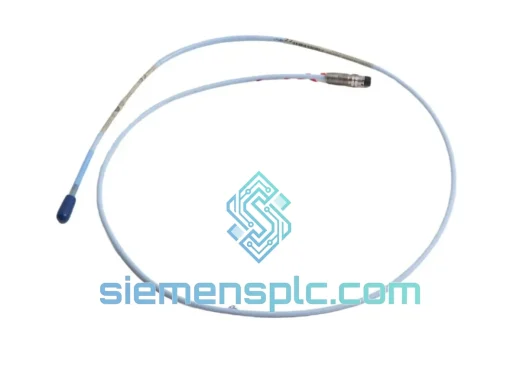
Bently Nevada 330196-05-30-10-00 Proximity Probe – 3300 XL ETR
3301
Origin US
Proximity Probe
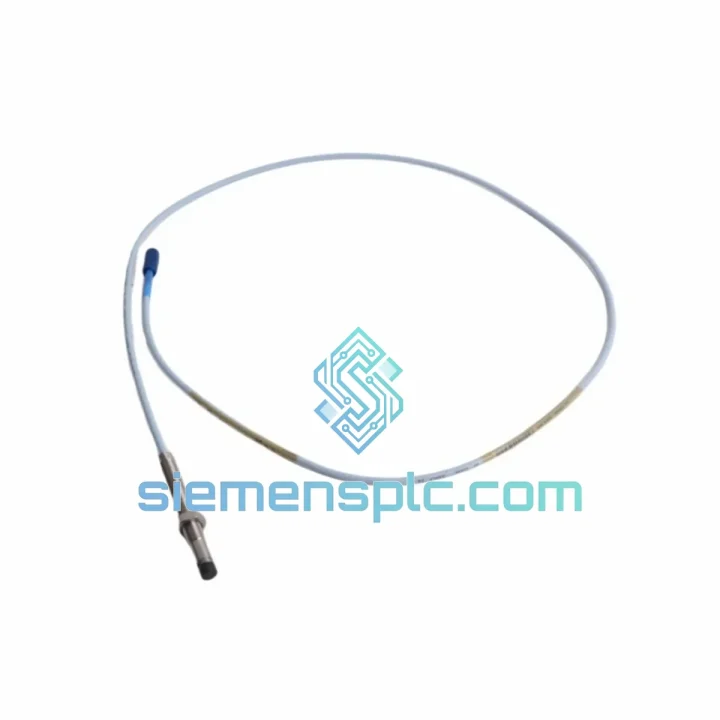
Request verified availability, condition, replacement risk review, packing options and courier lead time for 330101-00-20-20-02-05.
Click Request Quote and the part number is inserted into the inquiry form automatically.
Core fields for model confirmation and RFQ routing. Detailed product narrative remains below.
The Bently Nevada 330101-00-20-20-02-05 is an 8 mm eddy-current proximity transducer assembly belonging to the 3300 XL platform — a system architecture that has defined the API 670 machinery protection standard for over three decades. This specific part number encodes a complete, factory-matched assembly: an 8 mm probe body with a 2.0 m armored integral cable, paired with a 5.0 m extension cable, designed to interface with the 3300 XL Proximitor driver. The transducer operates on the principle of electromagnetic induction: a high-frequency oscillating magnetic field (typically 1.0–1.5 MHz) is generated at the probe tip coil. When a conductive target — the rotating shaft — enters this field, eddy currents are induced on the shaft surface, loading the oscillator circuit and producing a proportional change in output voltage. This voltage-to-gap relationship is linear across the calibrated range of 0 to 2.0 mm (0 to 80 mil), with a nominal sensitivity of 7.87 V/mm (200 mV/mil).
Unlike piezoelectric accelerometers, which measure vibration velocity or acceleration and require mechanical contact or adhesive mounting, the 330101-00-20-20-02-05 measures absolute shaft displacement relative to the bearing housing — a fundamentally different and more direct measurement of rotor dynamic behavior. This distinction is critical in turbomachinery: a shaft can exhibit dangerous sub-synchronous instability (oil whirl, oil whip) at amplitudes that would not register meaningfully on a casing-mounted accelerometer, yet would be clearly captured by a proximity transducer monitoring the journal orbit inside the bearing clearance.
The 3300 XL system is backward-compatible with legacy 3300 series installations, allowing direct probe replacement without recalibration of the monitoring rack, provided the Proximitor driver is also from the 3300 XL family. This compatibility is maintained through a consistent output scale factor and connector pinout, reducing retrofit engineering costs in brownfield plant upgrades.
Real-time Stock & RFQ: [email protected] | WhatsApp: +86 18359268345
| Parameter | Value |
|---|---|
| Part Number | 330101-00-20-20-02-05 |
| Series | 3300 XL |
| Probe Tip Diameter | 8 mm |
| Integral Cable Length | 2.0 m (armored, integral to probe) |
| Extension Cable Length | 5.0 m (matched, included in assembly) |
| Total System Cable | 7.0 m (probe + extension) |
| Linear Measurement Range | 0 – 2.0 mm (0 – 80 mil) |
| Nominal Sensitivity | 7.87 V/mm (200 mV/mil) |
| Supply Voltage | −24 VDC nominal (−18 to −26 VDC operating range) |
| Output Voltage Range | −1 VDC to −17 VDC (proportional to gap) |
| Frequency Response | DC to 10,000 Hz (−3 dB) |
| Probe Operating Temperature | −35 °C to +177 °C |
| Driver/Proximitor Operating Temp | −35 °C to +85 °C |
| Target Material (Calibrated) | AISI 4140 steel |
| Oscillator Frequency | ~1.0 – 1.5 MHz (internal, fixed) |
| Output Connector | 5-pin MIL-C-5015 (driver output side) |
| Agency Approvals | CE, FM, CSA, ATEX, IECEx |
| Compliance Standard | API 670 (5th Edition), ISO 10816, ISO 20816 |
| Probe Body Weight | ~80 g (probe + integral cable assembly) |
| Warranty | 12 months from date of shipment |
Eddy-Current Sensing Architecture: The probe coil is wound on a ferrite core and encapsulated in a PEEK (polyether ether ketone) tip housing — a material selected for its dielectric stability across the full −35 °C to +177 °C operating envelope and its resistance to hydrocarbon lubricants, steam condensate, and process gases. The coil-to-target gap produces a measurable impedance change in the LC oscillator circuit housed in the Proximitor driver. The driver demodulates this impedance shift into a DC voltage output, maintaining linearity within ±0.5% of full scale across the calibrated gap range.
EMC Design and Shielding: The integral armored cable uses a triaxial construction: the center conductor carries the coil signal, the inner shield is driven at the same potential as the center conductor (guard shield, driven shield topology) to eliminate cable capacitance effects at high frequencies, and the outer shield provides EMC protection against radiated interference from variable-frequency drives, high-voltage bus bars, and RF sources common in industrial environments. This driven-shield architecture maintains the probe’s frequency response to 10,000 Hz without signal attenuation from cable capacitance — a critical requirement when monitoring blade-passing frequencies on high-speed compressors.
Thermal Stability and Gap Drift: The probe body uses a controlled thermal expansion coefficient matched to the stainless steel mounting hardware, minimizing apparent gap drift due to differential thermal expansion between the probe and the bearing housing. At +177 °C continuous operation, the sensitivity deviation remains within the API 670 allowable tolerance of ±1% of nominal scale factor — a specification that eliminates the need for temperature compensation algorithms in the monitoring rack.
Factory System Matching: The probe, extension cable, and Proximitor driver are calibrated as a matched set at the factory. The calibration data is encoded in the part number suffix: the “02” field designates the extension cable length (5.0 m), and the “05” field designates the driver gain setting. Mixing components from different matched sets introduces a systematic sensitivity error that cannot be corrected by rack-level calibration alone. This factory-matching protocol is a deliberate design constraint that ensures measurement traceability from the shaft surface to the monitor output.
Every Bently Nevada 330101-00-20-20-02-05 unit supplied by siemensplc.com is sourced through verified industrial distribution channels and undergoes a structured incoming inspection protocol before dispatch. Physical integrity of the probe tip, armored cable jacket, and MIL-spec connector is verified against the original factory packaging and part number label. Date codes and lot traceability are recorded for each unit. Components are stored in ESD-safe, climate-controlled warehousing in Xiamen, China, maintaining the probe coil assembly within the recommended storage temperature range of −40 °C to +85 °C.
Shipments originate from Xiamen, Fujian Province — a major international logistics hub with direct air freight connections to Singapore, Dubai, Frankfurt, Los Angeles, and Tokyo. Standard export documentation includes a commercial invoice, packing list, and certificate of origin. For critical plant applications, a Certificate of Conformance (CoC) is available upon request. Typical dispatch lead time for in-stock units is 1–3 business days. International express delivery (DHL, FedEx, UPS) to most destinations is achieved within 3–7 business days. All shipments are fully insured and tracked from dispatch to delivery confirmation.
A 12-month warranty covers manufacturing defects under normal operating conditions. Warranty claims are processed with replacement dispatch within 5 business days of defect confirmation, minimizing plant downtime exposure.
Email: [email protected]
WhatsApp: +86 18359268345
Web: siemensplc.com
Location: Xiamen, China
© 2026 siemensplc.com. All rights reserved.
We check the full part number, brand, series and visible nameplate information before quotation.
Sales confirms stock path, condition option, quantity and realistic lead time for export dispatch.
DHL, FedEx, UPS or buyer courier arrangements can be reviewed with packing requirements.
Similar brand or category products for fast comparison and multi-item RFQ lists.