Bently Nevada
RFQ Ready
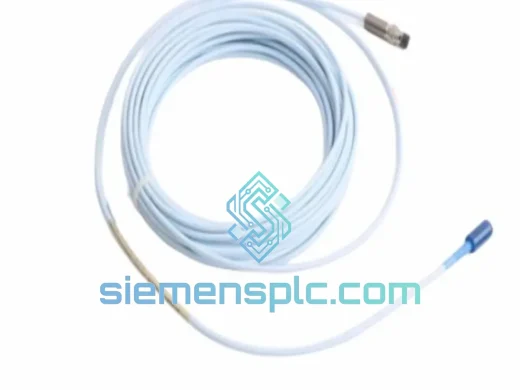
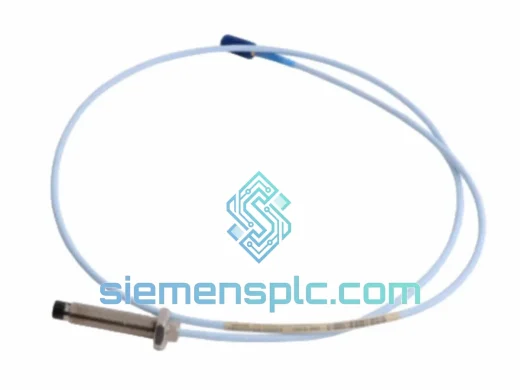
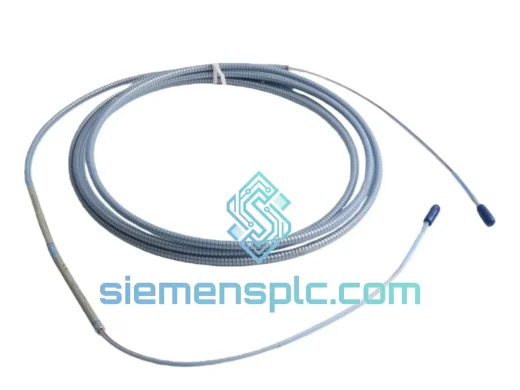
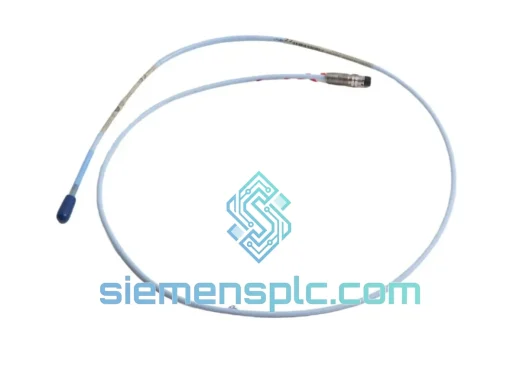
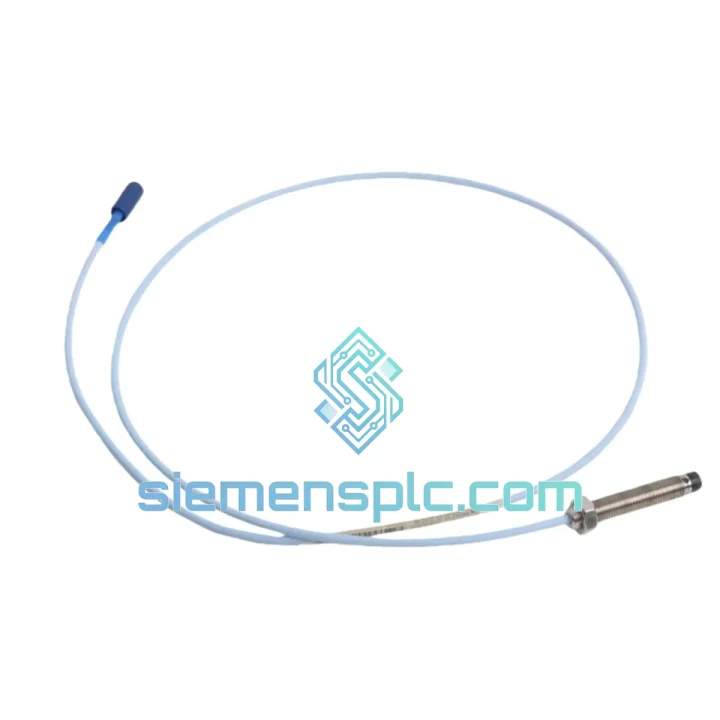
Bently Nevada 330196-05-30-10-00 Proximity Probe – 3300 XL ETR
3301
Origin US
Proximity Probe
Request verified availability, condition, replacement risk review, packing options and courier lead time for 330101-00-20-20-02-CN.
Click Request Quote and the part number is inserted into the inquiry form automatically.
Core fields for model confirmation and RFQ routing. Detailed product narrative remains below.
The 330101-00-20-20-02-CN is an 8mm eddy-current proximity probe manufactured by Bently Nevada as a primary sensing element within the 3300 XL Non-contact Transducer System. Its function in a control loop is unambiguous: it converts the physical gap between probe tip and rotating target into a proportional DC voltage signal, providing the continuous position and vibration data that protection and condition-monitoring systems require to make real-time trip and alarm decisions. Without a calibrated, low-noise signal at this first stage, every downstream calculation — orbit plots, Bode diagrams, shaft centerline trends — carries compounded measurement error. The 330101-00-20-20-02-CN eliminates that risk through a tightly controlled electromagnetic geometry and a factory-matched cable assembly.
The part number suffix encodes the full mechanical configuration: probe tip extension of 200 mil (5.08 mm), integral cable length of 200 inches (5.0 m), standard 2-pin MIL-C-5015 connector, and CN designation indicating a non-ATEX standard approval configuration. This specific combination is the most widely deployed variant in general-purpose petrochemical and power-generation installations where cable routing distances between probe and driver fall within the 5 m integral cable specification.
Real-time Stock & RFQ: [email protected] | WhatsApp: +86 18359268345
| Parameter | Specification |
|---|---|
| Part Number | 330101-00-20-20-02-CN |
| Manufacturer | Bently Nevada (Baker Hughes) |
| Series / Platform | 3300 XL 8mm Non-contact Transducer System |
| Sensing Principle | Eddy-Current (Inductive, Non-Contact) |
| Probe Tip Diameter | 8 mm |
| Nominal Gap Range | 0.25 mm – 2.25 mm (10 – 90 mil) |
| Linear Measurement Range | 2.0 mm (80 mil) |
| Scale Factor (Sensitivity) | 7.87 V/mm ± 0.25% (200 mV/mil) |
| Frequency Response (–3 dB) | DC – 10,000 Hz |
| Integral Cable Length | 5.0 m (200 in), armored, factory-terminated |
| Connector | 2-pin MIL-C-5015, standard |
| Supply Voltage (via Driver) | –24 VDC nominal (from 330180-series driver) |
| Output Signal | DC voltage proportional to gap (processed at driver stage) |
| Operating Temperature | –40 °C to +177 °C (–40 °F to +350 °F) |
| Primary Target Material | AISI 4140 Steel (factory calibration standard) |
| Probe Body Material | 316L Stainless Steel |
| Thread Size | M10 × 1.0 |
| Ingress Protection | IP67 |
| Compatible Driver Module | Bently Nevada 330180-series (3300 XL NSv) |
| Compatible Extension Cable | 330130-series (total system cable length must match driver calibration) |
| Regulatory Approvals | CE; ATEX consult datasheet for zone classification |
| Probe Body Weight | Approx. 50 g |
| Warranty | 12 months from date of shipment |
The 330101-00-20-20-02-CN operates on a resonant eddy-current circuit. The probe tip houses a precision-wound coil driven by a high-frequency oscillator located in the paired 330180-series driver module. When the coil is energized, it projects an alternating electromagnetic field perpendicular to the probe face. As a conductive target enters this field, eddy currents are induced on the target surface, loading the oscillator circuit and reducing its amplitude. The driver’s demodulator stage converts this amplitude change into a DC voltage output with a linear scale factor of 7.87 V/mm — a relationship that holds within ±0.25% across the 2.0 mm linear range when the target is AISI 4140 steel.
EMC Design: The integral armored cable is a critical EMC element, not merely a mechanical convenience. The factory-terminated, shielded construction maintains a controlled characteristic impedance between probe coil and driver oscillator, preventing standing-wave reflections that would introduce gain error at higher vibration frequencies. The 316L stainless steel probe body provides a continuous Faraday shield around the coil assembly, attenuating capacitively coupled interference from adjacent high-voltage cabling common in turbomachinery enclosures. This shielding architecture allows the probe to maintain its DC–10 kHz bandwidth specification in environments with strong variable-frequency drive (VFD) switching noise.
Thermal Stability: The coil winding uses a temperature-compensated formulation that holds scale factor drift to within the published ±0.25% tolerance across the full –40 °C to +177 °C operating envelope. This is achieved through matched thermal expansion coefficients between the coil former, potting compound, and probe body — a design constraint that makes the 330101 series unsuitable for field repair but ensures measurement traceability over the probe’s service life without periodic recalibration.
Target Material Dependency: The eddy-current field penetration depth is a function of target electrical conductivity and magnetic permeability. The factory calibration for AISI 4140 steel establishes the 7.87 V/mm scale factor. Targets with different alloy compositions — Inconel 718, titanium 6Al-4V, or duplex stainless — alter both penetration depth and induced current density, shifting the effective scale factor. For non-standard target materials, a material correction factor must be applied at the driver or monitoring rack level, or a field recalibration performed against a known gap standard.
Integral vs. Extension Cable Architecture: The 200-inch (5.0 m) integral cable in this variant eliminates one connector junction compared to a short-body probe paired with an extension cable. Each connector junction introduces a potential impedance discontinuity and a mechanical failure point in high-vibration environments. For installations where the probe-to-driver distance is ≤5 m, the 330101-00-20-20-02-CN is the lower-risk configuration. For longer distances, the 330130-series extension cable must be added, and the total system cable length must remain within the driver’s calibrated specification to preserve scale factor accuracy.
Every 330101-00-20-20-02-CN unit dispatched from our Xiamen, China facility is sourced through verified industrial distribution channels with full supply-chain traceability to Bently Nevada’s authorized manufacturing and distribution network. Pre-shipment inspection covers physical integrity of the probe body and tip, connector pin condition and seating torque, cable armor continuity, and label authenticity — including manufacturer date codes and serialization. Original OEM packaging, labeling, and documentation are preserved without remarking or repackaging. A Certificate of Conformance (CoC) is available upon request for regulated industries including nuclear, offshore, and pharmaceutical applications.
Logistics from Xiamen operate via DHL Express, FedEx International Priority, and UPS Worldwide Expedited, with typical transit times of 3–5 business days to major industrial hubs in Southeast Asia, the Middle East, and Europe. Export documentation — commercial invoice, packing list, and HS code 9031.80 classification — is prepared in-house and included with every shipment. For time-critical plant shutdowns, same-day dispatch is available for in-stock units when orders are confirmed before 14:00 CST. Volume orders and blanket purchase agreements are accommodated with scheduled release shipments to minimize buyer inventory carrying costs.
Email: [email protected]
WhatsApp: +86 18359268345
Web: siemensplc.com
Location: Xiamen, China
© 2026 siemensplc.com. All rights reserved.
We check the full part number, brand, series and visible nameplate information before quotation.
Sales confirms stock path, condition option, quantity and realistic lead time for export dispatch.
DHL, FedEx, UPS or buyer courier arrangements can be reviewed with packing requirements.
Similar brand or category products for fast comparison and multi-item RFQ lists.