Bently Nevada
RFQ Ready
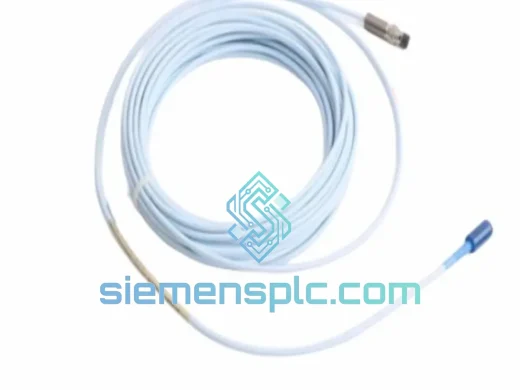
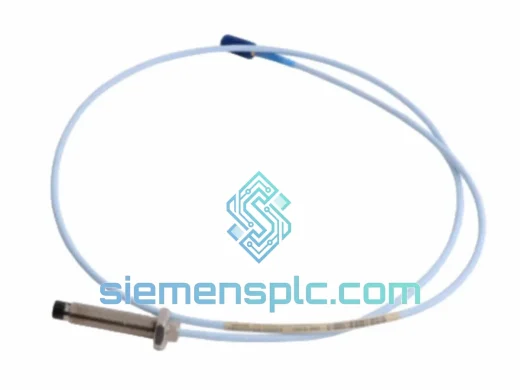
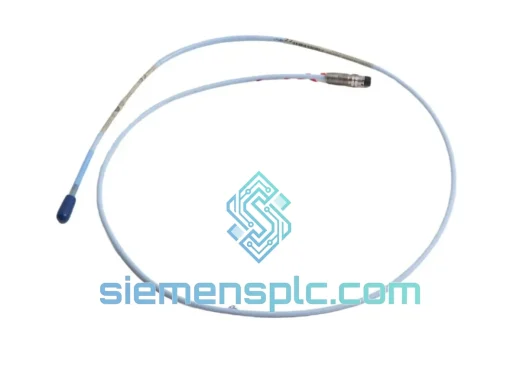
Bently Nevada 330196-05-30-10-00 Proximity Probe – 3300 XL ETR
3301
Origin US
Proximity Probe
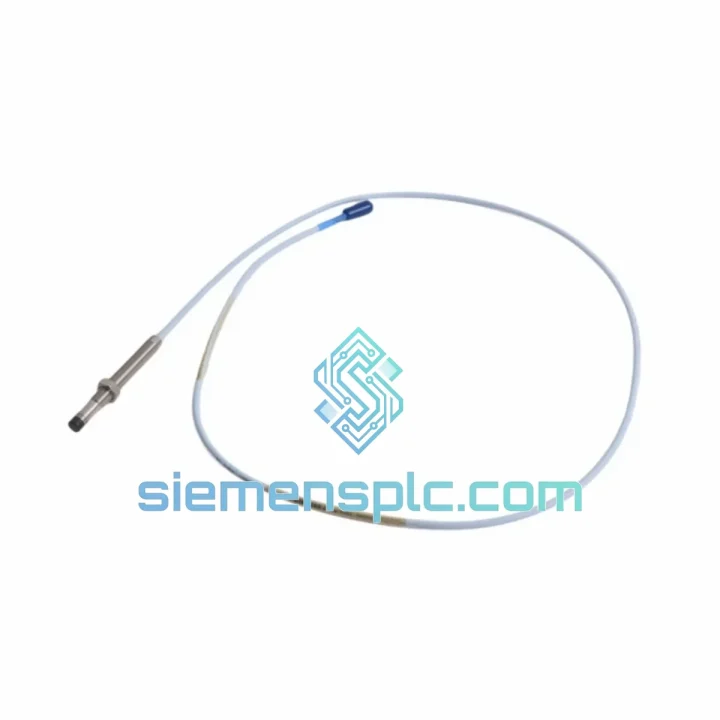
Request verified availability, condition, replacement risk review, packing options and courier lead time for 330101-00-67-20-02-05.
Click Request Quote and the part number is inserted into the inquiry form automatically.
Core fields for model confirmation and RFQ routing. Detailed product narrative remains below.
A tripped vibration loop on a critical compressor or steam turbine is not a maintenance event — it is a production emergency. When the 3300 XL monitor rack goes NOT OK and operations locks out the machine, the clock starts running: lost throughput, emergency crew overtime, potential contractual penalties. The fastest variable you can control is parts lead time. The Bently Nevada 330101-00-67-20-02-05 — an 8 mm eddy-current proximity probe from the field-proven 3300 XL Series — is physically on our shelf in Xiamen, cleared for same-day dispatch. No OEM backorder queue. No broker markup. Verified original hardware, shipped direct to your site.
We have supplied this exact part number to petrochemical plants, LNG terminals, power generation facilities, and offshore platforms across Southeast Asia, the Middle East, and Europe. When the plant manager is standing behind you asking for an ETA, this is the call you make.
URGENT REQUIREMENT? Contact: [email protected] | WhatsApp: +86 18359268345
| Part Number | 330101-00-67-20-02-05 ✔ Ready to Ship |
| Brand | Bently Nevada (Baker Hughes) |
| Series | 3300 XL |
| Sensing Technology | Eddy-current, non-contact |
| Probe Tip Diameter | 8 mm |
| Integral Cable Length | 2.0 m (system cable 7.0 m with 330130-045-00-00 extension) |
| Scale Factor | 7.87 V/mm (200 mV/mil) — AISI 4140 reference target |
| Linear Measurement Range | 0.25 mm – 2.25 mm (10 – 90 mil) |
| Frequency Response | DC to 10,000 Hz (–3 dB) |
| Operating Temperature (Probe Tip) | –35 °C to +177 °C |
| Supply Voltage | –24 VDC via 3300 XL Proximitor® driver |
| Output Voltage Range | –2 VDC to –18 VDC (DC-coupled) |
| Ingress Protection | IP67 (probe body) |
| Hazardous Area Certification | ATEX / IECEx / FM — Zone 1 / Division 1 |
| Standards Compliance | API 670 (5th Edition), CE, RoHS |
| Compatible Proximitor® Driver | 330180-X1-05 (8 mm, 3300 XL) |
| Weight | ~200 g |
| Origin | United States |
| Stock Status | ✔ In Stock — Dispatches within 24 hours |
Ten years of field work on rotating machinery teaches you that most 3300 XL probe failures fall into four patterns. Identify yours before you order — and confirm the probe is actually the failed component, not the Proximitor® driver or extension cable.
Fault Pattern 1 — Output railed at –24 V (constant low): The probe coil or tip is shorted. Most common cause: metal debris bridging the probe tip during a shaft rub event, or physical tip fracture. A shorted probe will eventually damage the Proximitor® driver output stage if left connected. Disconnect immediately. Verify by measuring coil resistance at the probe connector — nominal is 8–12 Ω for the 8 mm coil. A dead short confirms probe replacement.
Fault Pattern 2 — Output railed at 0 V (constant high): Open circuit in the probe or cable. The most common break point is the integral cable at the probe body exit — armored cable fatigue after 5+ years of vibration cycling creates micro-fractures at the strain relief. Flex the cable near the probe body while monitoring output voltage. Movement-correlated voltage changes confirm cable failure, not coil failure. Replace the probe assembly; the cable is not field-repairable.
Fault Pattern 3 — Intermittent NOT OK / gap voltage drift: Connector corrosion at the probe-to-extension cable junction is the primary suspect. Disassemble the junction, inspect the MIL-spec connector pins for green oxidation or moisture ingress, clean with contact cleaner, and re-torque to 1.1 N·m. If gap voltage continues to drift after cleaning, the probe coil has thermally degraded — common in bearing housings that regularly exceed 150 °C. Replace the probe.
Fault Pattern 4 — Scale factor deviation exceeding ±5%: Either the target material is not AISI 4140 (or equivalent), or the probe tip has accumulated a conductive contamination layer — oil carbon deposits, metallic scale, or corrosion products. Clean the tip with isopropyl alcohol and re-gap. If deviation persists, apply the material correction factor per Bently Nevada Application Note 141228. Do not adjust monitor rack trip setpoints to compensate for a drifted probe — this masks real machinery faults.
Replacement procedure — field-verified steps:
No DIP switches. No firmware. No address configuration. The 330101-00-67-20-02-05 is a passive transducer — all system configuration lives in the Proximitor® driver (330180-X1-05) and the monitor rack. Swap the probe, set the gap, done. Do not substitute a 5 mm Proximitor® driver — coil impedance mismatch will produce a false OK signal with a corrupted scale factor.
The 3300 XL probe series was not designed for a clean lab environment. It was designed for the inside of a turbine bearing pedestal — oil mist, steam condensate, vibration, and heat cycling that would destroy a standard industrial sensor within a single maintenance interval.
The IP67-rated probe body is fully sealed against immersion to 1 meter — routine in flooded bearing housings during process upsets. The integral cable uses a stainless-steel armored braid over a PTFE-insulated coaxial core. PTFE is chemically inert to virtually every hydrocarbon process fluid, lubricating oil, and cleaning solvent encountered in refinery and power generation environments. The armor resists abrasion from vibrating conduit and cable trays without compromising the coaxial geometry that maintains calibrated impedance.
Probe tip temperature tolerance to +177 °C covers hot-section bearing housings on gas turbines and high-pressure steam turbines where standard sensors fail within months. The eddy-current coil assembly is potted in a thermally stable compound that holds calibrated impedance across the full operating temperature range — no drift, no field recalibration required after thermal cycling events. Because the sensing principle is non-contact, there are no wear surfaces, no moving parts, and no fatigue-sensitive mechanical elements in the measurement path. MTBF for 3300 XL probes in clean, properly gapped installations exceeds 100,000 hours — statistically, over a decade of continuous operation before expected failure.
Every unit dispatched from our Xiamen facility is inspected for label integrity, connector pin condition, cable sheathing continuity, and coil impedance before it is boxed. We do not ship untested stock.
Our Xiamen warehouse is located 12 km from Xiamen Gaoqi International Airport — a primary air cargo hub with direct freighter connections to Frankfurt, Dubai, Chicago O’Hare, Singapore Changi, and Amsterdam. This is not a coincidence. It means your emergency order moves from our shelf to an aircraft in hours.
For orders confirmed before 14:00 CST, same-day dispatch is standard. AWB tracking numbers are provided within 2 hours of carrier pickup confirmation.
All international shipments include a commercial invoice, packing list, and HS code 9031.80 declaration. Xiamen Customs has established clearance procedures for industrial instrumentation exports — our documentation package is structured to clear without delay. Payment accepted via T/T bank transfer, PayPal, Western Union, and major credit cards. Multi-currency invoicing available in USD, EUR, and CNY.
Email: [email protected]
WhatsApp: +86 18359268345
Web: siemensplc.com
© 2026 siemensplc.com. All rights reserved.
We check the full part number, brand, series and visible nameplate information before quotation.
Sales confirms stock path, condition option, quantity and realistic lead time for export dispatch.
DHL, FedEx, UPS or buyer courier arrangements can be reviewed with packing requirements.
Similar brand or category products for fast comparison and multi-item RFQ lists.