Bently Nevada
RFQ Ready
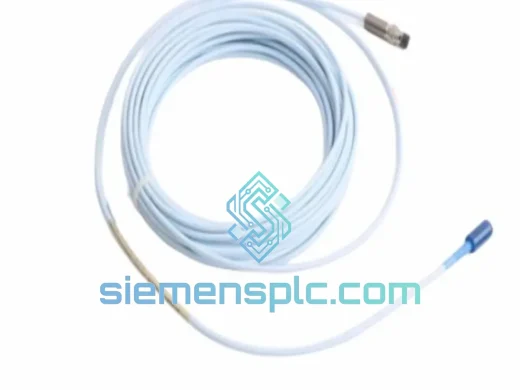
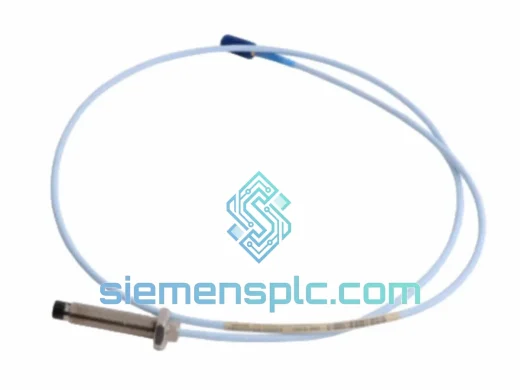
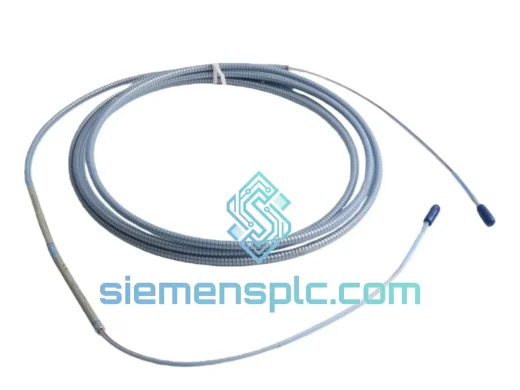
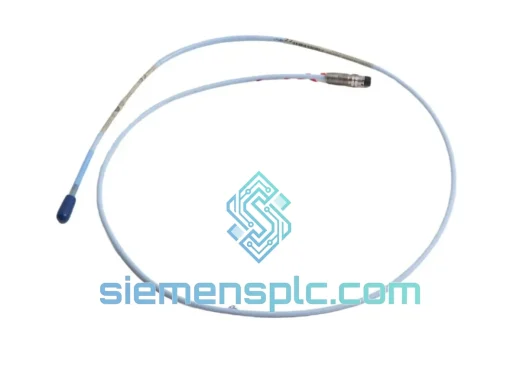
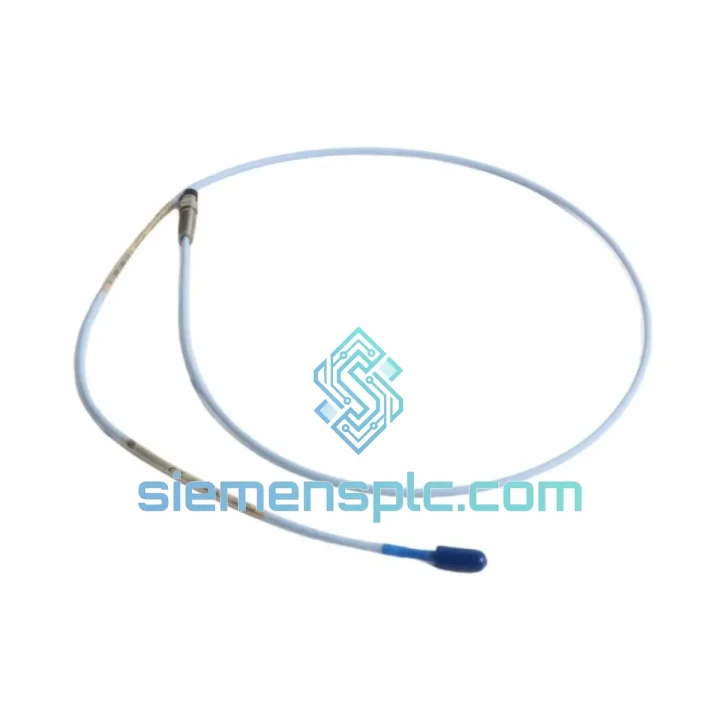
Bently Nevada 330196-05-30-10-00 Proximity Probe – 3300 XL ETR
3301
Origin US
Proximity Probe
Request verified availability, condition, replacement risk review, packing options and courier lead time for 330106-05-30-05-12-05.
Click Request Quote and the part number is inserted into the inquiry form automatically.
Core fields for model confirmation and RFQ routing. Detailed product narrative remains below.
Your compressor tripped at 03:00. The control room is dark. Maintenance is on-site and the root cause is confirmed: the 3300 XL proximity transducer system has failed. Every hour offline costs you real money — in a mid-scale petrochemical plant, unplanned downtime on a critical rotating train runs $50,000–$200,000 per day. You don’t need a lecture on eddy-current physics right now. You need a Bently Nevada 330106-05-30-05-12-05 on a plane out of Xiamen before your morning shift briefing.
We stock it. We ship it. That’s the entire value proposition.
The 330106-05-30-05-12-05 is a factory-matched, complete 8 mm proximity transducer system from Bently Nevada’s 3300 XL Series — the global standard for non-contact shaft vibration and axial position measurement on turbines, compressors, and pumps operating under API 670 machinery protection requirements. This listing covers the full system: 8 mm probe with 30-inch (762 mm) integral cable, 12-inch (305 mm) extension cable, and 5-meter armored interconnect cable. No substitutions. No field-spliced assemblies. The matched system you need to restore your monitoring loop to OEM specification.
URGENT REQUIREMENT? Contact: [email protected] | WhatsApp: +86 18359268345
| Parameter | Specification | Status |
|---|---|---|
| Part Number | 330106-05-30-05-12-05 | ✅ Ready to Ship |
| Brand | Bently Nevada (Baker Hughes) | |
| Series | 3300 XL | |
| Probe Tip Diameter | 8 mm | |
| Probe Cable Length | 30 in (762 mm) | |
| Extension Cable Length | 12 in (305 mm) | |
| Interconnect Cable Length | 5 m (~16.4 ft) | |
| Measurement Principle | Eddy-current, non-contact | |
| Linear Range (AISI 4140) | 0.25 mm – 2.26 mm | |
| Output Sensitivity | 7.87 V/mm (200 mV/mil) nominal | |
| Supply Voltage | −24 VDC nominal | |
| Probe Operating Temp | −35°C to +177°C | |
| Connector | Standard Bently Nevada coaxial | |
| Standard Compliance | API 670 compatible | |
| Origin | USA (Bently Nevada / Baker Hughes) | |
| Dispatch Location | Xiamen, China | ✅ Same-Day Dispatch Available |
Common failure signatures for the 330106-05-30-05-12-05 system:
1. OK LED extinguished on the 3300 XL driver module. Before condemning the probe, check the driver first. Disconnect the extension cable at the driver input and measure the probe/extension cable resistance. A healthy 8 mm 3300 XL probe presents approximately 7–9 Ω tip-to-shield. An open circuit or reading above 50 Ω confirms cable or probe failure. A shorted reading (near 0 Ω) typically indicates probe tip impact damage — common after a rub event.
2. Bently Nevada 3500 rack showing Not OK or Danger on the vibration channel with no process change. Swap the suspect probe system with a known-good spare on the same driver before pulling the driver card. The 3300 XL driver is factory-calibrated to a specific probe/cable combination. Mixing cable lengths from different part numbers shifts the calibration curve and produces a DC bias error at the monitor — your gap voltage will read incorrectly even if the probe is functional.
3. Intermittent high-vibration alarms with no confirmed mechanical cause. Inspect the armored interconnect cable along its full run. Flex fatigue at conduit entry points and cable clamps is the leading cause of intermittent signal loss on 3300 XL systems in high-vibration environments. A hairline crack in the coaxial center conductor produces noise that mimics real vibration events and can trigger spurious trips. Pull the cable and perform a flex test while monitoring the gap voltage output — any flicker confirms cable replacement is required.
Replacement procedure — key configuration checkpoints:
The 3300 XL 8 mm proximity transducer system was not designed for a laboratory. It was designed for the inside of a gas turbine enclosure where ambient temperatures exceed 150°C, where lube oil mist coats every surface, and where the structure vibrates continuously at amplitudes that would destroy conventional sensors within weeks.
The probe body is machined from 316 stainless steel with a ceramic-filled epoxy tip compound that maintains dimensional stability across the full −35°C to +177°C operating range. The coaxial cable uses a PTFE dielectric that resists hydrocarbon absorption — a critical property in compressor and turbine environments where oil contamination is unavoidable. The armored interconnect cable is constructed with a stainless steel braid over the PTFE-insulated coaxial core, providing mechanical protection against abrasion, rodent damage, and the repeated thermal cycling that causes standard cables to crack at their terminations.
Connector integrity is maintained through a precision-machined coaxial interface with gold-plated contacts. In high-humidity coastal and offshore environments, this contact plating prevents the galvanic corrosion that causes resistance drift in unplated connectors — a drift that manifests as a slow, undetected shift in your gap voltage baseline over months of operation.
Every unit we dispatch has been visually inspected under magnification for probe tip condition, connector seating, and cable jacket integrity. Units with any evidence of prior impact, connector damage, or jacket cracking are rejected. You receive a system that is ready to install, not one that needs to be evaluated before installation.
Our dispatch hub is in Xiamen, Fujian Province, China — a major international freight gateway with direct DHL and FedEx express connections to over 220 countries and territories. For urgent orders confirmed before 14:00 CST, same-day dispatch is available on in-stock items.
Typical transit times from Xiamen:
All shipments include full commercial invoice, packing list, and certificate of origin documentation required for customs clearance. For destinations requiring an import license or end-user certificate for industrial automation components, contact us in advance — our logistics team handles export compliance documentation daily and can advise on requirements for your specific country.
Tracking numbers are issued within 2 hours of dispatch. We use DHL and FedEx exclusively for express shipments — no postal services, no consolidators, no unknown transit times. Your part moves on a known schedule from the moment it leaves our warehouse.
For orders requiring air freight on a dedicated basis (AOG-equivalent urgency), contact us directly via WhatsApp for real-time coordination. We have handled same-day charter freight arrangements for critical plant shutdowns — if your situation is that urgent, tell us and we will find a solution.
📧 Email: [email protected]
💬 WhatsApp: +86 18359268345
🌐 Web: siemensplc.com
© 2026 siemensplc.com. All rights reserved.
We check the full part number, brand, series and visible nameplate information before quotation.
Sales confirms stock path, condition option, quantity and realistic lead time for export dispatch.
DHL, FedEx, UPS or buyer courier arrangements can be reviewed with packing requirements.
Similar brand or category products for fast comparison and multi-item RFQ lists.