Bently Nevada
RFQ Ready
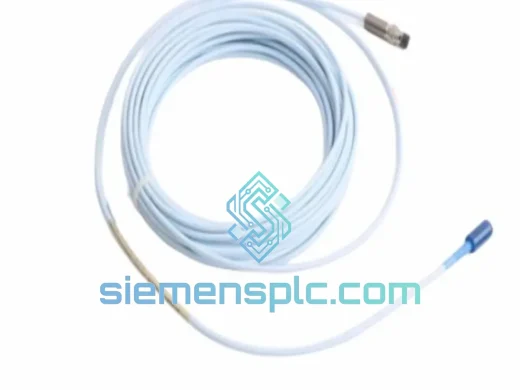
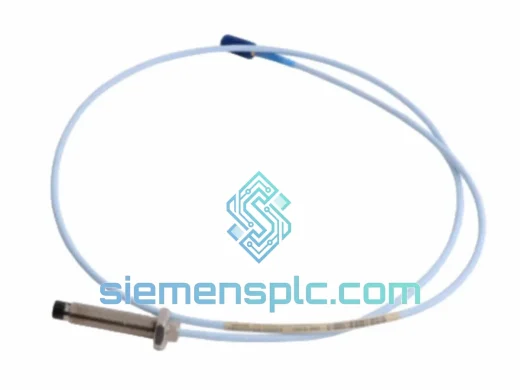
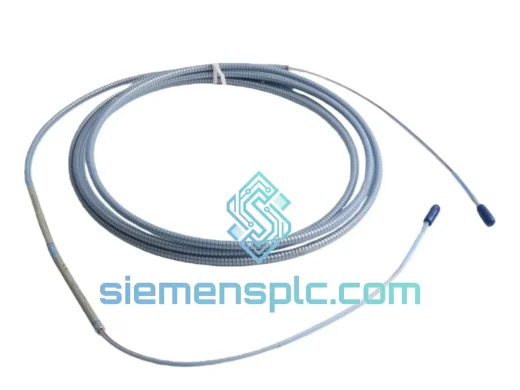
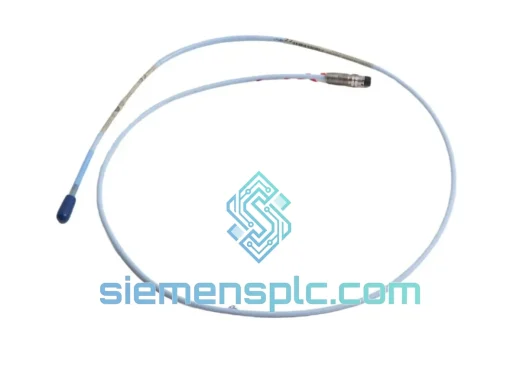
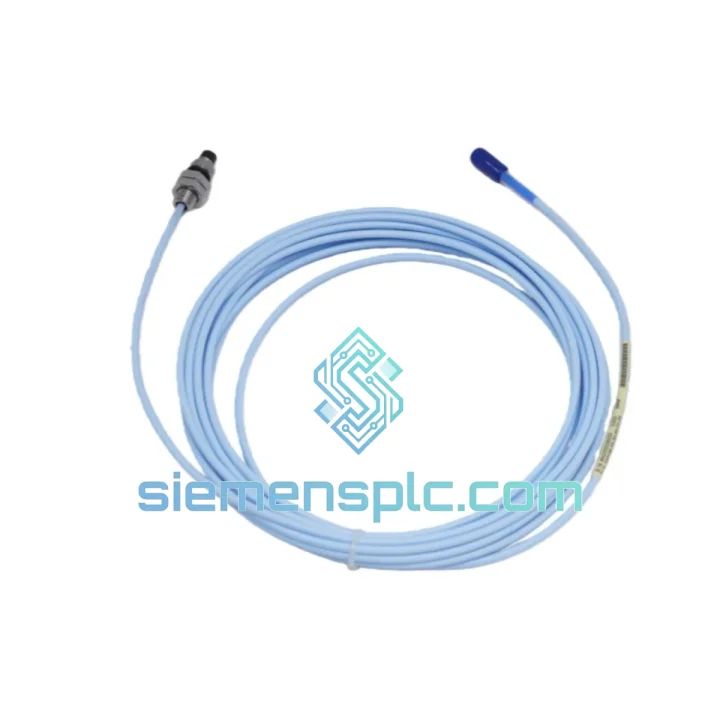
Bently Nevada 330196-05-30-10-00 Proximity Probe – 3300 XL ETR
3301
Origin US
Proximity Probe
Request verified availability, condition, replacement risk review, packing options and courier lead time for 330106-05-30-50-12-CN.
Click Request Quote and the part number is inserted into the inquiry form automatically.
Core fields for model confirmation and RFQ routing. Detailed product narrative remains below.
Your turbine tripped. The DCS is screaming. Maintenance is standing by. The bottleneck is a single proximity probe — and your spare parts cabinet is empty. The Bently Nevada 330106-05-30-50-12-CN is a reverse-mount eddy current proximity probe from the 3300 XL Series, purpose-built for shaft radial vibration and position monitoring in rotating machinery where front-access installation is mechanically impossible. We stock it. We ship it today from Xiamen. You get your machine back online.
This is not a catalog listing. This is a field-ready unit, inspected, verified, and boxed — waiting for your purchase order.
URGENT REQUIREMENT? Contact: [email protected] | WhatsApp: +86 18359268345
| Parameter | Specification | Status |
|---|---|---|
| Part Number | 330106-05-30-50-12-CN | ✔ Ready to Ship |
| Series | Bently Nevada 3300 XL | |
| Probe Configuration | Reverse Mount | |
| Measurement Principle | Eddy Current (Non-contacting) | |
| Tip Diameter | 5 mm (0.197 in) | |
| Integral Cable Length | 30 in (762 mm) | |
| Termination Impedance | 50 Ω | |
| Connector Thread | 12 mm | |
| Output Sensitivity | 7.87 V/mm (200 mV/mil) | |
| Linear Measurement Range | 0.25 – 2.25 mm (system dependent) | |
| Supply Voltage | −24 VDC (via Proximitor) | |
| Operating Temperature | −35°C to +120°C | |
| Target Material (Calibrated) | AISI 4140 Steel | |
| Compatible Monitor | Bently Nevada 3300 XL Proximitor / Seismic Monitor | |
| Approvals | CE, ATEX (zone-specific — confirm on order) | |
| Weight | ~200 g (probe + cable assembly) | |
| Origin | USA (Baker Hughes / Bently Nevada) |
Common Failure Modes for 330106 Series Probes
After a decade of field work, these are the failure patterns that show up repeatedly on this probe family:
Step-by-Step Replacement Procedure
Configuration Note — Total Cable Length: The 330106-05-30-50-12-CN has a 30-inch (762 mm) integral cable. Your extension cable (330130 series) must bring the total system length to the value stamped on your Proximitor — typically 5 m or 9 m. Mismatched total length shifts the sensitivity from the nominal 7.87 V/mm and invalidates your calibration. Confirm before ordering extension cables.
The 3300 XL probe series was not designed for a clean lab. It was designed for the inside of a bearing housing on a gas turbine running at 3,600 RPM in a 45°C ambient with oil mist, vibration, and electromagnetic interference from adjacent VFDs. The 330106-05-30-50-12-CN reflects that design intent at every level.
The stainless-steel probe body withstands continuous exposure to turbine lube oil, synthetic compressor fluids, and process gas condensate without dimensional change or thread galling. The armored integral cable is rated for continuous flexural fatigue at the vibration amplitudes typical of bearing housing installations — not just static routing. The 50 Ω impedance-matched coaxial construction rejects common-mode electrical noise from ground loops and nearby power cables, maintaining signal integrity even in electrically dense control rooms.
Operating temperature range of −35°C to +120°C covers the full envelope from cold-start conditions in outdoor installations to hot-section bearing pedestals on steam turbines. The probe body is sealed against moisture ingress to IP67 equivalent, preventing the condensation-driven corrosion that kills unprotected sensors in coastal and tropical plant environments.
Vibration endurance testing on the 3300 XL series follows the requirements of IEC 60068-2-6 (sinusoidal vibration) and IEC 60068-2-64 (random vibration), covering the frequency ranges and amplitudes encountered in rotating machinery installations. The reverse-mount mechanical configuration distributes installation stress across the probe body threads rather than concentrating it at the tip — a design advantage in high-vibration bearing housings where standard forward-mount probes show accelerated thread wear.
Our warehouse is in Xiamen, China — one of the most logistics-connected export hubs in Asia, with direct DHL Express, FedEx International Priority, and UPS Worldwide Express services operating daily. When you place an order before 15:00 CST, the unit ships the same day.
Typical transit times from Xiamen:
Every shipment includes a commercial invoice, packing list, and HS code declaration (9031.80) for smooth customs clearance. For plants requiring a Certificate of Conformance or material traceability documentation, these are prepared and included at no additional charge. Emergency air freight with next-flight-out routing is available for critical shutdowns — contact us directly for same-day freight booking.
All units are packed in anti-static foam-lined boxes with moisture-desiccant inserts. The probe tip is protected by a machined plastic cap. The connector is sealed with a dust cover. The package survives the handling chain intact — we have shipped to offshore platforms, desert refineries, and Arctic LNG facilities without a single transit damage claim.
Email: [email protected]
WhatsApp: +86 18359268345
Web: siemensplc.com
© 2026 siemensplc.com. All rights reserved.
We check the full part number, brand, series and visible nameplate information before quotation.
Sales confirms stock path, condition option, quantity and realistic lead time for export dispatch.
DHL, FedEx, UPS or buyer courier arrangements can be reviewed with packing requirements.
Similar brand or category products for fast comparison and multi-item RFQ lists.