Bently Nevada
RFQ Ready
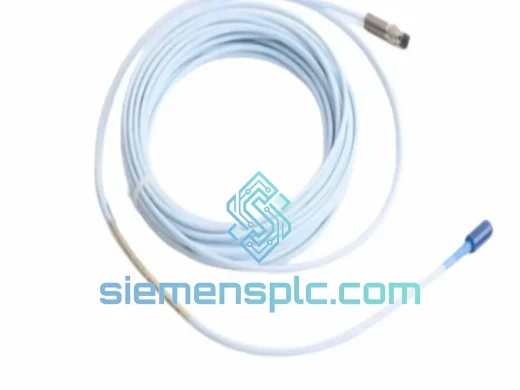
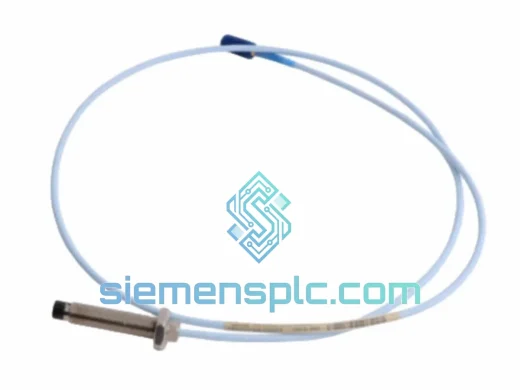
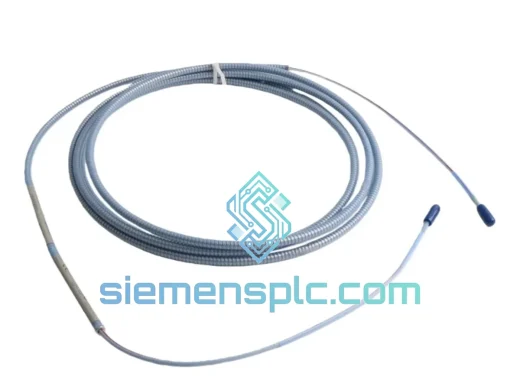
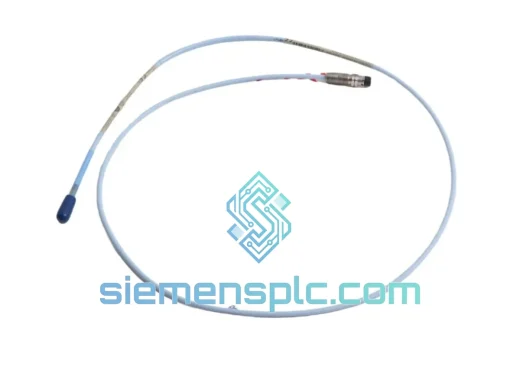
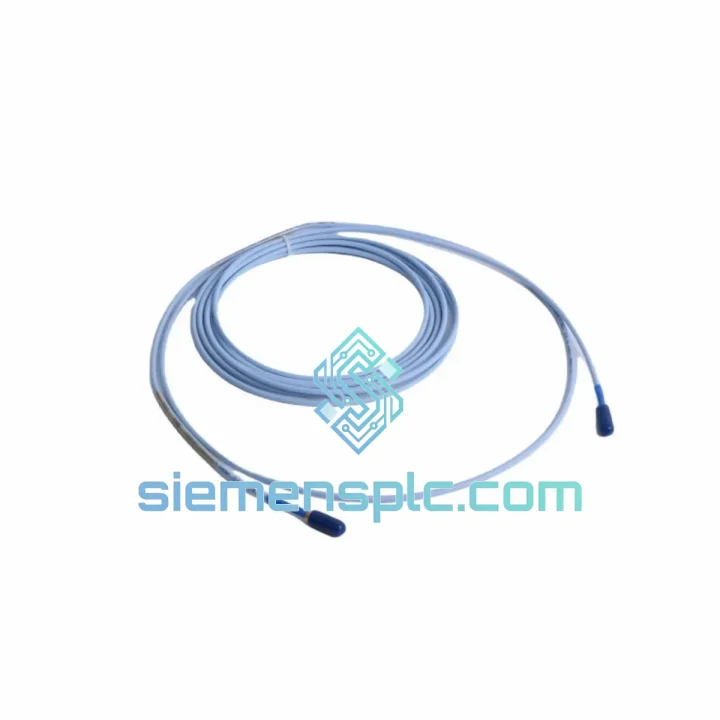
Bently Nevada 330196-05-30-10-00 Proximity Probe – 3300 XL ETR
3301
Origin US
Proximity Probe
Request verified availability, condition, replacement risk review, packing options and courier lead time for 330130-085-13-CN.
Click Request Quote and the part number is inserted into the inquiry form automatically.
Core fields for model confirmation and RFQ routing. Detailed product narrative remains below.
A failed proximity transducer on a critical compressor or turbine train doesn’t wait for procurement cycles. When your 3500 monitor throws a Not OK on the shaft vibration channel and the plant is on emergency standby, you need a verified replacement in hand — not a 6-week lead time from the OEM. The Bently Nevada 330130-085-13-CN is on our shelf in Xiamen. We process same-day and ship via DHL Express or FedEx International Priority. Most destinations in Asia, the Middle East, and Europe receive within 48–72 hours of order confirmation.
This is not a refurbished unit. Not a grey-market pull. Every 330130-085-13-CN we ship is inspected against the factory scale factor specification before it leaves our warehouse.
URGENT REQUIREMENT? Contact: [email protected] | WhatsApp: +86 18359268345
| Part Number | 330130-085-13-CN ✔ Ready to Ship |
| Manufacturer | Bently Nevada (Baker Hughes) |
| Series | 3300 XL NSv (Non-contacting Vibration) |
| Sensor Technology | Eddy-current, non-contacting |
| Probe Tip Diameter | 8 mm |
| Linear Measurement Range | 0.25 – 2.25 mm (10 – 90 mil) |
| Scale Factor | 7.87 V/mm (200 mV/mil) — factory calibrated |
| Probe Cable Length | 0.85 m (2.8 ft) |
| Extension Cable (CN config) | 5.0 m (16.4 ft) armored coaxial ✔ Ready to Ship |
| Required Driver | 3300 XL 8 mm Proximitor® (330180 series) |
| Supply Voltage | −24 VDC nominal |
| Output Signal | −2 to −18 VDC (proportional to gap) |
| Probe Temp Rating | −35 °C to +177 °C |
| Extension Cable Temp Rating | −35 °C to +85 °C |
| Connector | TNC, armor-jacketed coaxial |
| Approvals | CE, ATEX, IECEx (IS variants available) |
| Compliance | API 670 (5th Ed.), ISO 10816 / ISO 20816 |
| Weight | ~550 g |
| Origin | United States |
| Stock Status | In Stock — Ships Same Business Day |
After ten years of field work on turbomachinery protection systems, these are the failure modes and swap pitfalls that actually bite engineers on-site:
1. Confirm the fault is the probe, not the Proximitor driver.
Before pulling the 330130-085-13-CN, disconnect the probe at the field junction box and measure the driver output voltage with a calibrated DMM. A healthy 3300 XL Proximitor with no probe connected reads approximately −24 VDC. If you see that, the driver is alive — the probe or extension cable is the culprit. If the output is floating or near 0 V, suspect the 330180-series driver first. Swapping a good probe onto a failed driver wastes time and risks damaging the new unit.
2. Gap setting is non-negotiable — don’t skip it.
The 330130-085-13-CN has a linear range of 0.25–2.25 mm. The optimal operating gap for most 3500/42M channel configurations is 1.0 mm ± 0.05 mm (corresponding to approximately −10.5 VDC output). Use a feeler gauge and a calibrated gap meter during installation. Do not rely on the previous probe’s thread depth as a reference — probe body tolerances vary between manufacturing lots. An incorrect gap shifts your vibration baseline and can trigger nuisance trips or, worse, mask real shaft movement.
3. Extension cable routing — shield grounding matters.
The CN configuration’s 5 m armored extension cable must be grounded at one end only (typically at the Proximitor junction box). Double-grounding the shield creates a ground loop that injects 50/60 Hz noise directly into the vibration signal. In electrically noisy environments (VFD-heavy plants, near large transformers), this manifests as a fixed-frequency spike on the 3500 monitor’s dynamic display — often misdiagnosed as a real mechanical frequency. Check your shield termination before condemning the probe.
4. Common fault codes on the 3500/42M after probe replacement:
5. Firmware and monitor configuration — no changes required for direct swap.
The 330130-085-13-CN is a passive transducer. There is no firmware, no EEPROM, no address setting. The 3500/42M monitor configuration (scale factor, full-scale range, alert/danger setpoints) does not need to be modified when replacing like-for-like. However, if you are replacing a different probe model (e.g., a 330100 series 5 mm probe), you must update the Proximitor driver and reconfigure the monitor channel scale factor accordingly. Mixing probe diameters without reconfiguration is a common commissioning error that results in incorrect vibration readings.
Turbomachinery bearing pedestals are among the most hostile environments for instrumentation. The 330130-085-13-CN is built to operate continuously in conditions that destroy lesser sensors:
Thermal cycling: The probe body is rated to +177 °C continuous, covering hot-section gas turbine bearing locations where ambient temperatures routinely exceed 120 °C during load. The ceramic-filled probe tip maintains dimensional stability across the full thermal range, preventing gap drift that would corrupt vibration baselines during startup and shutdown transients.
Vibration and mechanical shock: The eddy-current sensing element has no moving parts. There is nothing to fatigue, no contact wear, no mechanical hysteresis. The armored coaxial cable construction of the CN extension resists the broadband vibration transmitted through bearing housings — typically 10–2000 Hz at amplitudes that would fracture conventional instrument cables within weeks.
Chemical and moisture exposure: The probe body and extension cable jacket are resistant to the hydrocarbon vapors, lube oil mist, and steam ingress common in compressor halls and turbine enclosures. The TNC connector interface, when properly torqued and sealed with the supplied boot, maintains IP67 ingress protection at the junction point.
Electromagnetic interference: The coaxial construction provides inherent shielding against the high-frequency EMI generated by variable frequency drives, large motor starters, and nearby high-voltage bus work. The −24 VDC supply and low-impedance output signal are significantly less susceptible to induced noise than high-impedance sensor types.
These are not marketing claims — they are the engineering reasons why API 670 mandates eddy-current proximity systems for critical machinery protection, and why the 3300 XL NSv platform has accumulated decades of installed base in refineries, LNG terminals, and power generation facilities worldwide.
Our warehouse is located in Xiamen, Fujian, China — a major international cargo hub with direct DHL and FedEx gateway access. Here is exactly how your order moves:
Order confirmation → same-day processing: Orders confirmed before 14:00 CST are picked, inspected, and packed the same business day. Each unit is wrapped in anti-static foam, sealed in a moisture-barrier bag with a humidity indicator card, and placed in a double-wall export carton. The commercial invoice, packing list, and certificate of origin are prepared simultaneously.
Export clearance: We handle all Chinese customs export documentation. HS code classification, ECCN determination, and any required export license review are completed before handover to the carrier. You receive the AWB number and tracking link within 2 hours of carrier pickup.
Transit times (typical, not guaranteed):
Import duties and customs: We provide accurate declared values and full HS code documentation to minimize customs delays. For customers in duty-sensitive markets, we can provide a formal commercial invoice with detailed technical descriptions to support import classification. DDP (Delivered Duty Paid) terms are available for select destinations — contact us to confirm eligibility before ordering.
For plant shutdowns and emergency turnarounds where every hour counts, contact us directly on WhatsApp for real-time stock confirmation and expedited booking: +86 18359268345.
Email: [email protected]
WhatsApp: +86 18359268345
Web: siemensplc.com
© 2026 siemensplc.com. All rights reserved.
We check the full part number, brand, series and visible nameplate information before quotation.
Sales confirms stock path, condition option, quantity and realistic lead time for export dispatch.
DHL, FedEx, UPS or buyer courier arrangements can be reviewed with packing requirements.
Similar brand or category products for fast comparison and multi-item RFQ lists.