Bently Nevada
RFQ Ready
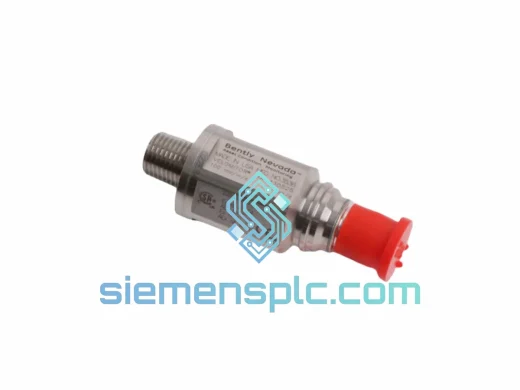
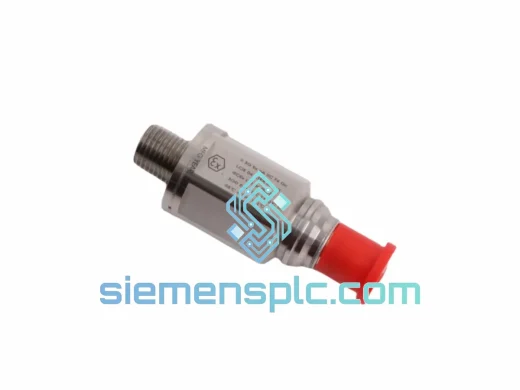
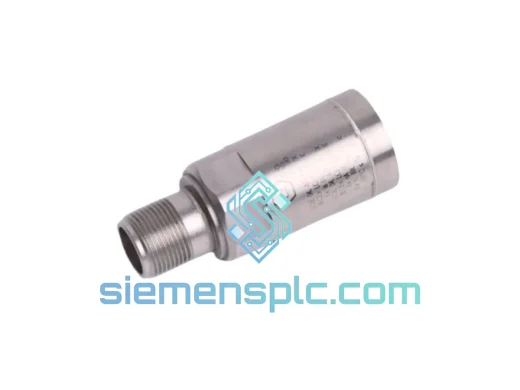
Bently Nevada VELOMITOR 330500 Velocity Sensor – VELOMITOR Series
3305
Origin US
Velocity Sensor
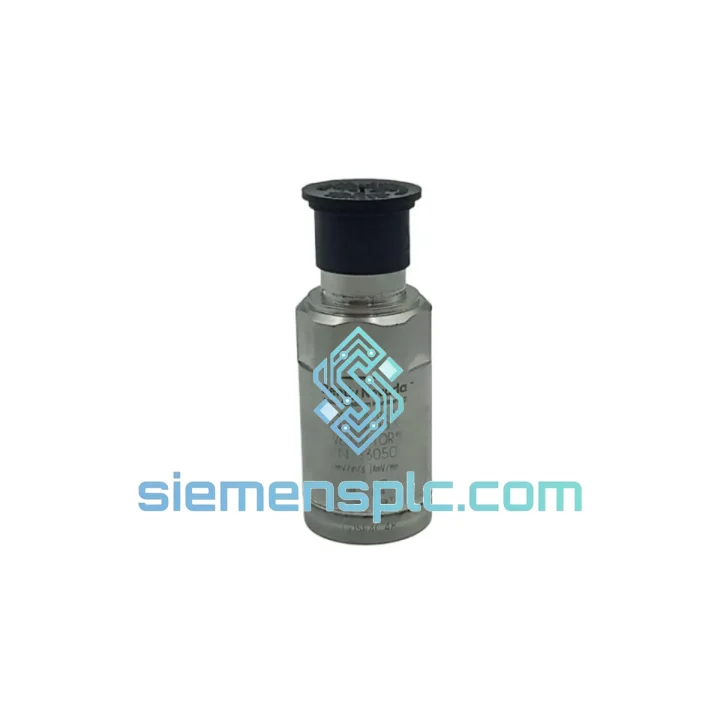
Request verified availability, condition, replacement risk review, packing options and courier lead time for 330500.
Click Request Quote and the part number is inserted into the inquiry form automatically.
Core fields for model confirmation and RFQ routing. Detailed product narrative remains below.
Every hour a critical machine sits idle, the losses compound. A tripped compressor train, a silenced turbine, a stalled reactor feed pump — the 330500 Velomitor is the single point of failure standing between you and full production. We stock it. We ship it. You get back online.
At siemensplc.com, we maintain ready inventory of the Bently Nevada 330500 Velomitor piezoelectric velocity transducer specifically for emergency MRO scenarios. No lead-time negotiation, no factory back-order queue. If you’re reading this during a shutdown, the clock is already running — contact us now.
URGENT REQUIREMENT? Contact: [email protected] | WhatsApp: +86 18359268345
| Parameter | Specification | Status |
|---|---|---|
| Part Number | 330500 | ✔ Ready to Ship |
| Manufacturer | Bently Nevada (Baker Hughes) | |
| Series | Velomitor — Piezoelectric Velocity Transducer | |
| Measurement Type | Velocity (proportional AC voltage output) | |
| Sensitivity | ~100 mV per in/s (verify against unit datasheet revision) | |
| Frequency Response | 10 Hz – 1,000 Hz (–3 dB) | |
| Operating Temperature | –40 °C to +121 °C (–40 °F to +250 °F) | |
| Housing | Stainless steel, hermetically sealed | |
| Electrical Connector | 2-pin MIL-spec (mating cable ordered separately) | |
| Mounting | Threaded stud; magnetic base adapter optional | |
| Weight | ~300 g | |
| Approvals | CE; ATEX/IECEx variants available on request | |
| Compatible Rack Module | Bently Nevada 3500/42M Proximitor/Velomitor Input | |
| Standards Compliance | API 670 (5th Ed.), ISO 10816 / ISO 20816 | |
| Origin | United States | |
| Stock Status | IN STOCK — Ships within 24 hours of order confirmation | |
The 330500 fails in predictable ways. Knowing the failure signature before you pull the unit saves you from chasing ghosts in the rack.
Symptom 1 — Flat-line or zero velocity reading on 3500/42M: Before condemning the transducer, check the extension cable first. The 330130-series armored cable is the most common failure point — a single crushed armor braid can short the signal conductor to shield and produce a dead channel. Disconnect the cable at the junction box and measure resistance between signal and shield: anything below 1 MΩ indicates cable damage, not transducer failure.
Symptom 2 — Constant OK/Not OK alarm chatter at low speed: The 330500 has a lower usable frequency limit of ~10 Hz. On machines that coast through low-speed ranges during startup, the monitor may alarm spuriously. Verify that the 3500/42M channel is configured with the correct full-scale range and that the OK setpoint is appropriate for your machine’s minimum operating speed. Do not replace the transducer until rack configuration is confirmed.
Symptom 3 — Elevated broadband noise floor after replacement: If a new 330500 shows higher-than-expected baseline vibration, check mounting surface flatness. The transducer base must contact the machine housing across its full footprint. A 0.1 mm gap under one edge introduces a mechanical resonance that appears as broadband noise between 200–600 Hz. Use a torque wrench; Bently Nevada specifies stud torque — do not hand-tighten.
Replacement Procedure Checklist:
No firmware matching is required for the 330500 — it is a passive piezoelectric device with no embedded electronics. The 3500/42M module handles all signal conditioning. However, if you are replacing a unit that was previously calibrated to a specific sensitivity value in System 1, update the transducer sensitivity constant in the software to match the new unit’s calibration certificate.
The 330500 Velomitor was not designed for a climate-controlled instrument room. It was designed for the bearing housing of a 40 MW gas turbine running at 3,000 RPM in a tropical refinery — and it has to keep working when the ambient hits 55 °C, the humidity is 95%, and the maintenance crew is running a high-pressure washdown three meters away.
The hermetically sealed stainless steel housing eliminates the primary failure mode of conventional velocity sensors: moisture ingress into the coil assembly. There is no coil. The piezoelectric element is a solid-state crystal stack encapsulated in a sealed cavity. Condensation, process fluid splash, and steam cleaning cycles cannot reach the sensing element.
Vibration immunity is inherent by design — a sensor that measures vibration must not be damaged by it. The 330500 is rated for continuous operation in the vibration environments it monitors. The internal crystal stack is mechanically constrained to prevent resonance within the operating frequency band, and the housing geometry is optimized to avoid structural modes below 2,000 Hz.
Thermal cycling is the other silent killer of industrial instrumentation. The 330500’s –40 °C to +121 °C operating range covers the full envelope from cold-start conditions in northern climates to bearing housing temperatures on high-speed machinery. The hermetic seal prevents differential pressure-driven moisture migration during thermal cycling — a failure mode that destroys conventional sensors within 18 months in humid environments.
For offshore and marine applications, the stainless steel housing provides adequate corrosion resistance for salt-laden atmospheres without additional protective coatings. ATEX/IECEx certified variants are available for Zone 1 and Zone 2 hazardous area classifications — specify your area classification when ordering.
Our warehouse is located in Xiamen, China — one of the country’s primary export hubs with direct access to international freight lanes serving Asia-Pacific, the Middle East, Europe, and the Americas. When you place an emergency order, here is exactly what happens:
Hour 0–2: Order confirmed, payment cleared, unit pulled from bonded warehouse stock. Export documentation prepared: commercial invoice, packing list, certificate of conformance, and HS code 9031.80 declaration.
Hour 2–6: Unit packed in ESD-safe, moisture-barrier inner packaging with shock-absorbing foam inserts. Outer carton labeled with shipper and consignee details. Shipment booked with DHL Express or FedEx International Priority — carrier selected based on fastest transit time to your destination.
Hour 6–24: Shipment collected by carrier and inducted into the international network. Tracking number issued to you via email and WhatsApp.
Transit Times (typical, not guaranteed):
For shipments to countries with complex import regulations (India, Brazil, Russia), we prepare full customs documentation packages and can coordinate with your local customs broker to prevent clearance delays. Incoterm options include EXW, FOB Xiamen, CIF, and DDP — specify your preference at time of order.
We do not use consolidation services or economy freight for emergency orders. Every urgent shipment goes direct, express, door-to-door. Your downtime cost per hour almost certainly exceeds the freight premium — we treat it accordingly.
Email: [email protected]
WhatsApp: +86 18359268345
Web: siemensplc.com
© 2026 siemensplc.com. All rights reserved.
We check the full part number, brand, series and visible nameplate information before quotation.
Sales confirms stock path, condition option, quantity and realistic lead time for export dispatch.
DHL, FedEx, UPS or buyer courier arrangements can be reviewed with packing requirements.
Similar brand or category products for fast comparison and multi-item RFQ lists.