Siemens
RFQ Ready
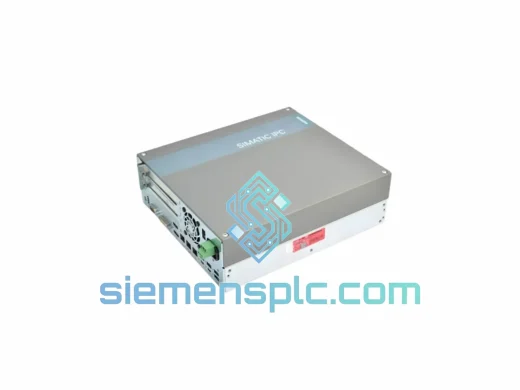
Siemens T8191 Safety Controller Module – Trusted TMR Series
Trusted Series
Origin DE
Safety Controller Module
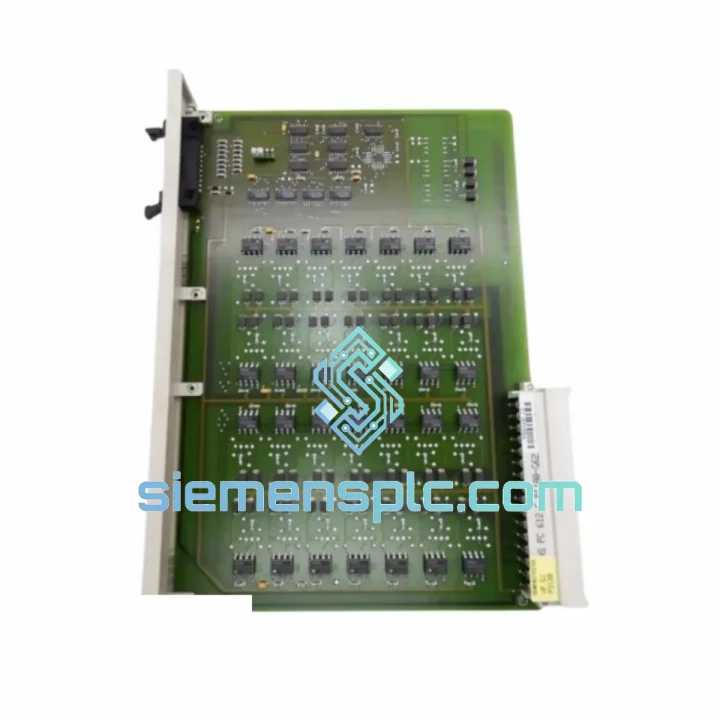
Request verified availability, condition, replacement risk review, packing options and courier lead time for 6DS1703-8RR.
Click Request Quote and the part number is inserted into the inquiry form automatically.
Core fields for model confirmation and RFQ routing. Detailed product narrative remains below.
The 6DS1703-8RR is a measurement and signal point extension module engineered for the SIEMENS TELEPERM M distributed control system platform. Its primary function within a control loop is to expand the addressable I/O point capacity of the TELEPERM M subrack without altering the central controller’s scan cycle or bus arbitration timing. In process industries where DCS architectures are sized at commissioning and then incrementally expanded over a plant’s operational lifetime, this module provides a deterministic, OEM-validated path to capacity growth. It slots directly into the TELEPERM M subrack backplane, communicates over the proprietary internal bus, and presents additional measurement points to the central controller as native system resources — no protocol translation, no latency penalty, no re-engineering of the existing control strategy.
In a typical control loop, the 6DS1703-8RR sits between field transmitters and the TELEPERM M central processing unit. Analog and digital signals from field instruments are wired to the module’s terminal block, conditioned on-board, and transferred to the CPU via the internal bus at the system’s configured scan rate. The module’s role is passive from the CPU’s perspective — it extends the point map transparently, which is critical in safety-instrumented and regulatory-compliant environments where any change to the control system’s logical structure requires formal re-validation.
Real-time Stock & RFQ: [email protected] | WhatsApp: +86 18359268345
| Parameter | Specification |
|---|---|
| Manufacturer | SIEMENS AG |
| Part Number | 6DS1703-8RR |
| Product Family | TELEPERM M |
| Module Classification | MS Point Extension |
| Form Factor | Subrack plug-in module (TELEPERM M standard pitch) |
| Bus Interface | TELEPERM M internal backplane bus |
| Operating Temperature | 0 °C to +60 °C |
| Storage Temperature | −40 °C to +70 °C |
| Relative Humidity | 5% – 95%, non-condensing |
| Mounting | DIN rail / subrack, front-panel extraction |
| Approx. Weight | ~300 g |
| Compliance | CE, IEC 61131, RoHS (verify lot date code) |
| Country of Origin | Germany |
| Warranty | 12 months from shipment date |
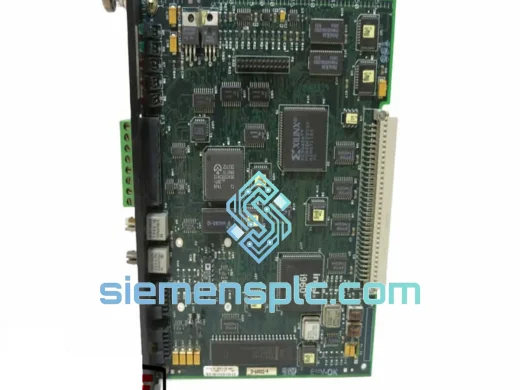
The 6DS1703-8RR’s hardware design reflects the engineering philosophy of the TELEPERM M platform: determinism over flexibility, and signal integrity over raw channel density. Several design characteristics distinguish this module from generic I/O expansion hardware:
Backplane Bus Arbitration Compatibility. The TELEPERM M internal bus operates on a time-division multiplexed arbitration scheme. The 6DS1703-8RR’s bus interface logic is synchronized to the system clock distributed across the subrack backplane, ensuring that point data is latched and transferred within the CPU’s defined scan window. This eliminates the jitter that would otherwise appear if the module used an asynchronous local buffer — a common failure mode in third-party replacement modules that causes intermittent diagnostic alarms in the central controller.
Signal Conditioning and Isolation Architecture. Input channels on the 6DS1703-8RR incorporate galvanic isolation between field wiring and the module’s internal logic circuitry. This isolation barrier — typically implemented via optocoupler arrays on digital channels and transformer-coupled front-ends on analog channels — prevents ground loop currents from corrupting measurement data and protects the backplane bus from transient overvoltages originating in the field wiring. In petrochemical and power generation environments, where field cable runs can exceed several hundred meters and share cable trays with high-voltage power conductors, this isolation architecture is a functional requirement, not a design luxury.
EMC Design and Conducted Noise Rejection. The module’s PCB layout follows SIEMENS’ internal EMC design rules for industrial control hardware: ground planes are segmented to separate analog return paths from digital logic returns, decoupling capacitors are placed at each IC power pin, and the front-panel connector shell is bonded to the subrack chassis ground to provide a low-impedance path for shield currents. This layout discipline allows the module to maintain specified accuracy in environments with conducted RF interference levels consistent with IEC 61000-4-6 Class A.
Thermal Management. The module’s power dissipation is managed through conduction cooling via the subrack’s card guides and convection through the subrack’s ventilation slots. No active cooling components (fans, heat pipes) are present, which eliminates a common failure mode in high-MTBF industrial hardware. The operating temperature ceiling of +60 °C is achievable in standard TELEPERM M cabinet installations with the subrack’s specified airflow maintained.
Every 6DS1703-8RR unit dispatched from our Xiamen, China facility undergoes a structured pre-shipment inspection protocol before it is released for shipment:
Logistics from Xiamen covers all major industrial markets: DHL Express and FedEx International Priority for time-critical requirements (typical transit: 3–5 business days to Europe, North America, and Southeast Asia); sea freight consolidation for volume orders. Export compliance screening is performed on all shipments in accordance with applicable trade regulations.
Email: [email protected]
WhatsApp: +86 18359268345
Web: siemensplc.com
Location: Xiamen, China
© 2026 siemensplc.com. All rights reserved.
We check the full part number, brand, series and visible nameplate information before quotation.
Sales confirms stock path, condition option, quantity and realistic lead time for export dispatch.
DHL, FedEx, UPS or buyer courier arrangements can be reviewed with packing requirements.
Similar brand or category products for fast comparison and multi-item RFQ lists.