Bently Nevada
RFQ Ready
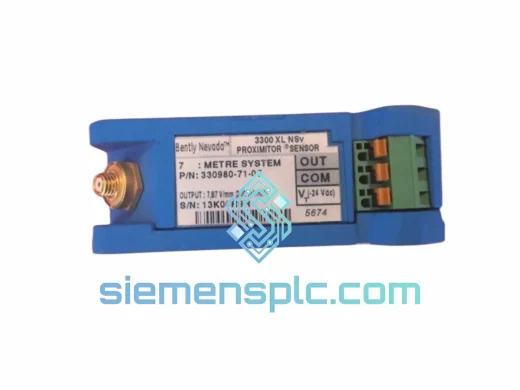
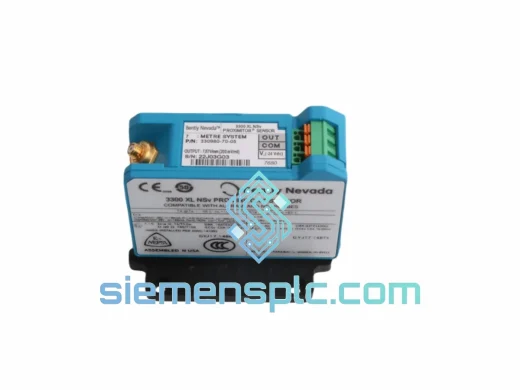
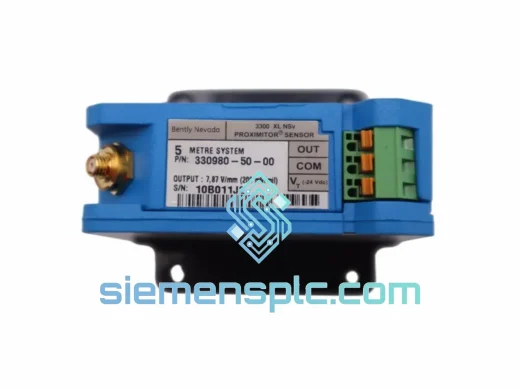
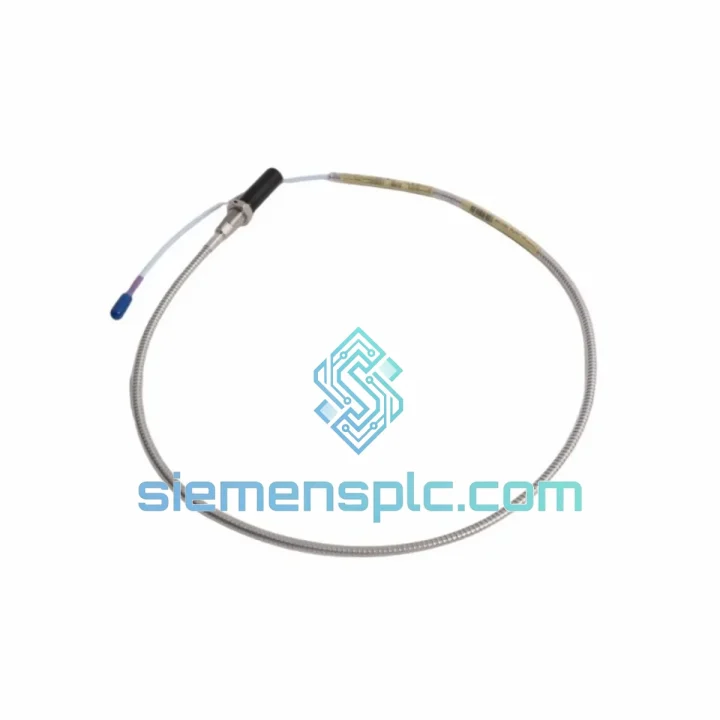
Bently Nevada 330980-71-05 NSV Proximitor Sensor
3309
Origin US
Proximitor Sensor
Request verified availability, condition, replacement risk review, packing options and courier lead time for 330902-00-15-10-02-05.
Click Request Quote and the part number is inserted into the inquiry form automatically.
Core fields for model confirmation and RFQ routing. Detailed product narrative remains below.
Your compressor tripped at 03:00. The DCS is screaming a HIGH VIBRATION fault on the radial channel. Maintenance pulled the probe — gap voltage is dead flat, no oscillation, no signal. The culprit: a failed Bently Nevada 330902-00-15-10-02-05 NSv proximity transducer. Every hour that shaft sits idle costs you real money — in a mid-size petrochemical plant, unplanned rotating-equipment downtime runs $50,000–$200,000 per day. We stock this exact part number in Xiamen. It ships today.
The 330902-00-15-10-02-05 is a non-contacting eddy-current proximity transducer built to Bently Nevada’s 3300 XL NSv specification. NSv (Non-Standard voltage) means the output scale deviates from the conventional −18 V to −2 V range — a deliberate design choice for OEM systems and legacy monitor racks that require a shifted signal window. This is not a generic proximity probe. The part number encodes every critical dimension: probe thread (3/8-24 UNF), cable length (5 m), driver compatibility, and output configuration. Substituting a standard-voltage variant without recalibrating the monitor will produce false gap readings and potentially mask real shaft excursions. Get the right part. Get it fast.
URGENT REQUIREMENT? Contact: [email protected] | WhatsApp: +86 18359268345
| Parameter | Specification | Status |
|---|---|---|
| Part Number | 330902-00-15-10-02-05 | ✅ Ready to Ship |
| Brand | Bently Nevada (Baker Hughes) | 100% Original OEM |
| Series | 3300 XL NSv Proximity Transducer System | — |
| Measurement Principle | Eddy-current, non-contacting | — |
| Output Configuration | NSv (Non-Standard Voltage) | — |
| Probe Thread | 3/8-24 UNF | — |
| Cable Length | 5 metres (extension cable included) | — |
| Linear Gap Range | 0.25 mm – 2.26 mm | — |
| Frequency Response | DC to 10,000 Hz | — |
| Probe Temp. Range | −35 °C to +177 °C | — |
| Driver Temp. Range | −35 °C to +85 °C | — |
| Target Material (nominal) | AISI 4140 steel | — |
| Approvals | CE, ATEX, FM | — |
| Weight | ~60 g | — |
| Origin | USA (Bently Nevada / Baker Hughes) | — |
| Dispatch Location | Xiamen, China | ✅ Ships Same Day |
Fault Pattern Recognition
Before you pull the probe, confirm the failure mode. Three scenarios account for 90% of 330902-series field failures:
Step-by-Step Replacement Procedure
Common Fault Codes on 3300/3500 Racks
The 330902-00-15-10-02-05 is not a laboratory instrument. It was designed to survive the environments that destroy ordinary sensors — and it does so without complaint.
The probe body is machined from 316 stainless steel with a hermetically sealed ceramic-filled tip. That tip has been validated to withstand continuous immersion in process fluids including light hydrocarbons, steam condensate, and turbine lube oil without signal drift or dielectric breakdown. In offshore compressor trains where salt-laden air and humidity are constant, the sealed construction prevents the moisture ingress that kills conventional sensors within months.
Vibration is the enemy of every sensor mounted on rotating machinery — the irony of a vibration monitor that cannot survive vibration is not lost on field engineers. The 330902 series addresses this with a strain-relieved cable exit and a probe body geometry that avoids resonance frequencies in the 10–2,000 Hz range typical of industrial machinery. Units installed on gas turbine bearing housings — where broadband vibration levels routinely exceed 10 g — have demonstrated service lives exceeding five years without recalibration.
Temperature cycling is equally demanding. In a steam turbine bearing pedestal, the probe tip may see 150 °C during full-load operation and drop to ambient during a cold outage. The 330902’s ceramic-filled tip and Teflon-jacketed cable maintain dimensional stability and electrical characteristics across this entire range. The specified probe temperature limit of +177 °C provides a genuine safety margin for the most demanding applications — not a marketing number.
For ATEX and FM-certified installations in Zone 1 / Division 1 hazardous areas, the 330902-00-15-10-02-05 carries the necessary approvals. The intrinsically safe driver circuit limits energy at the probe tip to below ignition thresholds for Group IIC gases. No additional barriers are required when used with the matched Bently Nevada driver in a certified installation.
We operate from Xiamen, China — one of the country’s primary export hubs with direct access to DHL, FedEx, and UPS international gateways. When you confirm an order before 14:00 CST, the unit is packed, documented, and handed to the carrier the same afternoon.
Transit times from Xiamen to major industrial regions:
Every shipment includes a commercial invoice with accurate HS code classification (HS 9031.80 for proximity measurement instruments), a packing list, and a certificate of conformity. For customers in countries with strict import controls on industrial electronics, we can provide additional documentation — country of origin certificates, material safety data, and manufacturer traceability records — on request.
Parts are packed in anti-static foam-lined boxes with moisture-desiccant sachets. The probe tip is protected by a machined plastic cap. The cable connector is individually bagged. We have shipped to 60+ countries without a single transit-damage claim on this product line.
For genuinely critical situations — a plant that cannot restart until the part arrives — contact us directly on WhatsApp. We will coordinate with the carrier to expedite customs clearance and provide real-time tracking updates until the part is in your hands.
Email: [email protected]
WhatsApp: +86 18359268345
Web: siemensplc.com
© 2026. All rights reserved.
We check the full part number, brand, series and visible nameplate information before quotation.
Sales confirms stock path, condition option, quantity and realistic lead time for export dispatch.
DHL, FedEx, UPS or buyer courier arrangements can be reviewed with packing requirements.
Similar brand or category products for fast comparison and multi-item RFQ lists.