Siemens
RFQ Ready
Siemens A5E03378158 Communication Processor – SIMATIC S7-300 CP 343-1
SIMATIC S7-300
Origin DE
Communication Processor
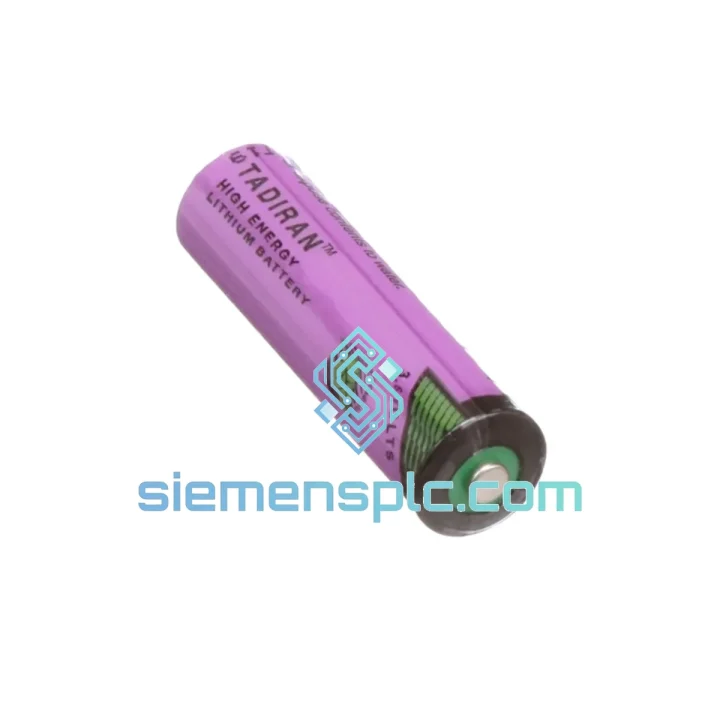
Request verified availability, condition, replacement risk review, packing options and courier lead time for 971-0BA00.
Click Request Quote and the part number is inserted into the inquiry form automatically.
Core fields for model confirmation and RFQ routing. Detailed product narrative remains below.
The 6ES7 971-0BA00 is the factory-original lithium backup battery module manufactured by Siemens AG for the SIMATIC S7-300 programmable logic controller family. Its primary function within the control loop is to sustain DC power to the CPU’s static RAM and real-time clock (RTC) circuitry during mains power interruptions, planned shutdowns, or unplanned outages. Without a functional backup battery, retentive data areas — including process parameters, counter values, timer presets, and user-defined retain variables — are lost on every power cycle, forcing operators into manual re-initialization procedures that introduce both downtime and human error risk.
In process-critical environments such as continuous chemical production, power generation, and oil and gas extraction, the integrity of retentive data is not a convenience feature — it is a hard operational requirement. The 6ES7 971-0BA00 addresses this requirement with a lithium manganese dioxide (Li/MnO₂) electrochemical cell, selected for its flat discharge curve, low self-discharge rate, and stable performance across the full industrial temperature range. The cell maintains a nominal output of 3.6 V DC throughout its service life, ensuring that the CPU’s memory backup threshold is never breached under normal operating conditions.
The module is housed in a plug-in format that allows tool-free replacement on supported S7-300 CPU variants. On CPUs that implement hot-swap capability, the battery can be exchanged without interrupting the running control program, provided the swap is completed within the CPU’s capacitor hold-up window (typically 30 seconds). This design eliminates the need for a planned production stop solely for battery maintenance, a significant operational advantage in high-availability lines.
Real-time Stock & RFQ: [email protected] | WhatsApp: +86 18359268345
| Parameter | Value |
|---|---|
| Part Number | 6ES7 971-0BA00 |
| Manufacturer | Siemens AG |
| Product Family | SIMATIC S7-300 |
| Electrochemical System | Lithium Manganese Dioxide (Li/MnO₂) |
| Nominal Voltage | 3.6 V DC |
| Rated Capacity | Approx. 1,000 mAh |
| Self-Discharge Rate | < 1% per year at 20 °C |
| Operating Temperature | 0 °C to +60 °C |
| Storage Temperature | −20 °C to +70 °C |
| Shelf Life (sealed) | Up to 10 years |
| Connector Interface | Plug-in module, tool-free |
| Hot-Swap Support | Yes (CPU-dependent; capacitor hold-up ≥ 30 s) |
| Compliance | CE, RoHS 2011/65/EU |
| Weight | Approx. 15 g |
| Warranty | 12 months from date of shipment |
The 6ES7 971-0BA00 interfaces directly with the CPU’s internal battery management circuit, which continuously monitors cell voltage via an analog comparator. When the measured voltage drops below a programmable threshold — typically 3.0 V — the CPU asserts the BATT LED diagnostic output and writes a corresponding entry to the diagnostic buffer (OB82 event). This two-stage warning architecture gives maintenance personnel advance notice before data integrity is compromised, rather than a silent failure mode.
The Li/MnO₂ chemistry was selected over alkaline or NiMH alternatives for three engineering reasons. First, the discharge curve is substantially flatter: the cell maintains output above 3.2 V for approximately 90% of its usable capacity, whereas alkaline cells exhibit a sloped discharge that can trigger false low-voltage alarms. Second, the self-discharge rate is below 1% per year at 20 °C, meaning a battery stored for five years retains more than 95% of its rated capacity — a critical property for MRO spare parts held in warehouse inventory. Third, Li/MnO₂ cells are non-pressurized and do not outgas under normal conditions, eliminating the risk of electrolyte leakage that can corrode CPU board traces.
The plug-in housing incorporates a polarity-keyed connector that physically prevents reverse insertion. The contact geometry is gold-plated to minimize contact resistance and resist oxidation over the module’s service life. The housing material is UL 94 V-0 rated flame-retardant thermoplastic, consistent with the fire safety requirements of IEC 60950 and EN 61131-2 for industrial control equipment.
From an EMC perspective, the battery circuit is isolated from the CPU’s digital logic ground plane by a dedicated power domain boundary. This prevents battery-side transients — such as those induced during hot-swap operations — from coupling into the CPU’s address and data buses. The isolation is implemented at the PCB level through a split ground plane with a single-point connection, a standard technique in high-reliability embedded design.
Every unit of the 6ES7 971-0BA00 supplied through siemensplc.com is sourced from verified Siemens-authorized distribution channels. Each batch undergoes incoming inspection that includes label authentication, date code verification, and open-circuit voltage measurement to confirm cell charge state prior to dispatch. Units that do not meet the 3.5 V minimum acceptance threshold are quarantined and returned to the supplier — no exceptions.
Packaging is ESD-safe and conforms to IATA PI 965 Section II requirements for lithium battery air freight, ensuring that shipments clear customs without delay at major international hubs. Export documentation — including commercial invoice, packing list, material safety data sheet (MSDS/SDS), and UN38.3 test summary — is prepared as standard for all international orders. DDP and DAP Incoterms are available on request for customers who require landed-cost certainty.
Dispatch from our Xiamen, China facility typically occurs within 1 to 3 business days for in-stock items. Express courier options (DHL, FedEx, UPS) provide transit times of 3 to 5 business days to most destinations in Europe, North America, Southeast Asia, and the Middle East. For time-critical plant shutdowns, same-day dispatch is available on confirmed orders received before 14:00 CST.
All shipments are covered by a 12-month warranty from the date of shipment. Warranty claims are processed via RMA with a target response time of 48 hours. Replacement units are dispatched before the defective unit is returned, minimizing plant downtime for customers with active production commitments.
Email: [email protected]
WhatsApp: +86 18359268345
Web: siemensplc.com
Location: Xiamen, China
© 2026 siemensplc.com. All rights reserved.
We check the full part number, brand, series and visible nameplate information before quotation.
Sales confirms stock path, condition option, quantity and realistic lead time for export dispatch.
DHL, FedEx, UPS or buyer courier arrangements can be reviewed with packing requirements.
Similar brand or category products for fast comparison and multi-item RFQ lists.