Bently Nevada
RFQ Ready
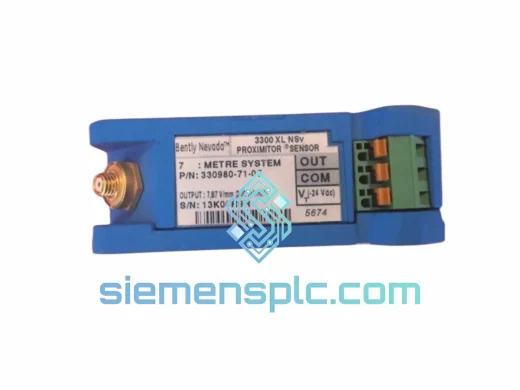
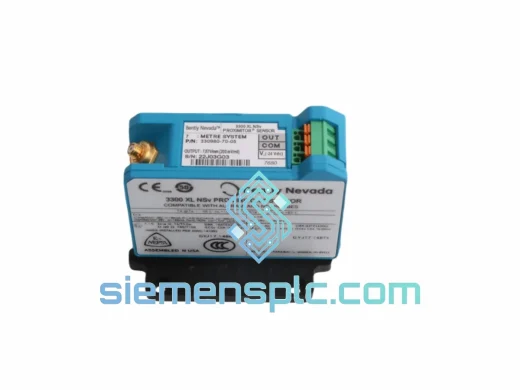
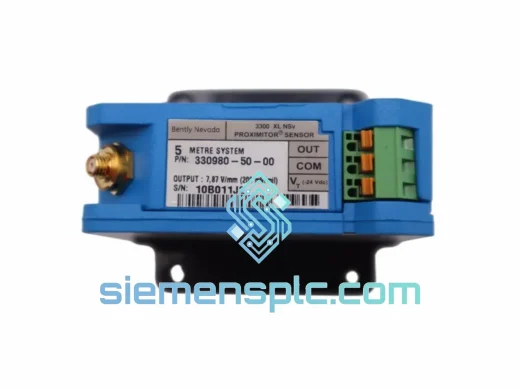
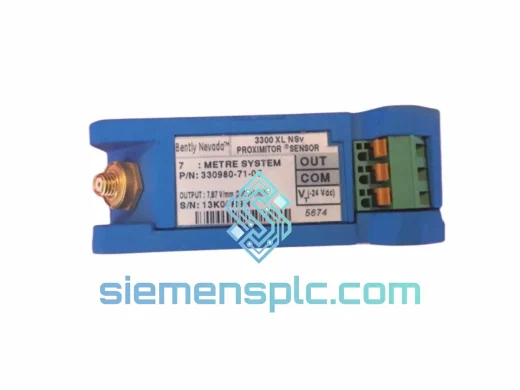
Bently Nevada 330980-71-05 NSV Proximitor Sensor
3309
Origin US
Proximitor Sensor
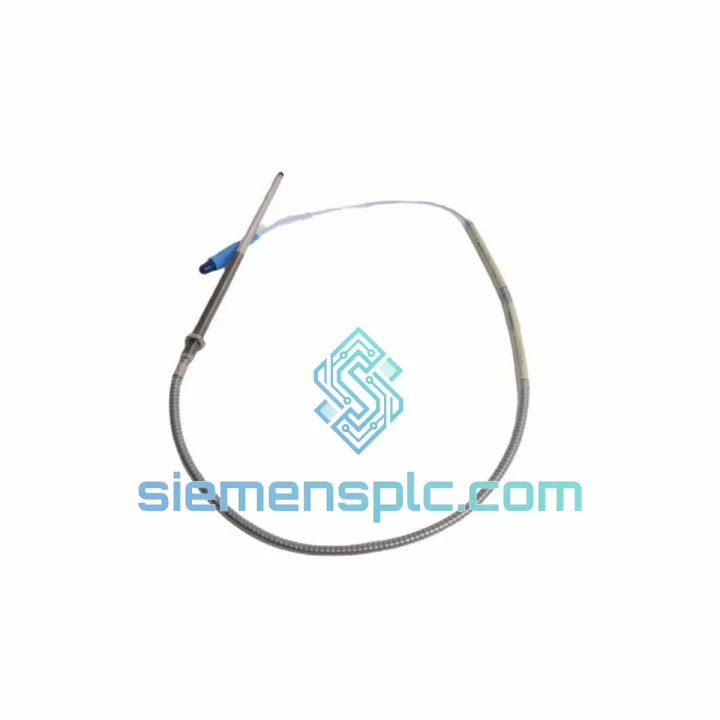
Request verified availability, condition, replacement risk review, packing options and courier lead time for 330910-00-11-10-01-00.
Click Request Quote and the part number is inserted into the inquiry form automatically.
Core fields for model confirmation and RFQ routing. Detailed product narrative remains below.
Every minute a turbine, compressor, or pump sits idle costs real money. When your Bently Nevada 3300 XL NSv proximity transducer fails — or your monitoring rack throws a -18 VDC gap voltage fault, a Not OK status, or a flat-line vibration channel — the clock starts immediately. Production losses in power generation and oil & gas facilities routinely exceed $50,000 per hour of unplanned downtime. The 330910-00-11-10-01-00 is a stocked, verified, ready-to-ship replacement. We ship from Xiamen within 24 hours of order confirmation. That is the only number that matters right now.
This is not a catalog listing. This is a field-ready unit sitting on a shelf, inspected, packaged, and waiting for your DHL waybill. If your maintenance window opens tomorrow morning, contact us today.
URGENT REQUIREMENT? Contact: [email protected] | WhatsApp: +86 18359268345
| Parameter | Specification |
|---|---|
| Part Number / SKU | 330910-00-11-10-01-00 |
| Brand | Bently Nevada (Baker Hughes) |
| Series | 3300 XL NSv (Non-contact Shaft vibration) |
| Sensing Technology | Eddy-current, non-contact |
| Measurement Target | Shaft radial vibration, axial position, differential expansion |
| Compliance Standard | API 670 Machinery Protection |
| Output Compatibility | 3300 XL signal conditioner / driver module |
| Typical Gap Voltage | -10 VDC nominal (verify with driver datasheet) |
| Weight | ~140 g |
| Origin | USA (Bently Nevada / Baker Hughes) |
| Stock Status | ✔ Ready to Ship — Xiamen warehouse |
| Lead Time | Ships within 24 hrs of order confirmation |
| Condition | New / Surplus New (specify on inquiry) |
After ten years of field work on rotating machinery protection systems, these are the failure modes and replacement pitfalls that actually bite engineers on-site:
Common Fault Indicators for 330910-00-11-10-01-00 / 3300 XL NSv:
Replacement Procedure — Key Steps:
The 3300 XL NSv proximity transducer system was not designed for a clean lab environment. It was built for the conditions that actually exist inside turbomachinery enclosures: sustained mechanical vibration from adjacent equipment, ambient temperatures that swing from sub-zero cold starts to 85°C+ in enclosed compressor buildings, and humidity levels that would destroy conventional electronic sensors within months.
The eddy-current sensing principle is inherently immune to the contamination vectors that kill optical and capacitive sensors — oil mist, process gas condensate, and particulate-laden cooling air have no effect on the electromagnetic field between the probe tip and the shaft. The probe body is constructed from corrosion-resistant materials rated for continuous immersion in the lubricating oil environments common in bearing housings.
Mechanical shock resistance is a non-negotiable requirement for any component mounted on or adjacent to rotating machinery. The 3300 XL NSv probe assembly is qualified to withstand the vibration levels it is designed to measure — a fundamental requirement that many aftermarket alternatives fail to meet. When a nearby machine trips on high vibration, the resulting mechanical transient must not damage the sensor that is supposed to detect it.
Long-term drift is the silent killer of vibration monitoring accuracy. Bently Nevada’s manufacturing process for the 3300 XL NSv series maintains scale factor stability over the product’s service life, which is critical for trend-based predictive maintenance programs where a 5% drift in sensitivity can mask a developing bearing defect for weeks before it becomes a trip condition.
Our dispatch hub is in Xiamen, China — one of the most active industrial export ports on the Pacific Rim, with daily consolidated freight departures to every major industrial hub globally. Here is exactly how your order moves:
If your machine is down and you need this part confirmed in stock before you commit to a maintenance window, call or message now — not tomorrow.
Email: [email protected]
WhatsApp: +86 18359268345
Web: siemensplc.com
© 2026 siemensplc.com. All rights reserved.
We check the full part number, brand, series and visible nameplate information before quotation.
Sales confirms stock path, condition option, quantity and realistic lead time for export dispatch.
DHL, FedEx, UPS or buyer courier arrangements can be reviewed with packing requirements.
Similar brand or category products for fast comparison and multi-item RFQ lists.