Yokogawa
RFQ Ready
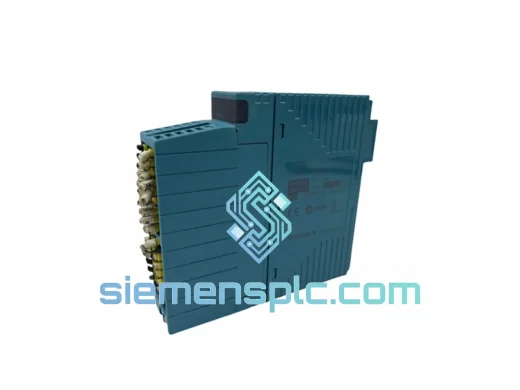
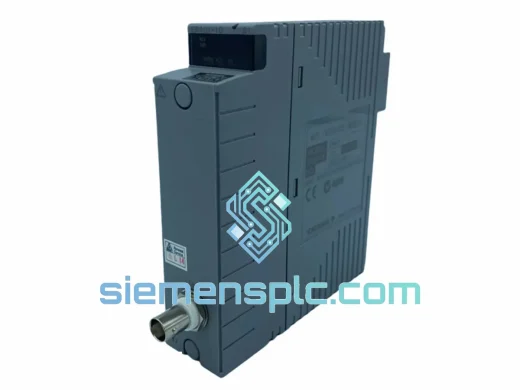
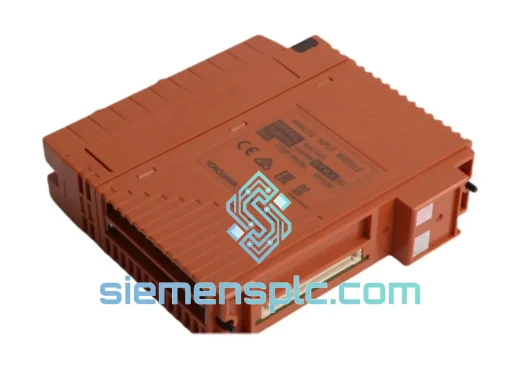
Yokogawa SAI143-H63/PRP S3 DCS Analog Input Module
CENTUM VP
Origin JP
DCS Analog Input Module
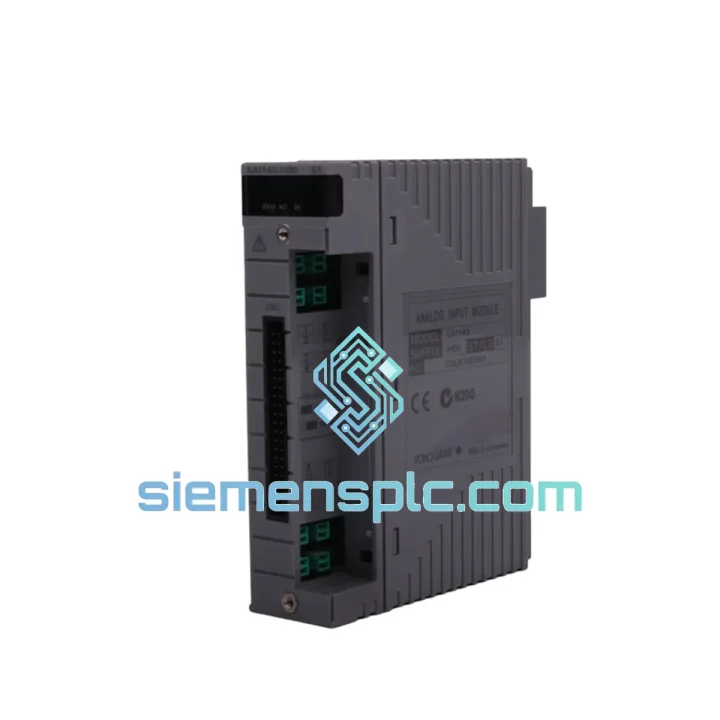
Request verified availability, condition, replacement risk review, packing options and courier lead time for AAI143-H00.
Click Request Quote and the part number is inserted into the inquiry form automatically.
Core fields for model confirmation and RFQ routing. Detailed product narrative remains below.
Within a distributed control system, the analog input module occupies a structurally critical position: it is the first point of signal conditioning between the physical process and the controller’s execution engine. The YOKOGAWA AAI143-H00 S1 is a 16-channel, 4–20 mA analog input module designed for deployment in CENTUM VP and CENTUM CS 3000 field control units. Its role is not passive — each channel performs independent A/D conversion, range validation, and diagnostic status generation before forwarding engineering-unit values to the FCU’s control database at a fixed scan cycle.
In a refinery or chemical plant running CENTUM VP, the FCU’s I/O bus operates on a deterministic token-passing protocol. The AAI143-H00 S1 responds to bus polling within a bounded latency window, ensuring that all 16 channels are refreshed within the FCU’s configured scan period — typically 100 ms to 1 s depending on the control strategy. This determinism is not incidental; it is an architectural requirement for closed-loop PID control, where stale input data directly degrades controller stability and process yield.
The H00 suffix designates the standard current-input variant without HART multiplexing. This configuration is appropriate for conventional 4–20 mA transmitters where smart device diagnostics are managed through a separate HART modem or are not required. The S1 suffix confirms CE marking, indicating compliance with EN 61326-1 for electromagnetic compatibility in industrial environments — a mandatory specification for projects subject to European machinery or process safety directives.
YOKOGAWA’s CENTUM platform has accumulated over four decades of deployment data across oil and gas, petrochemical, power generation, and specialty chemical facilities. The AAI143 series sits within the high-density I/O tier of this ecosystem, where channel-per-slot efficiency directly affects cabinet count, cable routing complexity, and lifecycle maintenance cost. For brownfield expansions where existing FCU slots are limited, the 16-channel density of the AAI143-H00 S1 provides a measurable engineering advantage over 8-channel alternatives.
Genuine YOKOGAWA AAI143-H00 S1 modules are available from stock in Xiamen, China. All units are sourced through verified supply channels and subject to pre-shipment inspection. Contact [email protected] for current pricing and availability.
📧 Real-time Stock & RFQ: [email protected] | WhatsApp: +86 18359268345
| Parameter | Specification |
|---|---|
| Model Number | AAI143-H00 S1 |
| Manufacturer | YOKOGAWA Electric Corporation |
| Compatible DCS Platform | CENTUM VP, CENTUM CS 3000 |
| Module Function | Analog Input (AI) |
| Number of Channels | 16 channels (independent) |
| Input Signal Type | 4–20 mA DC current input |
| Input Impedance | Approx. 250 Ω (per channel) |
| A/D Resolution | 16-bit |
| Accuracy | ±0.1% of full scale (at 25°C) |
| Isolation | Channel-to-bus optical isolation |
| Suffix H00 | Standard AI, no HART communication |
| Suffix S1 | CE marking / EN 61326-1 EMC compliance |
| Operating Temperature | 0°C to +60°C |
| Storage Temperature | -20°C to +70°C |
| Relative Humidity | 5% to 95% RH (non-condensing) |
| Power Consumption | Supplied via FCU I/O bus backplane |
| Mounting | CENTUM VP / CS 3000 Node Unit I/O slot |
| Module Weight | Approx. 250 g |
| Country of Origin | Japan |
| Warranty | 12 months from shipment date |
The AAI143-H00 S1 implements a per-channel signal conditioning chain that begins at the terminal block interface and terminates at the FCU’s internal data bus. Each of the 16 input channels passes through a dedicated current-to-voltage conversion stage, followed by an anti-aliasing low-pass filter before reaching the multiplexed A/D converter array. The multiplexer sequencing is controlled by the module’s onboard microcontroller, which also manages channel-level diagnostic logic — detecting open-circuit conditions (signal below 3.6 mA), over-range conditions (signal above 21 mA), and hardware fault states independently for each channel.
Optical isolation between the field-side circuitry and the bus-side logic is a fundamental design feature. The isolation barrier prevents ground loop currents — common in large industrial installations where field instruments and control cabinets share different ground reference potentials — from corrupting the A/D conversion result or damaging the module’s bus interface. The isolation voltage rating is consistent with YOKOGAWA’s standard for CENTUM I/O modules, providing protection against transient overvoltages induced by nearby switching equipment or lightning events on field cable runs.
The module’s EMC design addresses conducted and radiated interference through a combination of board-level filtering, shielded enclosure construction, and careful PCB layout that separates analog signal traces from digital switching nodes. The S1 CE marking confirms that this design has been validated against EN 61326-1 Class A limits for industrial environments — a test regime that includes 1 kV fast transient burst (IEC 61000-4-4), 2 kV surge immunity (IEC 61000-4-5), and electrostatic discharge immunity (IEC 61000-4-2). These are not nominal ratings; they reflect the actual electromagnetic stress conditions present in switchgear rooms and process control buildings.
Hot-swap capability within the CENTUM VP architecture allows the AAI143-H00 S1 to be removed and reinserted while the FCU remains powered and the control strategy continues executing. The FCU detects module removal, substitutes the last-known-good value or a configured fallback value for the affected channels, and re-initializes the replacement module upon reinsertion — all without operator intervention at the controller level. This behavior is governed by the FCU’s I/O bus arbitration logic and the module’s identification register, which the FCU reads during the initialization handshake to verify module type compatibility before resuming normal scan.
Every YOKOGAWA AAI143-H00 S1 unit dispatched from our Xiamen facility undergoes a structured pre-shipment verification process. Physical inspection covers connector pin integrity, label authenticity, and enclosure condition. Where serial number documentation is available, date codes are cross-referenced against known YOKOGAWA production batches to confirm genuine manufacture. Modules that exhibit any evidence of counterfeit marking, unauthorized repair, or component substitution are rejected and not offered for sale.
Packaging follows anti-static and mechanical protection standards appropriate for sensitive electronic assemblies: conductive foam insert, moisture barrier bag with desiccant, and outer carton with shock-absorbing padding. For international shipments, export documentation is prepared as standard — commercial invoice, packing list, and certificate of origin — to support customs clearance in the destination country without delay.
Xiamen’s geographic position provides direct access to major international freight routes via Xiamen Gaoqi International Airport and Xiamen Port. Air freight to Southeast Asia typically achieves 2–4 day transit; to the Middle East and Europe, 5–7 days. Sea freight options are available for bulk orders where lead time permits. All shipments are tracked from dispatch to delivery, with tracking information provided to the buyer upon collection by the carrier.
A 12-month warranty covers manufacturing defects and premature failure under normal operating conditions. Warranty claims are processed through direct communication with our technical team, who will assess the failure mode and arrange replacement or credit as appropriate. We do not require return of the failed unit before initiating a replacement for established customers with documented purchase history.
📧 Email: [email protected]
📱 WhatsApp: +86 18359268345
🌐 Web: siemensplc.com
📍 Location: Xiamen, China
© 2026. All rights reserved.
We check the full part number, brand, series and visible nameplate information before quotation.
Sales confirms stock path, condition option, quantity and realistic lead time for export dispatch.
DHL, FedEx, UPS or buyer courier arrangements can be reviewed with packing requirements.
Similar brand or category products for fast comparison and multi-item RFQ lists.