Yokogawa
In Stock OK
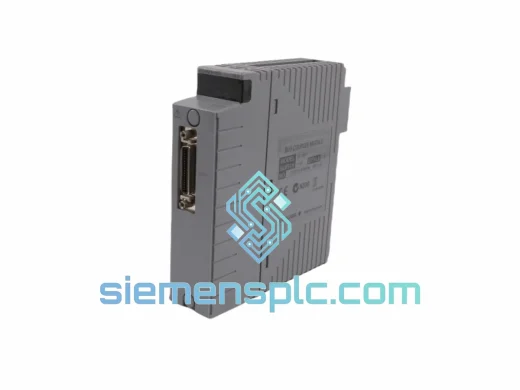
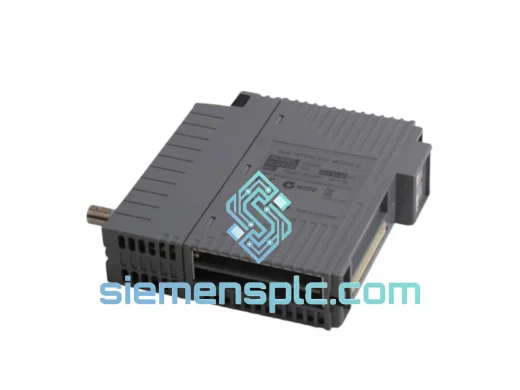
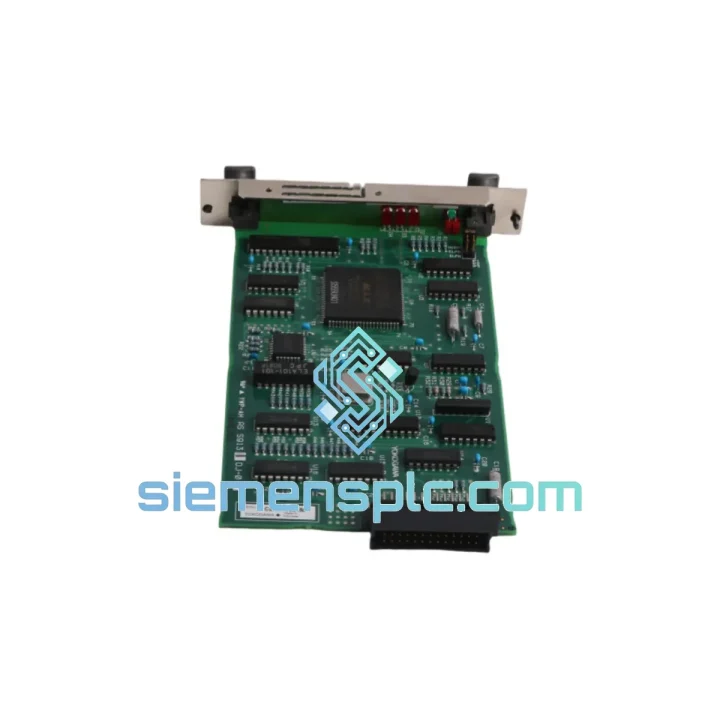
Yokogawa AIP171 S3 Bus Repeater – CENTUM Series
Request verified availability, condition, replacement risk review, packing options and courier lead time for AIP171 S3.
BrandYokogawa
Part NumberAIP171 S3
ConditionAvailability Check
Lead TimeRFQ Confirmation
DocumentsDatasheet / photos by RFQ
ShippingExport packing available
Auto-filled RFQ
AIP171 S3
Click Request Quote and the part number is inserted into the inquiry form automatically.
- Reply by email: [email protected]
- WhatsApp / Tel: +86 18359268345
- Mon-Sat 9:00-18:00 GMT+8
Procurement Data
Key Product Information
Core fields for model confirmation and RFQ routing. Detailed product narrative remains below.
- Brand
- Yokogawa
- Primary Part Number
- AIP171 S3
- Product Type
- DCS Bus Repeater
- Product Family
- Other series
- Manufacturer
- Yokogawa Electric Corporation
- Country of Origin
- JP
- Catalog Category
- DCS & Safety Modules
- Operating Temp.
- 0°C to +60°C
- Warranty
- 12 months functional warranty from date of shipment
Model confirmed for inquiry
AIP171 S3
Send quantity, destination and urgency. The RFQ form keeps this part number attached.
Request Quote
Product Overview
Yokogawa AIP171 S3 Bus Repeater – Signal Regeneration Architecture in CENTUM DCS Control Loops
The Yokogawa AIP171 is a dedicated S3 bus repeater module engineered for deployment within CENTUM CS 3000 and CENTUM VP distributed control systems. Its primary function is to regenerate and re-drive the proprietary S3 bus signal across extended cable runs, preserving data integrity in large-scale process plants where physical distances between field control stations (FCS) and remote I/O nodes exceed the standard segment length specification. Without a repeater at the correct electrical boundary, cumulative signal attenuation and reflective noise on the S3 bus manifest as intermittent communication faults, increased retry cycles, and ultimately, loss of deterministic scan-cycle performance — outcomes that are unacceptable in continuous process environments.
In a CENTUM architecture, the S3 bus operates as the internal backplane-extension bus connecting the FCS to its associated I/O nest units. The AIP171 inserts at the segment boundary, receives the degraded bus signal from the upstream segment, performs full signal reshaping — restoring voltage levels, edge timing, and differential balance — and re-transmits a clean signal onto the downstream segment. This is not passive signal conditioning; the AIP171 executes active regeneration, meaning the downstream segment behaves electrically as if it originates directly from the FCS output driver. The result is a predictable, specification-compliant bus topology regardless of total physical cable length.
Typical deployment scenarios include oil and gas refineries where marshalling cabinets are distributed across process units separated by 50–200 meters, chemical plants with hazardous-area junction boxes requiring long cable runs to safe-area control rooms, power generation facilities with boiler and turbine I/O distributed across multiple floors, and water treatment installations with remote pump station I/O nodes. In each case, the AIP171 eliminates the need to install an additional FCS or sub-controller solely to overcome distance constraints — a significant capital cost avoidance in brownfield expansion projects.
Real-time Stock & RFQ: [email protected] | WhatsApp: +86 18359268345
Technical Parameters
| Parameter | Specification |
|---|---|
| Model Number | AIP171 |
| Bus Type | Yokogawa S3 Bus (proprietary differential serial) |
| Compatible DCS Platforms | CENTUM CS 3000, CENTUM VP |
| Module Function | Active S3 Bus Signal Repeater / Regenerator |
| Mounting Method | CENTUM standard nest / DIN rail per system configuration |
| Supply Voltage | 24 VDC (bus-powered from CENTUM power supply unit) |
| Operating Temperature | 0°C to +60°C |
| Storage Temperature | -20°C to +70°C |
| Relative Humidity | 5% to 95% RH, non-condensing |
| Module Weight | 160 g |
| Manufacturer | Yokogawa Electric Corporation |
| Country of Origin | Japan |
| EMC Compliance | CE Marking (EMC Directive), IEC 61000-4 series |
| Functional Safety Compatibility | Standard (non-SIL rated); consult ProSafe-RS for SIS applications |
| Warranty | 12 months functional warranty from date of shipment |
Hardware Logical Analysis
The S3 bus uses a balanced differential signaling scheme over shielded twisted-pair cable, a topology chosen by Yokogawa for its inherent common-mode noise rejection — critical in industrial environments where variable-frequency drives, high-current motor starters, and inductive switching loads generate broadband electromagnetic interference across the 10 kHz–30 MHz range. The AIP171’s input stage incorporates a differential line receiver with a defined common-mode rejection ratio (CMRR), which suppresses noise coupled equally onto both conductors of the twisted pair before the signal reaches the regeneration logic.
The regeneration core samples the incoming differential signal, extracts the embedded clock and data, and reconstructs the output waveform with controlled rise and fall times matched to the S3 bus driver specification. This retiming function is significant: it prevents jitter accumulation across cascaded repeater stages. In a single-repeater topology, the downstream segment receives a signal with timing characteristics equivalent to a direct FCS output. In multi-repeater configurations, each stage resets the timing budget, preventing the cumulative jitter that would otherwise degrade the bus’s noise margin over long chains.
The AIP171’s output driver is designed to drive the full rated bus load of the downstream segment — the same capacitive and resistive load specification as the FCS output port. This means the downstream segment can support the same number of I/O nest connections as a primary segment, without derating. The module also maintains the bus termination impedance at the segment boundary, preventing signal reflections that would otherwise appear as spurious data transitions at high bus frequencies.
From an EMC design standpoint, the AIP171’s PCB layout isolates the input and output bus circuits with a ground plane partition, reducing capacitive coupling between the two segments. The module housing provides shielding continuity when installed in a grounded CENTUM cabinet, and the cable shield connection points are designed to maintain shield integrity through the repeater junction — a detail that is frequently overlooked in third-party repeater designs and that directly affects high-frequency noise rejection performance.
System Integration Benefits
- Deterministic scan-cycle preservation: By maintaining signal integrity at specification levels, the AIP171 ensures the FCS completes its I/O scan within the configured cycle time without communication retries that would extend the effective scan period and introduce control-loop latency.
- Zero-configuration deployment: The AIP171 is transparent to the CENTUM engineering workstation (EWS). No additional hardware tags, I/O assignments, or bus configuration parameters are required — the repeater is invisible to the system software layer, eliminating commissioning risk.
- Capital cost avoidance in distributed layouts: A single AIP171 extends the S3 bus segment reach, removing the need to install an additional FCS node solely to overcome distance constraints. In brownfield projects, this avoids both hardware cost and the engineering effort of integrating an additional controller into the existing system database.
- Diagnostic transparency: Because the AIP171 regenerates rather than bridges the bus, all CENTUM diagnostic functions — module status polling, communication error counters, and hardware fault detection — operate normally across the extended segment. The FCS retains full visibility of all downstream I/O modules without diagnostic blind spots.
- Noise immunity in mixed-voltage environments: The differential input stage rejects common-mode interference from adjacent power cables, grounding potential differences between cabinets, and radiated emissions from nearby variable-speed drives — all common sources of bus errors in process plant electrical environments.
- Segment load capacity retention: The output driver specification matches the FCS primary output, meaning the downstream segment supports the full rated I/O nest count without capacity derating. System designers do not need to recalculate bus loading budgets for the extended segment.
- Thermal stability across operating range: The AIP171 is rated for continuous operation from 0°C to 60°C, covering the full range of industrial cabinet environments from unheated outdoor enclosures in temperate climates to air-conditioned control rooms in tropical facilities.
- Long-term spare parts availability: As a mature CENTUM system component with an extended production history, the AIP171 is available through authorized distributors and certified surplus channels, supporting long-term maintenance strategies for plants with 20+ year operational horizons.
Quality Assurance & Global Logistics
Every Yokogawa AIP171 unit dispatched from our Xiamen, China facility is sourced exclusively from authorized Yokogawa distribution channels and verified surplus inventories with traceable provenance documentation. Each unit undergoes a structured pre-shipment inspection protocol: visual examination for physical damage, label integrity verification against Yokogawa part number databases, power-on functional test confirming module initialization and bus communication handshake, and firmware version check against the CENTUM compatibility matrix.
Units are packaged in anti-static bags with humidity indicator cards, placed in rigid foam-lined cartons rated for international air freight handling. Export documentation — commercial invoice, packing list, certificate of origin, and HS code declaration — is prepared for every international shipment to ensure smooth customs clearance in all major import markets including the EU, USA, Southeast Asia, and the Middle East.
Standard dispatch from Xiamen is within 1–3 business days for in-stock units. International delivery via DHL Express or FedEx International Priority typically achieves 3–5 business day transit to major industrial hubs. For urgent plant shutdown or emergency repair requirements, same-day dispatch is available on confirmed in-stock units — contact us directly via WhatsApp for real-time stock confirmation before placing an order.
All units are covered by a 12-month functional warranty from the date of shipment, covering defects in operation under normal industrial use conditions. Warranty claims are processed with a target response time of 48 hours and replacement dispatch within 5 business days.
Contact Information
Email: [email protected]
WhatsApp: +86 18359268345
Web: siemensplc.com
Location: Xiamen, China
© 2026 siemensplc.com. All rights reserved.
Ready to quote
[email protected]
Send This Part Number to Sales
RFQ workflow
Quality workflow ->
Confirmation Process
01Model confirmation
We check the full part number, brand, series and visible nameplate information before quotation.
02Availability reply
Sales confirms stock path, condition option, quantity and realistic lead time for export dispatch.
03Packing & courier
DHL, FedEx, UPS or buyer courier arrangements can be reviewed with packing requirements.
Continue sourcing
Browse full catalog ->
Related Automation Parts
Similar brand or category products for fast comparison and multi-item RFQ lists.