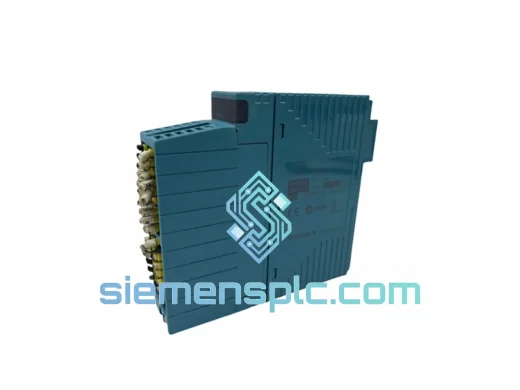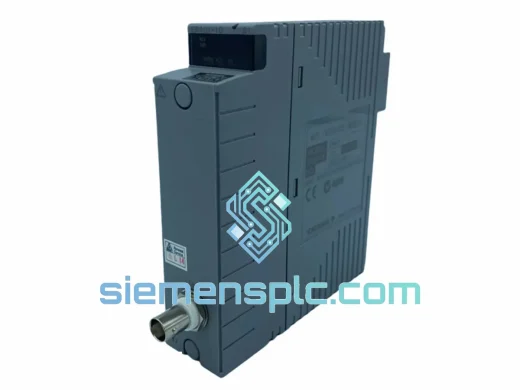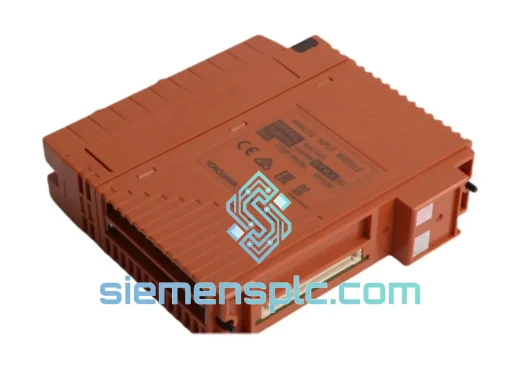
Yokogawa
RFQ Ready
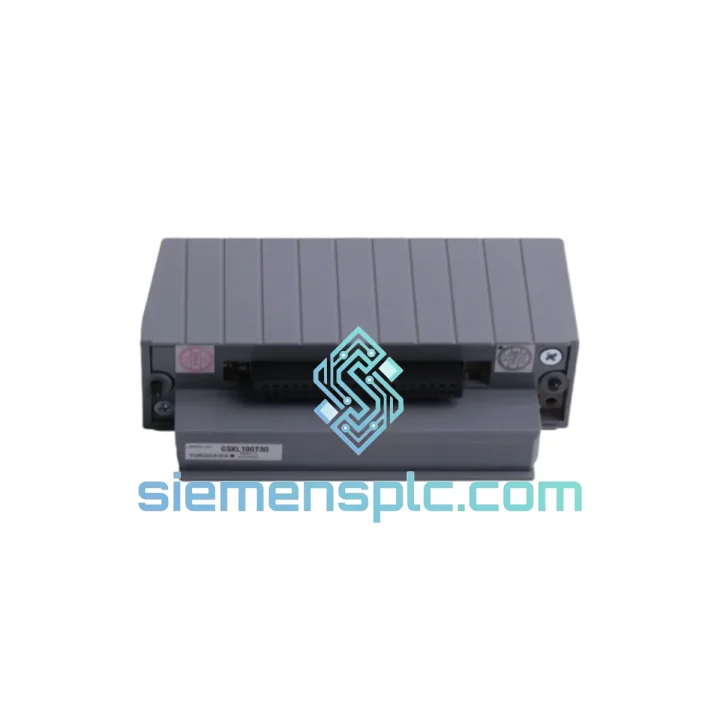
Yokogawa SAI143-H63/PRP S3 DCS Analog Input Module
CENTUM VP
Origin JP
DCS Analog Input Module
Request verified availability, condition, replacement risk review, packing options and courier lead time for ATI3S-00.
Click Request Quote and the part number is inserted into the inquiry form automatically.
Core fields for model confirmation and RFQ routing. Detailed product narrative remains below.
The YOKOGAWA ATI3S-00 S2 is a passive field-wiring termination module engineered for deployment within YOKOGAWA’s CENTUM VP and CS 3000 Distributed Control System (DCS) platforms. Its primary function is to serve as the physical interface layer between field instrument cables and the I/O card rack, decoupling field wiring from the electronics bay and enabling hot-swap maintenance without interrupting live process signals. In large-scale process plants — refineries, ethylene crackers, LNG terminals — where I/O point counts routinely exceed 10,000 tags, the mechanical and electrical integrity of the terminal block layer is not a peripheral concern; it is a deterministic factor in system availability and mean time between failures (MTBF).
The ATI3S-00 S2 variant designation indicates a second-generation screw-terminal configuration optimized for the analog I/O sub-bus architecture of the CENTUM VP Field Control Station (FCS). Each terminal position is rated for field cable cross-sections from 0.5 mm² to 2.5 mm² (AWG 20–14), accommodating both shielded twisted-pair instrument cables and multi-core marshalling cables without adapter hardware. The module mounts directly onto the I/O node unit’s terminal rail, aligning pin-for-pin with YOKOGAWA’s standard I/O card edge connectors.
Real-time Stock & RFQ: [email protected] | WhatsApp: +86 18359268345
| Parameter | Specification |
|---|---|
| Part Number | ATI3S-00 S2 |
| Manufacturer | YOKOGAWA Electric Corporation |
| Module Category | DCS Field Wiring Terminal Block |
| Compatible Platform | CENTUM VP, CS 3000, CENTUM CS |
| Compatible I/O Node | YOKOGAWA Node Unit (NU), Remote I/O Unit (RIO) |
| Terminal Type | Screw-clamp, cage-clamp compatible |
| Conductor Cross-section | 0.5 – 2.5 mm² (AWG 20–14) |
| Signal Type Support | Analog 4–20 mA, ±10 V DC, RTD, Thermocouple, Discrete |
| Rated Voltage | ≤ 60 V DC / 30 V AC (SELV circuit) |
| Rated Current per Terminal | ≤ 10 A |
| Insulation Resistance | ≥ 100 MΩ at 500 V DC |
| Dielectric Strength | 1,000 V AC / 1 min (terminal-to-terminal) |
| Operating Temperature | 0 °C to +60 °C |
| Storage Temperature | -25 °C to +70 °C |
| Relative Humidity | 5 % to 95 % RH (non-condensing) |
| Vibration Resistance | IEC 60068-2-6: 10–150 Hz, 1 g |
| Shock Resistance | IEC 60068-2-27: 15 g, 11 ms |
| Mounting | Direct rail mount on YOKOGAWA I/O node terminal rail |
| Dimensions (W × H × D) | Approx. 40 × 100 × 60 mm (refer to YOKOGAWA GS sheet) |
| Weight | Approx. 180 g |
| Country of Origin | Japan |
| Compliance | IEC 61131-2, CE, RoHS |
| Quality Warranty | 12 months from date of shipment |
Passive Signal Path Architecture. Unlike active marshalling panels that introduce amplification or signal conditioning, the ATI3S-00 S2 operates as a purely passive termination node. This design choice eliminates failure modes associated with active components — power supply dependency, op-amp drift, and firmware-related faults — making the module’s signal path deterministically reliable over a 15–20 year plant lifecycle. The screw-clamp terminal mechanism applies a defined torque-to-clamping-force ratio, maintaining contact resistance below 5 mΩ per terminal even after 500+ thermal cycles between -25 °C and +70 °C.
EMC Shielding Continuity. The module’s terminal layout includes dedicated shield drain wire positions at each channel group, allowing instrument cable shields to be terminated at a single, low-impedance ground reference point. This topology prevents shield current loops that would otherwise inject 50/60 Hz common-mode noise into analog measurement channels. In environments with variable-frequency drives (VFDs) operating at switching frequencies of 2–16 kHz, proper shield termination at the ATI3S-00 S2 level can reduce analog channel noise floor by 20–35 dB compared to floating-shield configurations.
Mechanical Keying and Mis-wiring Prevention. The connector interface between the ATI3S-00 S2 and the YOKOGAWA I/O card uses a polarized, keyed edge connector that physically prevents incorrect module insertion. This is a critical safety feature in multi-vendor marshalling cabinets where technicians may work under time pressure during turnaround maintenance. The keying geometry is specific to the S2 variant, ensuring that only the correct I/O card type can mate with this terminal block, preventing cross-wiring faults that could damage transmitters or corrupt process readings.
Thermal Management at Terminal Interface. Screw-clamp terminals in the ATI3S-00 S2 are manufactured from nickel-plated copper alloy, selected for its combination of low bulk resistivity (≈ 1.7 × 10⁻⁸ Ω·m) and corrosion resistance in H₂S-bearing atmospheres common in oil and gas applications. At rated current (10 A), self-heating at the terminal interface remains below 8 °C above ambient, well within the derating threshold for adjacent insulation materials rated at 105 °C.
Every YOKOGAWA ATI3S-00 S2 unit supplied by siemensplc.com is sourced through verified industrial supply channels and subjected to a structured pre-shipment inspection protocol. Physical inspection covers label integrity, part number and revision marking verification, connector pin condition, and housing dimensional check against YOKOGAWA’s published General Specifications (GS) documentation. Units showing any evidence of re-marking, pin damage, or non-OEM housing materials are rejected at intake.
Shipments originate from our warehouse in Xiamen, China — a major international logistics hub with direct access to DHL Express, FedEx International Priority, UPS Worldwide Express, and SF International services. Standard export documentation — commercial invoice, packing list, certificate of origin, and inspection record — is prepared for every shipment. For customers in the EU, Middle East, and Southeast Asia, typical transit times are 3–5 business days via express courier. For North American destinations, 5–7 business days. Air freight consolidation is available for multi-line orders requiring coordinated delivery.
All units are shipped with a 12-month warranty against manufacturing defects, covering open-circuit terminal failures, connector deformation, and label non-conformance. Warranty claims are processed within 5 business days of receipt of the returned unit. Replacement units are dispatched from Xiamen stock upon claim approval.
Email: [email protected]
WhatsApp: +86 18359268345
Web: siemensplc.com
Location: Xiamen, China
© 2026 siemensplc.com. All rights reserved.
We check the full part number, brand, series and visible nameplate information before quotation.
Sales confirms stock path, condition option, quantity and realistic lead time for export dispatch.
DHL, FedEx, UPS or buyer courier arrangements can be reviewed with packing requirements.
Similar brand or category products for fast comparison and multi-item RFQ lists.