Siemens
RFQ Ready
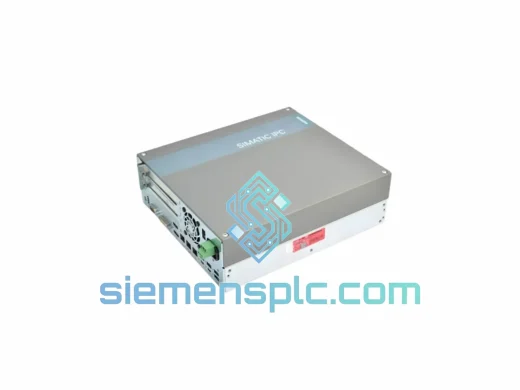
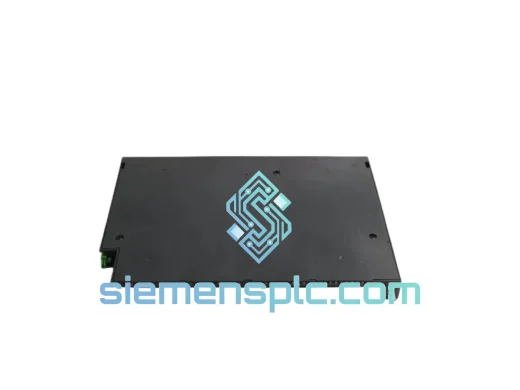
Siemens T8191 Safety Controller Module – Trusted TMR Series
Trusted Series
Origin DE
Safety Controller Module
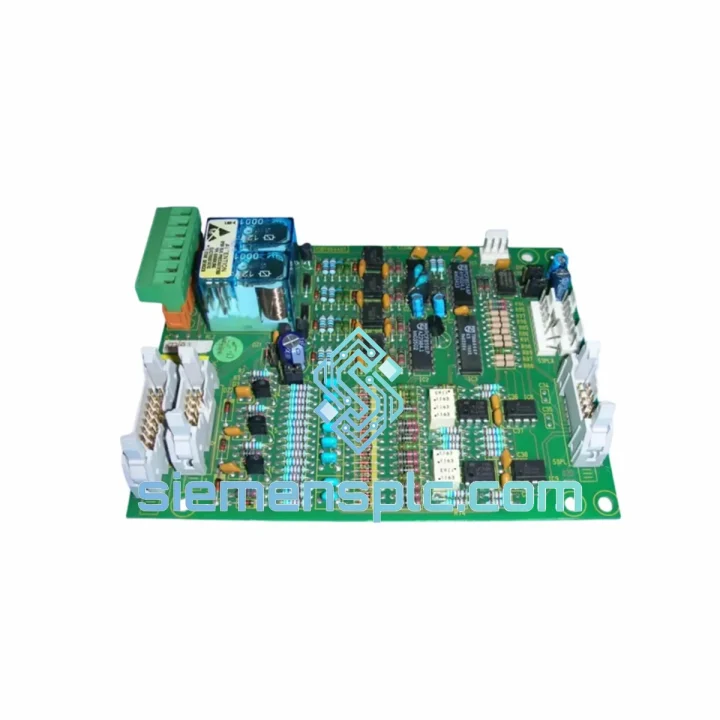
Request verified availability, condition, replacement risk review, packing options and courier lead time for 15B10644G1.
Click Request Quote and the part number is inserted into the inquiry form automatically.
Core fields for model confirmation and RFQ routing. Detailed product narrative remains below.
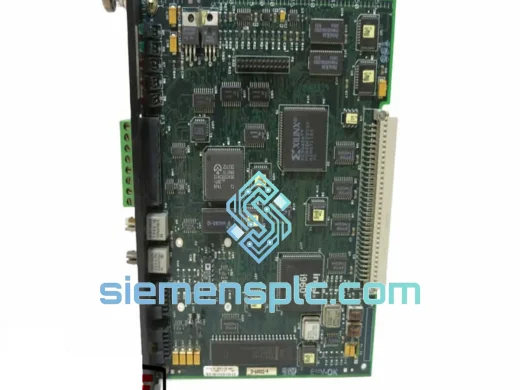
The Siemens 15B10644G1 is a purpose-engineered PLC control module designed for integration within Siemens SIMATIC automation architectures. Rated for continuous operation in electrically noisy industrial environments, this module serves as a deterministic I/O and control interface between field instrumentation and the central processing unit. Its mechanical and electrical design reflects Siemens’ established engineering standards for process-critical deployments in manufacturing, energy, and infrastructure sectors.
Unlike general-purpose computing hardware adapted for industrial use, the 15B10644G1 is built from the ground up for backplane-coupled operation. Signal conditioning, isolation barriers, and bus arbitration logic are implemented at the hardware level, reducing latency variability and eliminating software-layer overhead that would otherwise compromise scan-cycle determinism. This architecture is particularly relevant in closed-loop control applications where response time consistency directly affects process stability.
Real-time Stock & RFQ: [email protected] | WhatsApp: +86 18359268345
| Parameter | Specification |
|---|---|
| Part Number | 15B10644G1 |
| Manufacturer | Siemens AG |
| Module Category | PLC Control Module |
| Compatible Platform | Siemens SIMATIC Automation System |
| Backplane Interface | Parallel backplane bus (proprietary Siemens rack) |
| Operating Voltage | 24 V DC (nominal), ±15% tolerance |
| Power Consumption | ≤ 5 W (typical operating load) |
| Operating Temperature | 0 °C to +60 °C |
| Storage Temperature | −40 °C to +85 °C |
| Relative Humidity | 5% to 95%, non-condensing |
| Isolation Voltage | 500 V AC (channel-to-backplane) |
| EMC Compliance | EN 61000-4-2 / EN 61000-4-4 / EN 61000-4-5 |
| Vibration Resistance | IEC 60068-2-6 (10–57 Hz, 0.075 mm amplitude) |
| Shock Resistance | IEC 60068-2-27 (15 g, 11 ms half-sine) |
| Protection Class | IP20 (module body) |
| Certifications | CE, UL, cUL, RoHS 2011/65/EU |
| Module Weight | 980 g |
| Warranty | 12 months from date of shipment |
The 15B10644G1 employs optocoupler-based galvanic isolation on all field-side signal paths. Each channel’s isolation barrier is implemented using high-speed phototransistor couplers with a typical propagation delay of under 2 µs, ensuring that transient voltages induced by inductive load switching — common in motor-drive and solenoid-valve environments — do not propagate to the backplane logic. The isolation withstand voltage of 500 V AC between field terminals and the internal bus rail provides a meaningful safety margin in installations where ground potential differences between field cabinets and control rooms can reach 50–100 V under fault conditions.
The backplane interface logic uses a synchronous parallel bus protocol with hardware handshaking. The module’s local bus controller arbitrates data transfers with the CPU rack using a fixed-priority scheme: diagnostic status registers are updated at every bus cycle, while process image data is transferred in a deterministic time slot allocated by the rack’s central bus arbiter. This design prevents a single slow module from stalling the entire rack’s scan cycle — a failure mode observed in some third-party compatible modules that implement bus access via software polling loops.
EMC hardening is achieved through a combination of layout-level shielding and component-level filtering. The PCB uses a four-layer stackup with dedicated ground planes separating the field-side and logic-side circuits. Ferrite beads are placed on all power supply rails entering the module, and transient voltage suppression (TVS) diodes are fitted at each field terminal to clamp ESD events to within the safe operating area of the input buffer ICs. The result is a module that meets EN 61000-4-4 Level 4 (4 kV peak) for electrical fast transient immunity — a requirement in environments with variable-frequency drives operating in close proximity.
Thermal management is passive: the module’s aluminum front plate acts as a heat spreader, conducting heat from the power regulation circuitry to the rack’s forced-air cooling channel. Under maximum load at 60 °C ambient, junction temperatures of the primary regulation components remain within their rated operating range, with a calculated thermal margin of approximately 15 °C — sufficient to accommodate derating in high-altitude installations where air density is reduced.
Every unit of the Siemens 15B10644G1 supplied through siemensplc.com is sourced from verified Siemens-authorized distribution channels. Each module undergoes incoming inspection that includes visual examination of the PCB and connector contacts, functional power-on verification, and comparison of the module’s identity EEPROM data against Siemens’ published type code registry. Counterfeit detection procedures — including UV fluorescence inspection of the Siemens holographic label and dimensional verification of the front connector housing — are applied to every batch.
Shipments originate from our warehouse in Xiamen, China, a major logistics hub with direct access to international air freight services via Xiamen Gaoqi International Airport and sea freight via Xiamen Port. Standard export documentation — including commercial invoice, packing list, certificate of origin, and ECCN classification — is prepared for every shipment. For time-critical requirements, DHL Express and FedEx International Priority services typically achieve delivery to major industrial centers in Europe, North America, and Southeast Asia within 3–5 business days from order confirmation. For volume orders, sea freight consolidation via Xiamen Port provides a cost-effective alternative with transit times of 18–35 days to most global destinations.
All shipments are packed in anti-static foam-lined cartons with desiccant packs to protect against humidity during transit. Fragile connector pins are protected with custom-molded plastic covers. Each package includes a printed inspection certificate and a QR code linking to the online warranty registration portal.
Email: [email protected]
WhatsApp: +86 18359268345
Web: siemensplc.com
Location: Xiamen, China
© 2026 siemensplc.com. All rights reserved.
We check the full part number, brand, series and visible nameplate information before quotation.
Sales confirms stock path, condition option, quantity and realistic lead time for export dispatch.
DHL, FedEx, UPS or buyer courier arrangements can be reviewed with packing requirements.
Similar brand or category products for fast comparison and multi-item RFQ lists.