Yokogawa
In Stock OK
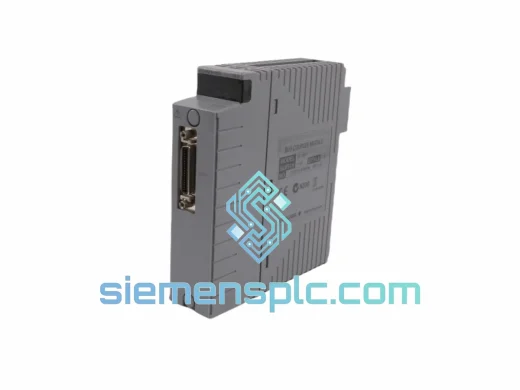
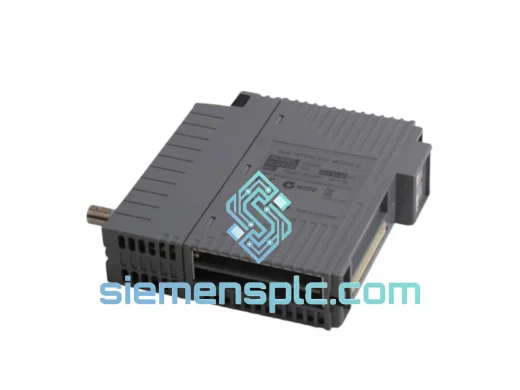
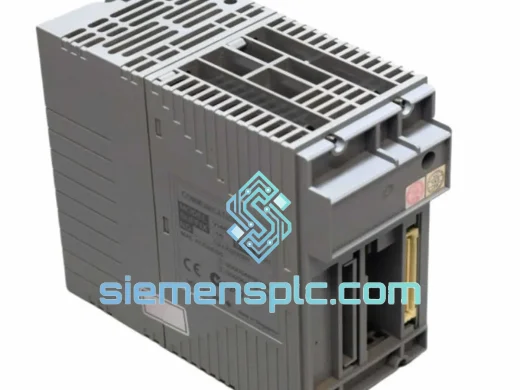
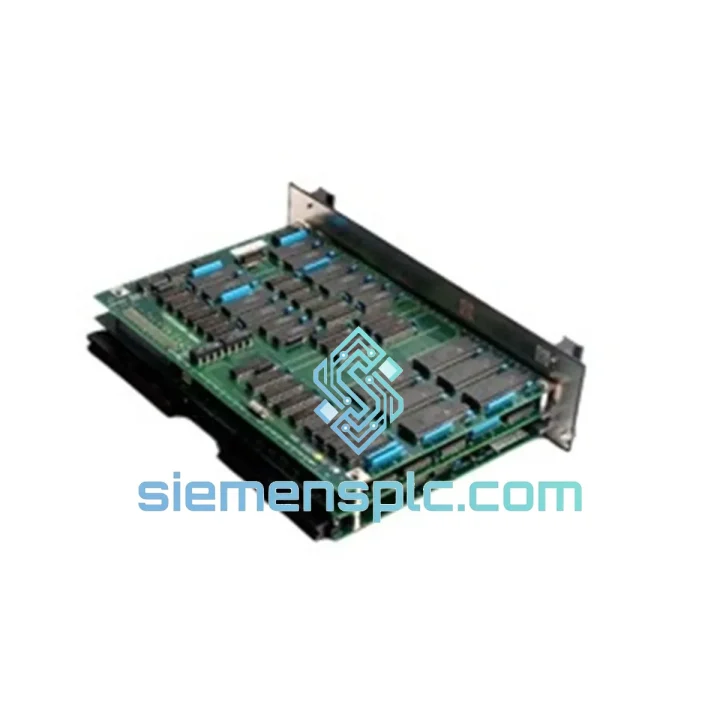
YOKOGAWA CP11*C ASS9291AS-0 CPU Module – CENTUM CS
Request verified availability, condition, replacement risk review, packing options and courier lead time for ASS9291AS-0.
BrandYokogawa
Part NumberASS9291AS-0
ConditionAvailability Check
Lead TimeRFQ Confirmation
DocumentsDatasheet / photos by RFQ
ShippingExport packing available
Auto-filled RFQ
ASS9291AS-0
Click Request Quote and the part number is inserted into the inquiry form automatically.
- Reply by email: [email protected]
- WhatsApp / Tel: +86 18359268345
- Mon-Sat 9:00-18:00 GMT+8
Procurement Data
Key Product Information
Core fields for model confirmation and RFQ routing. Detailed product narrative remains below.
- Brand
- Yokogawa
- Primary Part Number
- ASS9291AS-0
- Product Type
- CPU Module
- Product Family
- Other series
- Manufacturer
- YOKOGAWA Electric Corporation
- Country of Origin
- JP
- Catalog Category
- DCS & Safety Modules
- Operating Temp.
- 0°C to +55°C (per CENTUM CS hardware specification)
- Warranty
- 12 months from date of shipment
- Compliance
- YOKOGAWA factory QC; CE-marked platform
Model confirmed for inquiry
ASS9291AS-0
Send quantity, destination and urgency. The RFQ form keeps this part number attached.
Request Quote
Product Overview
YOKOGAWA CP11*C ASS9291AS-0 — Central Processing Unit for CENTUM CS Field Control Stations
In continuous-process automation, the CPU module is not a peripheral — it is the deterministic core around which every control loop, every interlock, and every diagnostic transaction is organized. The YOKOGAWA CP11*C ASS9291AS-0 serves as the central processing unit within the CENTUM CS Field Control Station (FCS), executing real-time control algorithms, managing the internal V-net station bus, and maintaining synchronized communication with the Human Interface Station (HIS) and Engineering Workstation (EWS). Its assembly revision designation, ASS9291AS-0, identifies a specific hardware and firmware configuration that must be matched precisely when replacing or expanding an existing CENTUM CS installation.
The CENTUM CS platform was engineered for industries where process uptime is measured in years, not quarters. Refineries, LNG terminals, chemical reactors, and pharmaceutical batch plants have relied on this architecture for over two decades. Within that ecosystem, the CP11*C occupies the highest-criticality position: it arbitrates all I/O scan cycles, resolves control priority conflicts, and maintains the execution schedule for every function block configured in the station. A mismatch in CPU revision — even a minor one — can introduce firmware incompatibilities that manifest as intermittent communication faults or degraded scan-cycle determinism. Sourcing the exact ASS9291AS-0 assembly is therefore not a preference; it is an engineering requirement.
Real-time Stock & RFQ: [email protected] | WhatsApp: +86 18359268345
Technical Parameters
| Parameter | Value / Description |
|---|---|
| Manufacturer | YOKOGAWA Electric Corporation |
| Full Part Number | CP11*C ASS9291AS-0 |
| Module Classification | Central Processing Unit (CPU) Module |
| Target Platform | CENTUM CS Distributed Control System (DCS) |
| Station Type | Field Control Station (FCS) |
| Assembly Revision | ASS9291AS-0 |
| Internal Communication Bus | V-net (YOKOGAWA proprietary high-speed station bus) |
| Control Execution | PID, sequence, advanced control function blocks |
| Redundancy Support | Hot-standby dual-CPU configuration (bumpless switchover) |
| Form Factor | Rack-mount module; CENTUM CS FCS chassis compatible |
| Operating Temperature | 0°C to +55°C (per CENTUM CS hardware specification) |
| Storage Temperature | -20°C to +70°C |
| Relative Humidity | 5% to 95% RH, non-condensing |
| Power Supply | Supplied via FCS backplane (station power module) |
| Weight (approx.) | 1,000 g |
| Compliance | YOKOGAWA factory QC; CE-marked platform |
| Warranty | 12 months from date of shipment |
Hardware Logical Analysis
The CP11*C is built around a deterministic real-time processor architecture that separates control execution from communication handling at the hardware level. This dual-path design ensures that V-net bus traffic — including HIS polling, alarm broadcasts, and EWS configuration downloads — cannot preempt the control scan cycle. The processor maintains a fixed scan period regardless of network load, which is the foundational requirement for closed-loop stability in processes with fast dynamics, such as compressor surge control or reactor temperature regulation.
The backplane interface of the CP11*C implements a time-division multiplexed (TDM) I/O scan protocol. Each I/O module slot is allocated a fixed time window within the scan frame, and the CPU arbitrates access using a deterministic round-robin scheduler. This eliminates bus contention jitter — a failure mode common in non-deterministic fieldbus architectures — and guarantees that analog input values are sampled at consistent intervals. For PID loops with derivative action, scan-cycle jitter directly degrades derivative term accuracy; the CP11*C’s TDM architecture eliminates this error source at the hardware level.
EMC performance is addressed through board-level design: signal traces carrying high-frequency clock signals are routed with controlled impedance and guarded by ground planes on adjacent PCB layers. The module housing provides shielding continuity with the FCS chassis ground, and all external connectors are filtered at the board edge. This design approach meets IEC 61000-4 series immunity requirements without relying solely on external cabinet shielding, which is significant in retrofit installations where cabinet integrity may be compromised.
The redundancy arbitration logic in the CP11*C operates at the hardware interrupt level, not the application software level. When the primary CPU detects a watchdog timeout or internal self-diagnostic fault, the switchover signal is asserted within one scan cycle, and the standby CPU assumes control without waiting for application-layer handshaking. This hardware-level arbitration reduces switchover time to sub-scan-cycle latency, which is critical for processes where a multi-second control gap would trigger safety system intervention.
System Integration Benefits
- Deterministic Scan-Cycle Execution: The TDM backplane protocol guarantees fixed I/O sampling intervals, preserving PID derivative accuracy and loop stability across all configured function blocks.
- Sub-Scan-Cycle Redundancy Switchover: Hardware-level arbitration logic executes CPU failover within a single scan period, preventing process upsets that would otherwise trigger safety system responses.
- Exact Firmware Revision Matching: The ASS9291AS-0 assembly designation locks hardware and firmware to a validated configuration, eliminating integration risk when replacing a failed unit in an existing FCS.
- V-net Bus Isolation: Control execution and station communication are handled by separate processor paths, ensuring that HIS polling or EWS downloads do not introduce latency into the control scan cycle.
- Integrated Self-Diagnostics: The CPU continuously monitors its own memory integrity, clock accuracy, and backplane communication health, generating structured diagnostic codes that appear in the CENTUM CS alarm management system without requiring external test equipment.
- Long-Term Platform Compatibility: CENTUM CS installations routinely operate for 20+ years. The CP11*C’s defined hardware revision ensures backward compatibility with existing I/O modules, power supplies, and communication cards already installed in the station.
- Reduced MTTR: A single CPU module swap restores full FCS functionality. There is no requirement for board-level component repair or firmware re-flashing when replacing a like-for-like ASS9291AS-0 unit, reducing mean time to repair to the duration of the physical swap procedure.
- Structured Alarm and Event Logging: The CPU timestamps all control events and diagnostic transitions at the scan-cycle level, providing the time-resolution required for post-incident root-cause analysis in regulated industries such as pharmaceuticals and nuclear power.
- Scalable Redundancy Architecture: The CP11*C supports both simplex and dual-redundant CPU configurations within the same FCS chassis, allowing facilities to upgrade from simplex to redundant operation without replacing I/O modules or rewiring field instruments.
- Consistent Batch-to-Batch Quality: YOKOGAWA’s ISO 9001-certified manufacturing process applies identical test protocols to every CP11*C unit, ensuring that a replacement module sourced years after the original installation meets the same electrical and functional specification.
Quality Assurance & Global Logistics
Every YOKOGAWA CP11*C ASS9291AS-0 unit dispatched from our Xiamen, China facility undergoes a structured pre-shipment inspection protocol. Visual examination covers PCB surface condition, connector pin integrity, label authenticity, and housing continuity. Where bench test equipment is available, power-on verification and V-net communication checks are performed prior to packaging. Units are sealed in anti-static bags, cushioned with closed-cell foam, and packed in double-wall corrugated cartons rated for international air freight handling.
Sourcing traceability is maintained for every unit: procurement records identify the origin channel — whether decommissioned OEM installation, authorized distributor surplus, or verified industrial liquidation — and these records are available to customers upon request for internal audit or regulatory compliance purposes. The 12-month warranty covers functional defects and dead-on-arrival conditions; warranty claims are processed with a target response time of one business day.
Logistics from Xiamen are executed via DHL Express, FedEx International Priority, UPS Worldwide Express, and freight forwarder channels for volume shipments. Standard export documentation — commercial invoice, packing list, and certificate of origin — is prepared for every order. Additional documentation such as material safety data sheets, test reports, or customs pre-classification letters is available on request. Typical transit times to major industrial hubs: Southeast Asia 2–4 days, Europe 3–5 days, Middle East 3–5 days, North America 4–6 days.
Contact Information
Email: [email protected]
WhatsApp: +86 18359268345
Web: siemensplc.com
Location: Xiamen, China
© 2026 siemensplc.com. All rights reserved.
Ready to quote
[email protected]
Send This Part Number to Sales
RFQ workflow
Quality workflow ->
Confirmation Process
01Model confirmation
We check the full part number, brand, series and visible nameplate information before quotation.
02Availability reply
Sales confirms stock path, condition option, quantity and realistic lead time for export dispatch.
03Packing & courier
DHL, FedEx, UPS or buyer courier arrangements can be reviewed with packing requirements.
Continue sourcing
Browse full catalog ->
Related Automation Parts
Similar brand or category products for fast comparison and multi-item RFQ lists.