Yokogawa
In Stock OK
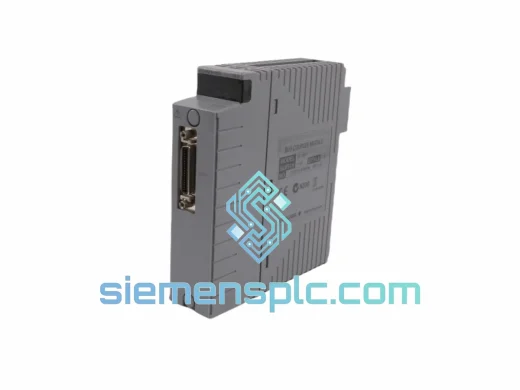
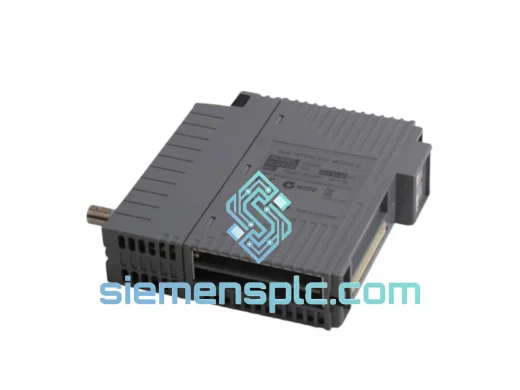
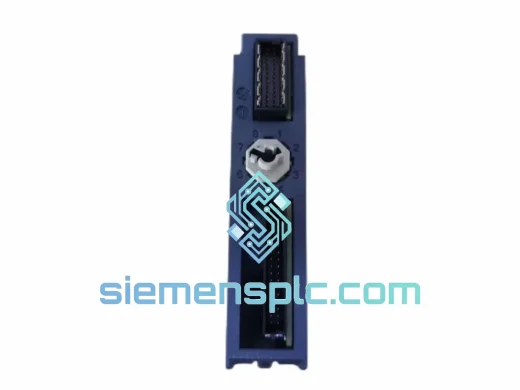
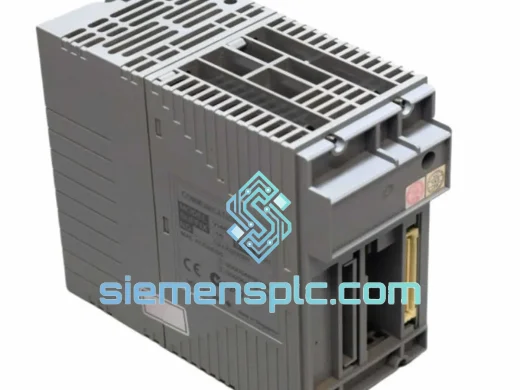
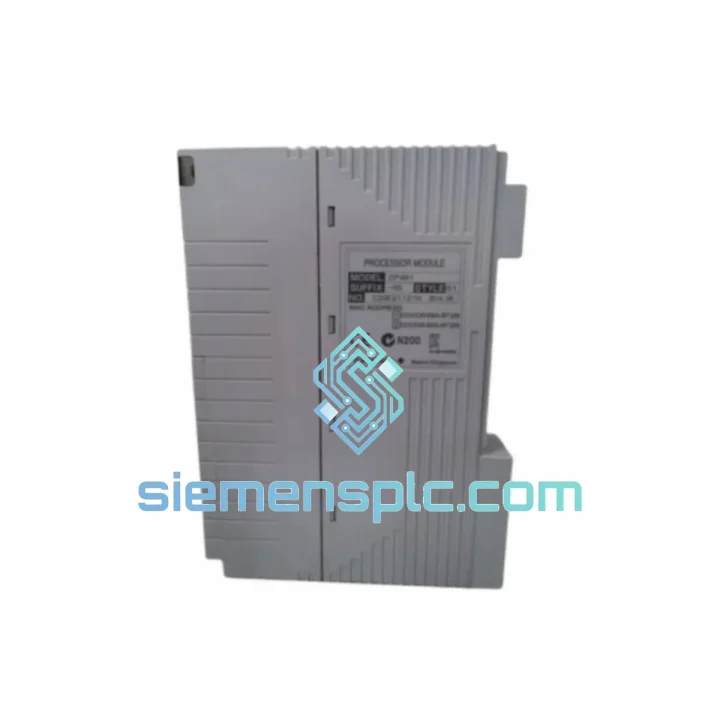
YOKOGAWA CP461-50 S1 DCS Processor Module
Request verified availability, condition, replacement risk review, packing options and courier lead time for CP461-50.
BrandYokogawa
Part NumberCP461-50
ConditionAvailability Check
Lead TimeRFQ Confirmation
DocumentsDatasheet / photos by RFQ
ShippingExport packing available
Auto-filled RFQ
CP461-50
Click Request Quote and the part number is inserted into the inquiry form automatically.
- Reply by email: [email protected]
- WhatsApp / Tel: +86 18359268345
- Mon-Sat 9:00-18:00 GMT+8
Procurement Data
Key Product Information
Core fields for model confirmation and RFQ routing. Detailed product narrative remains below.
- Brand
- Yokogawa
- Primary Part Number
- CP461-50
- Product Type
- DCS Processor Module
- Product Family
- Other series
- Manufacturer
- YOKOGAWA Electric Corporation
- Country of Origin
- JP
- Catalog Category
- DCS & Safety Modules
Model confirmed for inquiry
CP461-50
Send quantity, destination and urgency. The RFQ form keeps this part number attached.
Request Quote
Product Overview
CP461-50 S1 In Stock Now — Every Hour of DCS Downtime Costs You More Than This Module
Your CENTUM CS 3000 Field Control Station just dropped offline. The CP461-50 S1 processor is the brain of that FCS — without it, every PID loop in that cabinet is frozen, every safety interlock is blind, and your operators are staring at a dead HIS screen. In a refinery, that’s a CDU shutdown. In a chemical plant, that’s a reactor quench and a 12-hour restart sequence. In a power station, that’s a forced outage call to the grid operator. The financial exposure starts the moment that module fails and stops only when a verified replacement is seated, initialized, and back in scan.
We stock the YOKOGAWA CP461-50 S1 in Xiamen, China. Not on order. Not inbound next week. In our warehouse, tested, packed in ESD-safe materials, and ready to ship via DHL Express or FedEx International Priority within 24 hours of order confirmation. For plants running CENTUM CS 3000 across Asia-Pacific, the Middle East, Europe, or the Americas, that means a replacement processor on-site in 2–5 business days — not 6–10 weeks through an OEM back-order queue.
This is not a refurbished unit sold as new. Every CP461-50 S1 we dispatch is inspected against Yokogawa’s published part numbering conventions, suffix-code verified (S1 = standard specification), and power-on tested where bench equipment permits. We issue inspection records on request — because in a regulated process environment, your maintenance management system needs documentation, not just a part.
URGENT REQUIREMENT? Contact us immediately:
📧 [email protected] | 📱 WhatsApp: +86 18359268345
Quick Technical Datasheet
| Manufacturer | YOKOGAWA Electric Corporation |
| Full Part Number | CP461-50 S1 |
| Series / Platform | CENTUM CS 3000 DCS |
| Module Function | Field Control Station (FCS) Central Processor |
| Suffix Code | S1 — Standard Specification |
| Control Network | V-net (Yokogawa proprietary) |
| Redundancy | 1:1 dual-redundant configuration supported |
| Form Factor | Card-type, rack-mounted |
| Weight | 700 g (approx.) |
| Origin | Japan |
| Stock Status | ✅ Ready to Ship — Xiamen Warehouse |
| Lead Time | Ships within 24 hours of order confirmation |
Troubleshooting & Replacement Tips
Confirming processor failure before you pull the card: Before condemning the CP461-50 S1, check the FCS status LED sequence. A solid red FAIL LED with no V-net heartbeat on the HIS typically confirms processor fault rather than a power supply or I/O bus issue. Cross-check the FCS alarm log in CENTUM CS 3000 Builder — error codes in the 3xxx range (e.g., 3001, 3002) point directly to the processor execution environment. If you’re seeing 1xxx-range codes, suspect the V-net coupler or node interface unit first.
Suffix code matching — do not skip this step: The S1 suffix is not cosmetic. It encodes the hardware revision and regional specification. Installing an S2 or S3 variant into a cabinet configured for S1 can cause initialization failures or redundancy handshake errors. Pull the existing module’s label before ordering and confirm the full part number including suffix.
Redundancy pair replacement procedure: If your FCS runs in 1:1 redundant mode, do not replace both processors simultaneously. Force a manual switchover to the standby unit via the HIS Engineering Mode, confirm the standby is holding scan, then remove the faulted primary. After seating the new CP461-50 S1, allow the FCS to complete its self-initialization sequence (typically 90–120 seconds) before re-enabling redundancy tracking. Attempting to force redundancy sync before initialization completes will trigger a dual-fault condition and drop the FCS entirely.
Firmware version awareness: CENTUM CS 3000 has gone through multiple software revisions (R3.xx through R3.09.xx). The CP461-50 S1 hardware is broadly compatible across these revisions, but if your plant is running an older Builder version, confirm that the replacement module’s embedded firmware is not newer than what your Builder release supports. Yokogawa’s release notes document the firmware-to-Builder compatibility matrix. When in doubt, request the module’s firmware version from us before dispatch.
Post-replacement initialization checklist:
- Verify FCS node address assignment — CENTUM CS 3000 uses software-based node addressing, but confirm the FCS domain and station number in Builder match the physical cabinet label.
- Check V-net communication status on HIS within 3 minutes of processor power-up. If the FCS does not appear on the V-net map, suspect a V-net coupler connection or node address conflict.
- Confirm all I/O modules re-enumerate correctly on the I/O bus. A partial I/O list on the HIS after FCS restart indicates a bus communication fault, not a processor fault.
- Run a full function block download from Builder if the replacement module does not retain the previous configuration (this occurs when replacing with a factory-fresh unit).
- Verify redundancy status LED on both processor cards shows green SYNC before returning the FCS to automatic control.
Reliability in Harsh Conditions
The CP461-50 S1 was engineered for continuous 24/7 operation in environments that would destroy commercial-grade electronics within months. Yokogawa’s industrial qualification process for CENTUM CS 3000 hardware includes vibration testing to IEC 60068-2-6 (sinusoidal, 10–150 Hz, 2G), shock testing to IEC 60068-2-27, and thermal cycling across the full operating range of 0°C to 55°C ambient. The PCB conformal coating provides protection against humidity and airborne contaminants — relevant for coastal petrochemical sites, tropical climates, and plants with poor HVAC discipline in the instrument room.
Electrostatic discharge protection is built into the card-edge connectors and backplane interface, reducing the risk of latent damage during handling — a common failure mode for modules that have been improperly stored or shipped without ESD precautions. Every unit we dispatch is handled in a controlled ESD environment, bagged in anti-static material, and packed with sufficient cushioning to survive the mechanical stress of international air freight.
For plants in high-humidity environments (Southeast Asia, Middle East coastal zones), we recommend inspecting the module’s connector pins for oxidation upon receipt and using contact cleaner before seating. This is standard practice for any electronic module that has been in storage, regardless of source.
Global Express Logistics
Our dispatch hub is in Xiamen, China — a major international cargo gateway with direct DHL Express and FedEx International Priority connections to hubs in Hong Kong, Shanghai, and Guangzhou. This routing gives us consistent next-flight-out capability for urgent shipments, with typical transit times as follows:
- Southeast Asia (Singapore, Thailand, Malaysia, Indonesia): 1–3 business days
- Middle East (UAE, Saudi Arabia, Kuwait, Qatar): 2–4 business days
- Europe (Germany, Netherlands, UK, France): 3–5 business days
- North America (USA, Canada): 3–5 business days
- South America (Brazil, Chile, Colombia): 4–7 business days
- Australia & New Zealand: 2–4 business days
Every shipment includes a full commercial invoice, packing list, and certificate of origin. For customers in countries with import duty exemptions on industrial automation components, we can provide HS code documentation (HS 8537.10 or 8538.90 as applicable) to support customs clearance. For regulated industries requiring material traceability, we provide our inspection report and, where available, the module’s original Yokogawa production documentation.
For genuine plant emergencies — where a production unit is down and every hour counts — contact us directly via WhatsApp. We can arrange same-day dispatch for orders confirmed before 16:00 CST, and we will provide a tracking number within 2 hours of handover to the carrier.
Contact Information
📧 Email: [email protected]
📱 WhatsApp: +86 18359268345
🌐 Web: siemensplc.com
© 2026 siemensplc.com. All rights reserved.
Ready to quote
[email protected]
Send This Part Number to Sales
RFQ workflow
Quality workflow ->
Confirmation Process
01Model confirmation
We check the full part number, brand, series and visible nameplate information before quotation.
02Availability reply
Sales confirms stock path, condition option, quantity and realistic lead time for export dispatch.
03Packing & courier
DHL, FedEx, UPS or buyer courier arrangements can be reviewed with packing requirements.
Continue sourcing
Browse full catalog ->
Related Automation Parts
Similar brand or category products for fast comparison and multi-item RFQ lists.