GE
RFQ Ready
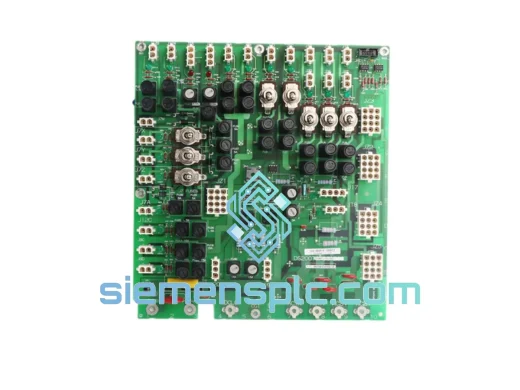
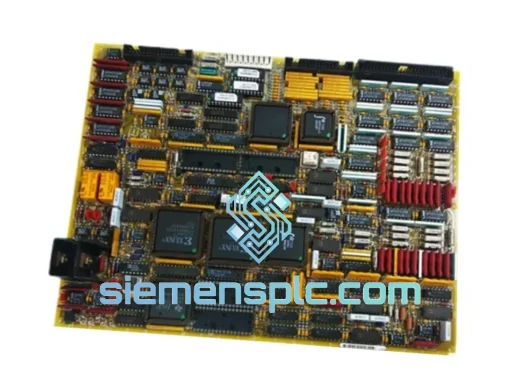
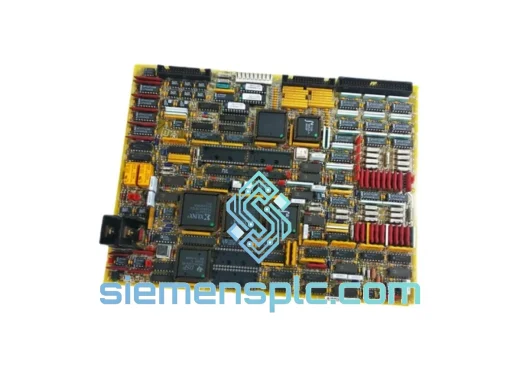
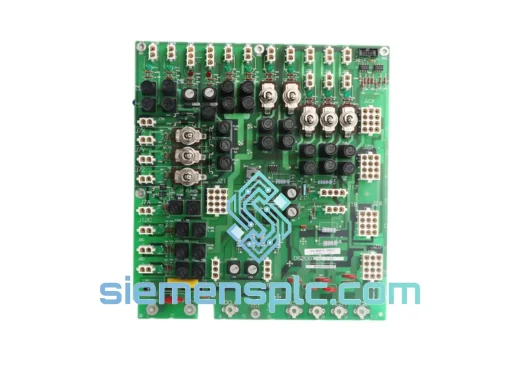
GE DS200TCQCG1BKG Turbine Control Module – Mark V Series
Mark V
Origin US
Turbine Control Module
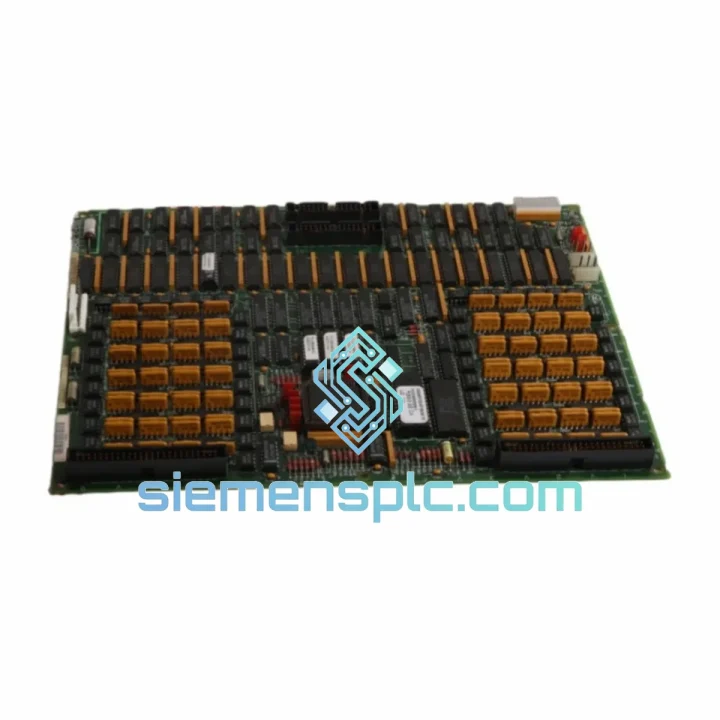
Request verified availability, condition, replacement risk review, packing options and courier lead time for DS215TCCAG1BZZ01A.
Click Request Quote and the part number is inserted into the inquiry form automatically.
Core fields for model confirmation and RFQ routing. Detailed product narrative remains below.
The GE DS215TCCAG1BZZ01A is the Common Analog I/O Board (TCCA) within the GE Mark V Speedtronic turbine control platform. Its function is not peripheral — it is the primary analog signal conditioning and conversion layer between field instrumentation and the Mark V digital controller. Every temperature thermocouple, every 4–20 mA pressure transmitter, every RTD wired into a Mark V panel passes through this board before the controller can act on it. Without a functional TCCA board, the turbine’s closed-loop control logic operates without process feedback, making safe operation impossible.
The Mark V Speedtronic system was engineered by GE for continuous-duty gas and steam turbine applications where control determinism and signal integrity are non-negotiable. The DS215TCCAG1BZZ01A was designed as a native component of this architecture — not an afterthought or a generic I/O card adapted for turbine use. Its analog front-end handles multi-channel signal acquisition across thermocouple, RTD, and current-loop input types simultaneously, with on-board signal conditioning that compensates for cold-junction error, line resistance, and common-mode noise before the digitized value is passed to the controller backplane.
This board is deployed in both Simplex and Triple Modular Redundant (TMR) Mark V panel configurations. In TMR installations, three TCCA boards operate in parallel across the R, S, and T controller lanes, with the Mark V’s median-select voting logic continuously comparing their outputs. A single board degradation does not interrupt control — the voting algorithm isolates the outlier channel and flags it for maintenance without a process trip. This architecture makes the DS215TCCAG1BZZ01A a critical element of the Mark V’s fault-tolerant design philosophy.
Real-time Stock & RFQ: [email protected] | WhatsApp: +86 18359268345
| Parameter | Specification |
|---|---|
| Part Number | DS215TCCAG1BZZ01A |
| Manufacturer | GE (General Electric) / GE Vernova |
| Series | Mark V Speedtronic Turbine Control System |
| Module Designation | TCCA — Common Analog I/O Board |
| Analog Input Types | Thermocouple (J, K, T, E types), RTD (Pt100), 4–20 mA current loop |
| Analog Output | 4–20 mA isolated current output channels |
| Input Resolution | 12-bit ADC minimum per channel |
| Common-Mode Rejection | >80 dB at 50/60 Hz |
| Cold Junction Compensation | On-board hardware CJC for thermocouple inputs |
| Isolation | Channel-to-backplane optical isolation |
| Operating Temperature | 0°C to +60°C (panel ambient) |
| Form Factor | PCB card, Mark V panel rack slot |
| Backplane Interface | GE Mark V proprietary VME-derivative bus |
| Panel Compatibility | Mark V TMR and Simplex configurations |
| Weight | Approx. 220 g |
| Warranty | 12 months from shipment date |
The DS215TCCAG1BZZ01A’s analog front-end is structured around a multiplexed acquisition chain. Field signals from multiple input channels are routed through a precision analog multiplexer to a shared instrumentation amplifier stage, which provides high input impedance and differential signal rejection before the signal reaches the ADC. This architecture reduces per-channel component count while maintaining measurement accuracy — a deliberate design trade-off that improves long-term reliability by minimizing the number of active components exposed to field-side transients.
Optical isolation between the field-side analog circuitry and the backplane digital logic is implemented at the data path level. This means that a field-side overvoltage event — common in turbine environments where inductive loads switch frequently — cannot propagate to the controller backplane. The isolation barrier is rated to withstand transient voltages well above the IEC 61000-4-5 surge immunity test levels applicable to industrial control equipment.
Cold junction compensation for thermocouple inputs is handled by a dedicated on-board temperature sensor positioned at the terminal block interface. The compensation algorithm runs in hardware, not firmware, eliminating the latency and potential software fault modes associated with software-based CJC implementations. This is particularly relevant in turbine exhaust temperature monitoring, where thermocouple accuracy directly affects combustion tuning and emissions compliance.
The board’s EMC design follows GE’s internal shielding and ground-plane partitioning standards for turbine control hardware. Analog and digital ground planes are separated and joined at a single star point, preventing digital switching noise from coupling into the analog measurement paths. Decoupling capacitors are placed at each IC power pin, and the board layout routes high-frequency digital signals away from sensitive analog traces. These measures allow the DS215TCCAG1BZZ01A to maintain specified accuracy in the high-EMI environment of a gas turbine enclosure, where variable-frequency drives, ignition systems, and high-current contactors generate broadband interference continuously.
Every DS215TCCAG1BZZ01A unit dispatched from our Xiamen, China facility is sourced from verified supply channels and subjected to a structured pre-shipment inspection protocol. Visual examination covers the full board surface for component damage, solder joint integrity, connector pin condition, and corrosion on exposed metal surfaces. Part number and revision suffix are verified against the customer’s purchase order before the unit is released for packing.
Units are packed in anti-static shielding bags, placed in foam-lined inner cartons, and shipped in double-wall corrugated outer cartons rated for international air freight handling. Export documentation — including commercial invoice, packing list, and certificate of origin — is prepared in compliance with Chinese customs export regulations and the import requirements of the destination country.
Shipment is arranged via DHL Express, FedEx International Priority, or UPS Worldwide Express depending on destination and urgency. Transit times from Xiamen to major industrial hubs are typically 2–5 business days for air express services. Full tracking is provided at the time of shipment, and our logistics team monitors shipments through customs clearance. For critical plant situations requiring same-day dispatch, contact us directly via WhatsApp for emergency stock confirmation and expedited booking.
All units are covered by a 12-month warranty against functional defects from the date of shipment. Warranty claims are handled directly by our technical team, with replacement units dispatched upon fault confirmation. We do not route warranty cases through third-party service centers — the same engineers who verify the units before shipment handle post-sale technical support.
Email: [email protected]
WhatsApp: +86 18359268345
Web: siemensplc.com
Location: Xiamen, China
© 2026 siemensplc.com. All rights reserved.
We check the full part number, brand, series and visible nameplate information before quotation.
Sales confirms stock path, condition option, quantity and realistic lead time for export dispatch.
DHL, FedEx, UPS or buyer courier arrangements can be reviewed with packing requirements.
Similar brand or category products for fast comparison and multi-item RFQ lists.