Yokogawa
RFQ Ready
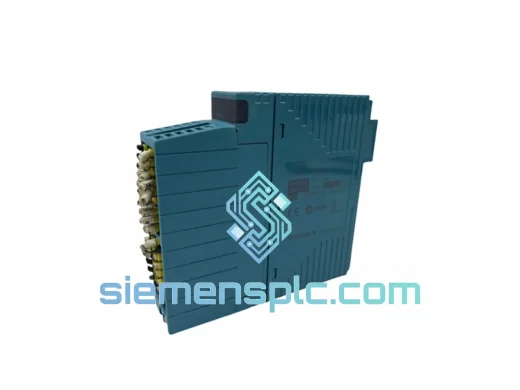
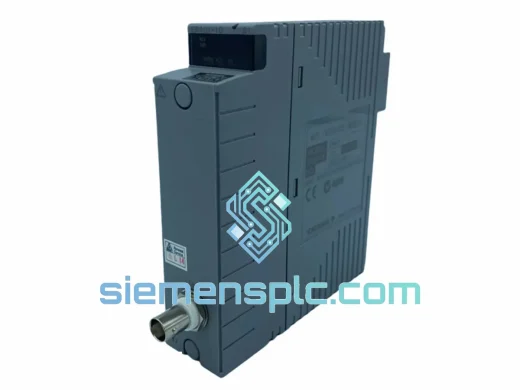
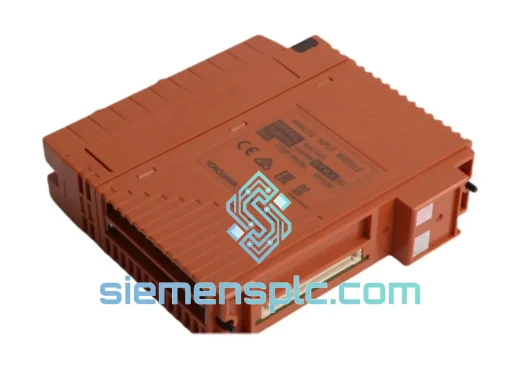
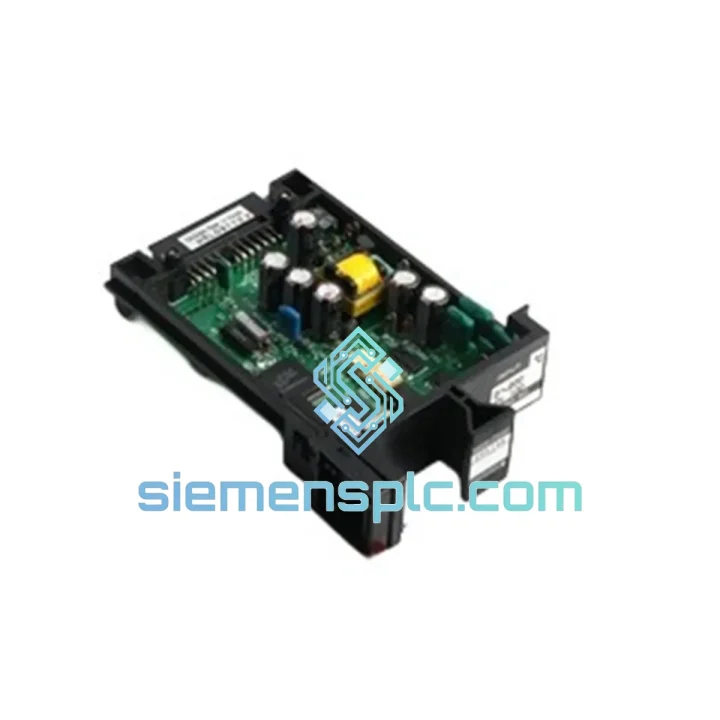
Yokogawa SAI143-H63/PRP S3 DCS Analog Input Module
CENTUM VP
Origin JP
DCS Analog Input Module
Request verified availability, condition, replacement risk review, packing options and courier lead time for ER5*B.
Click Request Quote and the part number is inserted into the inquiry form automatically.
Core fields for model confirmation and RFQ routing. Detailed product narrative remains below.
Your CENTUM VP or CS 3000 FCS just threw a channel fault. The historian is gapping. The operator is calling. You’ve already ruled out the field wiring — the ER5*B module itself is dead. You need a replacement on the bench today, not in six weeks through the OEM channel. That’s exactly why this page exists.
We stock the YOKOGAWA ER5*B 16-channel RTD input module in Xiamen and ship globally via DHL Express and FedEx Priority. Most orders clear customs and land on your receiving dock within 3–5 business days. No minimum order. No waiting for a distributor to locate stock. One call, one unit, problem solved.
URGENT REQUIREMENT? Contact: [email protected] | WhatsApp: +86 18359268345
| Parameter | Specification | Status |
|---|---|---|
| Part Number | ER5*B | ✅ Ready to Ship |
| Manufacturer | YOKOGAWA Electric Corporation | 100% Original OEM |
| Module Function | RTD (Resistance Temperature Detector) Input | — |
| Compatible Platform | CENTUM VP (R4.x–R6.x), CENTUM CS 3000 (R3.x) | — |
| Channel Count | 16 channels (8 differential pairs) | — |
| Supported RTD Types | Pt100 (IEC 751), JPt100 (JIS C 1604), Cu10, Ni100, Ni120 | — |
| Measurement Range | −200 °C to +850 °C (Pt100 / IEC 751) | — |
| Accuracy | ±0.1 °C typical @ 25 °C ambient | — |
| Resolution | 0.01 °C | — |
| Isolation | Channel-to-channel + channel-to-bus | — |
| Wiring Configuration | 3-wire or 4-wire RTD | — |
| Bus Interface | ESB / V-net/IP (FCS generation dependent) | — |
| Hot-Swap | Yes — live insertion/removal supported | — |
| Power Consumption | ≤ 5 W typical | — |
| Operating Temperature | 0 °C to +55 °C | — |
| Storage Temperature | −25 °C to +70 °C | — |
| Humidity | 5%–95% RH, non-condensing | — |
| Weight | Approx. 80 g | — |
| Certifications | CE, UL, cUL | — |
| Country of Origin | Japan | — |
| Mounting | CENTUM VP standard I/O nest (ANB10D / ANB11D) | — |
After ten years of pulling dead I/O cards out of live DCS cabinets, here’s what actually matters when you’re swapping an ER5*B under pressure:
Step 1 — Confirm the fault is the module, not the field wiring. Before you pull the card, check the CENTUM VP alarm summary for IOM fault codes. A CHN FAIL on a single channel almost always points to a broken RTD lead or corroded terminal. A MODULE FAIL or IOM COMM ERR across multiple channels simultaneously is your signal that the ER5*B itself has given up. Cross-check by swapping the suspect module into a spare slot on the same nest — if the fault follows the card, you’ve confirmed the hardware failure.
Step 2 — No DIP switches, no address jumpers. Unlike older Yokogawa I/O generations, the ER5*B uses automatic slot addressing within the CENTUM VP I/O nest. The FCS reads the physical slot position and maps it to the tag database automatically. You do not need to set any hardware address before insertion. Just seat the module firmly until the locking lever clicks.
Step 3 — RTD type is software-configured per channel. Open the CENTUM VP engineering environment (CAMS for HIS), navigate to the IOM definition for the affected FCS, and verify that each channel’s RTD type (Pt100, JPt100, etc.) and wiring mode (3-wire / 4-wire) match your field instruments. A mismatch here will give you readings that are off by a fixed offset — a classic post-replacement head-scratcher that wastes hours.
Step 4 — Firmware revision check. The ER5*B revision label is on the module’s front face. If you’re running CENTUM VP R6.x and the replacement unit is an older hardware revision, verify compatibility in Yokogawa’s IOM compatibility matrix (document TI 33Q01B10-01E). In practice, the ER5*B is backward-compatible across all CENTUM VP generations, but document it for your MOC record.
Step 5 — Hot-swap procedure. The ER5*B supports live insertion. Inform the control room operator before you pull the card — the FCS will generate an IOM removal alarm and the affected tags will go to their configured fail-safe values (typically last value or a defined fallback). Insert the replacement, wait for the FCS to complete the IOM initialization sequence (typically 10–30 seconds), then verify all channels return to normal scan in the CENTUM VP alarm summary. Clear the IOM fault alarm and document the swap in your maintenance log.
Common fault codes to know:
Process plants don’t give I/O modules an easy life. The ER5*B is built to operate continuously in environments that would kill consumer-grade electronics within weeks. The module’s conformal-coated PCB resists moisture ingress and corrosive airborne contaminants common in coastal petrochemical facilities and pulp mills. The sealed housing attenuates high-frequency vibration from compressors and rotating machinery, protecting the precision ADC circuitry from mechanical fatigue failures that degrade measurement accuracy over time.
Thermal cycling is the silent killer of DCS I/O cards. Cabinet temperatures swing from cold startup conditions to sustained 45–50 °C ambient during summer peak loads. The ER5*B’s operating range of 0 °C to +55 °C provides genuine headroom for these conditions, and the on-board voltage regulators are rated for continuous operation at the upper end of that range without derating. The module’s low power consumption (≤ 5 W) also means it contributes minimal heat load to the I/O nest, reducing thermal stress on adjacent cards.
Channel-to-channel isolation is not just a spec-sheet checkbox — it’s what prevents a ground fault on one RTD circuit from corrupting readings across the entire module. In multi-point temperature networks where sensors share a common process vessel, this isolation is the difference between a single-channel fault and a full-module outage that takes down your entire temperature monitoring loop.
Our warehouse is located in Xiamen, Fujian Province — one of China’s primary export hubs with direct access to DHL, FedEx, and UPS international gateways. Here’s how a typical urgent order moves:
For extremely time-critical situations — a refinery shutdown with a hard restart deadline — contact us directly on WhatsApp before placing the order. We can confirm real-time stock availability, arrange same-day dispatch, and coordinate with your freight forwarder or customs broker to pre-clear the shipment. We’ve done it before. We know what a $500,000-per-day downtime event looks like, and we move accordingly.
All shipments include a commercial invoice, packing list, and certificate of origin. CITES, dual-use, and EAR99 classification documentation available on request for regulated-industry procurement teams.
📧 Email: [email protected]
💬 WhatsApp: +86 18359268345
🌐 Web: siemensplc.com
© 2026 siemensplc.com. All rights reserved.
We check the full part number, brand, series and visible nameplate information before quotation.
Sales confirms stock path, condition option, quantity and realistic lead time for export dispatch.
DHL, FedEx, UPS or buyer courier arrangements can be reviewed with packing requirements.
Similar brand or category products for fast comparison and multi-item RFQ lists.