Siemens
RFQ Ready
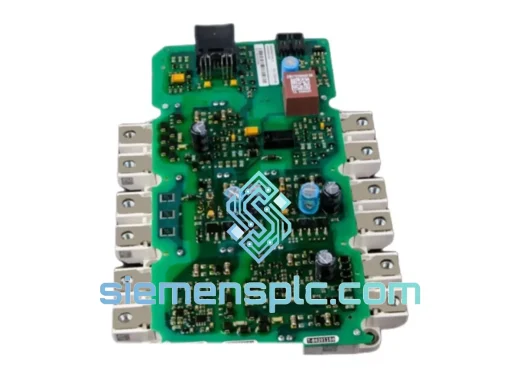
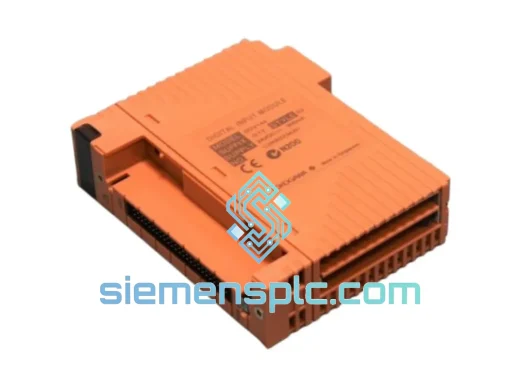
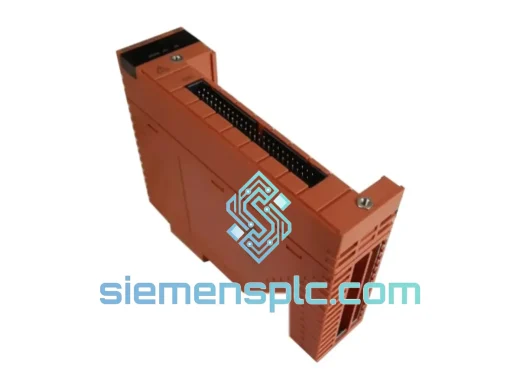
Siemens SDV144-S13-S4 Digital Output Module – SIMATIC S7
SIMATIC S7 Series
Origin DE
Digital Output Module
Request verified availability, condition, replacement risk review, packing options and courier lead time for 626A01TDE.
Click Request Quote and the part number is inserted into the inquiry form automatically.
Core fields for model confirmation and RFQ routing. Detailed product narrative remains below.
The Siemens 626A01TDE is a high-resolution analog input module engineered for integration within SIMATIC S7-300/S7-400 distributed control architectures. Designed to interface directly with field-level transducers — including thermocouples, RTDs, 4–20 mA current loops, and ±10 V voltage sources — this module performs multi-channel analog-to-digital conversion with 15-bit resolution plus sign, delivering measurement data to the CPU via the S7 backplane bus at deterministic cycle intervals. Its role in a control loop is not passive signal relay; it is the first point of quantization fidelity, where sensor accuracy is either preserved or degraded. The 626A01TDE is built to preserve it.
Each input channel is individually configurable via STEP 7 or TIA Portal parameter assignment blocks, eliminating the need for hardware jumpers. Channel-to-channel isolation is achieved through optocoupler barriers rated at 500 V AC, preventing ground loop interference from propagating across measurement channels — a critical design requirement in mixed-signal industrial panels where power and signal conductors share cable trays. The module supports up to 8 differential analog input channels, with each channel independently assignable to voltage, current, resistance, or thermocouple measurement mode.
In process control applications where loop stability depends on sub-millisecond scan consistency, the 626A01TDE’s integration time is selectable at 2.5 ms, 16.7 ms, 20 ms, or 100 ms per channel group, allowing engineers to trade noise rejection bandwidth against scan cycle budget. At 16.7 ms integration (50 Hz rejection), common-mode noise from power line harmonics is attenuated by greater than 60 dB — sufficient for most industrial floor environments without additional signal conditioning hardware.
Real-time Stock & RFQ: [email protected] | WhatsApp: +86 18359268345
| Parameter | Specification |
|---|---|
| Part Number | 626A01TDE |
| Brand | Siemens AG |
| Series | SIMATIC S7-300 / S7-400 |
| Module Type | Analog Input (SM 331 class) |
| Number of Channels | 8 differential analog inputs |
| Resolution | 15-bit + sign (16-bit word) |
| Input Ranges (Voltage) | ±80 mV, ±250 mV, ±500 mV, ±1 V, ±2.5 V, ±5 V, ±10 V, 1–5 V |
| Input Ranges (Current) | ±20 mA, 0–20 mA, 4–20 mA |
| Resistance / RTD | Pt100, Pt200, Pt500, Pt1000, Ni100, Ni1000, 0–600 Ω |
| Thermocouple Types | Type B, C, E, J, K, L, N, R, S, T, U |
| Integration Time | 2.5 / 16.7 / 20 / 100 ms (selectable per channel group) |
| Common-Mode Rejection | >60 dB at 50/60 Hz (at 16.7 ms integration) |
| Channel Isolation | 500 V AC (optocoupler, channel-to-bus) |
| Supply Voltage (Logic) | 5 V DC via S7 backplane bus |
| Supply Voltage (Field) | 24 V DC (external, for transmitter loop power) |
| Current Consumption (5 V) | ≤ 80 mA |
| Current Consumption (24 V) | ≤ 60 mA (without transducer load) |
| Operating Temperature | 0 °C to +60 °C |
| Storage Temperature | −40 °C to +70 °C |
| Relative Humidity | 5–95% (non-condensing, per IEC 60068-2-3) |
| Degree of Protection | IP20 (EN 60529) |
| Dimensions (W × H × D) | 40 mm × 125 mm × 120 mm |
| Weight | Approx. 0.32 kg |
| Certifications | CE, UL, cUL, ATEX Zone 2 (with barrier), RoHS |
| Warranty | 12 months from date of shipment |
| Origin | Germany |
The 626A01TDE’s internal signal path begins at the front connector terminal block, where field wiring terminates on 40-pin spring-cage or screw-type connectors. Differential input pairs are routed through a passive RC anti-aliasing filter network before entering a multiplexed successive-approximation ADC core. The multiplexer sequentially connects each channel to the ADC at intervals governed by the configured integration time, ensuring that no two channels share simultaneous conversion bandwidth — a design choice that eliminates inter-channel crosstalk at the ADC input stage.
The optocoupler isolation barrier separates the field-side analog ground from the backplane logic ground. This galvanic separation is not merely a safety measure; it is a functional EMC design element. In installations where variable-frequency drives (VFDs) operate in proximity to analog signal wiring, the common-mode voltage induced on cable shields can reach several volts. The 626A01TDE’s 500 V AC isolation rating provides a margin of approximately 20:1 over typical industrial common-mode disturbance levels, preventing measurement offset errors that would otherwise corrupt PID loop feedback signals.
On the backplane side, the module communicates with the CPU via the P-bus (peripheral bus) of the S7-300 rack or the K-bus of the S7-400 rack. Data transfer is initiated by the CPU’s cyclic I/O update task, which reads the module’s output data record (OD) containing the 16-bit signed integer representation of each channel’s measured value. The module also maintains a diagnostic data record (DD) that flags wire-break conditions, overflow, underflow, and parameter assignment errors — all accessible via SFB 52 (RDREC) without interrupting normal I/O scanning.
The wire-break detection circuit operates by injecting a small bias current into the measurement loop. For 4–20 mA current inputs, a measured value below 3.6 mA triggers a wire-break diagnostic flag, allowing the CPU program to execute a fault-handling routine before the process variable is lost entirely. This sub-threshold detection mechanism operates independently of the main ADC conversion cycle, adding no latency to normal measurement throughput.
EMC hardening extends to the PCB layout, where analog and digital ground planes are separated by a moat topology, joined only at a single star point beneath the isolation barrier. Decoupling capacitors are placed within 2 mm of each IC power pin, and the front connector shield connection is bonded directly to the chassis ground rail, providing a low-impedance return path for shield currents without routing them through the signal ground plane.
Every Siemens 626A01TDE unit supplied through siemensplc.com originates from Siemens AG’s authorized manufacturing and distribution network. Each module carries a factory serial number traceable to its production batch, enabling verification against Siemens’ global product authentication database. Units are stored in an ESD-controlled warehouse environment maintained at 20–25 °C and 40–60% relative humidity, consistent with Siemens’ long-term storage guidelines for electronic assemblies.
Pre-shipment inspection includes visual examination of the front connector, backplane bus connector pins, and module housing for transport damage, followed by a functional power-on test confirming that the module’s status LED sequence matches the expected initialization pattern. Modules that do not pass inspection are quarantined and returned to the supplier — no exceptions.
Logistics operations are based in Xiamen, China, a major southeastern port city with direct freight connections to Hong Kong, Singapore, Rotterdam, Los Angeles, and Dubai. Standard international shipments are dispatched via DHL Express, FedEx International Priority, or UPS Worldwide Expedited, with typical transit times of 3–7 business days to Europe and North America. For time-critical plant shutdowns, same-day dispatch is available for orders confirmed before 14:00 CST. All shipments include commercial invoice, packing list, and certificate of origin documentation required for customs clearance. Export compliance screening is performed on every order in accordance with EU dual-use regulations and Chinese export control law.
For pricing, availability confirmation, technical pre-sales consultation, or bulk order quotations, contact our engineering sales team directly:
We check the full part number, brand, series and visible nameplate information before quotation.
Sales confirms stock path, condition option, quantity and realistic lead time for export dispatch.
DHL, FedEx, UPS or buyer courier arrangements can be reviewed with packing requirements.
Similar brand or category products for fast comparison and multi-item RFQ lists.