GE
RFQ Ready
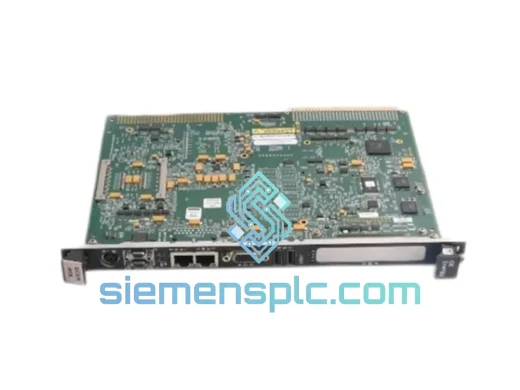
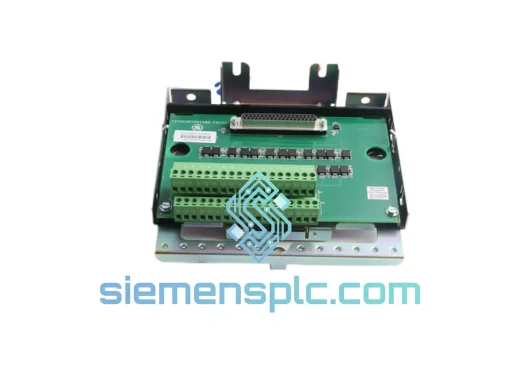
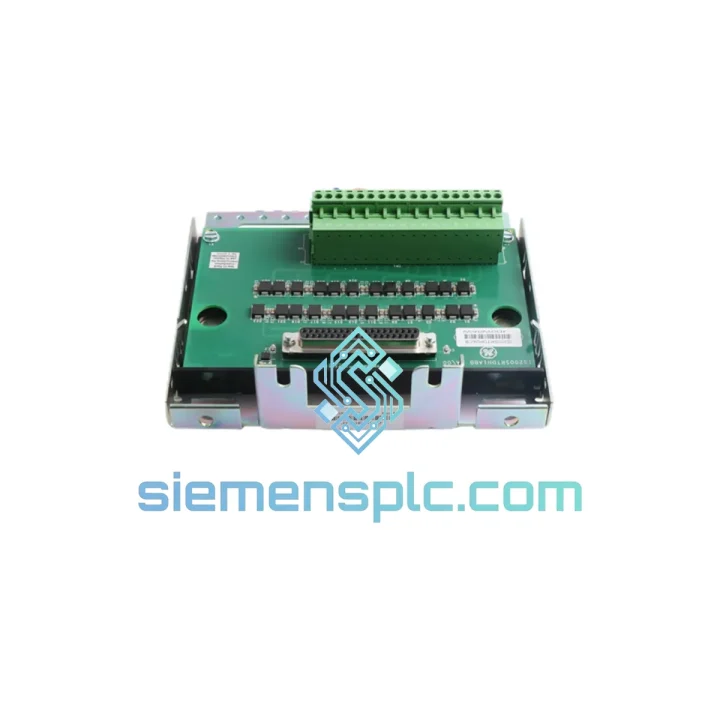
GE IS210MVRBH1A I/O Interface Board – Mark VIe Series
Mark VI
Origin US
I/O Interface Board
Request verified availability, condition, replacement risk review, packing options and courier lead time for IS200SRTDH2A.
Click Request Quote and the part number is inserted into the inquiry form automatically.
Core fields for model confirmation and RFQ routing. Detailed product narrative remains below.
The IS200SRTDH2A is a dedicated Resistance Temperature Detector (RTD) input module engineered for GE’s Mark VI turbine control platform. Within a Mark VI control loop, temperature measurement is not a peripheral function — it is a primary protection variable. Exhaust temperature spreads, bearing metal temperatures, and combustion dynamics all feed into trip logic and load-shedding algorithms. The IS200SRTDH2A occupies the front-end of this signal chain, converting milliohm-level resistance variations from PT100 or PT1000 sensors into calibrated digital values that the Mark VI controller processes at deterministic scan rates.
Unlike generic analog input cards, this module is purpose-built for RTD excitation and linearization. It sources a precision constant current through each RTD element, measures the resulting voltage drop across a four-wire Kelvin connection, and applies hardware-level linearization to compensate for the non-linear resistance-temperature characteristic of platinum sensing elements. The result is a temperature measurement chain with sub-degree resolution across the full industrial operating range, without relying on software correction loops that introduce latency into protection-critical paths.
📧 Real-time Stock & RFQ: [email protected] | WhatsApp: +86 18359268345
| Parameter | Specification |
|---|---|
| Part Number | IS200SRTDH2A |
| Manufacturer | General Electric (GE) |
| Platform | Mark VI Turbine Control System |
| Module Function | RTD (Resistance Temperature Detector) Signal Input |
| Supported RTD Types | PT100, PT1000 (IEC 60751 Class A/B) |
| Measurement Technique | 4-wire Kelvin (ratiometric excitation) |
| Input Channels | Multi-channel (per Mark VI I/O rack slot assignment) |
| Resolution | ≤ 0.1 °C effective (hardware linearization applied) |
| Operating Temperature | 0 °C to +60 °C (ambient, panel-mounted) |
| Storage Temperature | -40 °C to +85 °C |
| Supply Voltage | Derived from Mark VI I/O rack backplane (5 VDC / 24 VDC) |
| Isolation | Optical isolation between field-side inputs and backplane bus |
| EMC Compliance | Designed to IEC 61000-4 series (ESD, EFT, surge, conducted RF) |
| Form Factor | Plug-in PCB module, Mark VI I/O rack compatible |
| Weight | Approx. 600 g |
| Warranty | 12 months from shipment date |
The IS200SRTDH2A’s hardware design reflects the engineering constraints of turbine protection environments, where measurement integrity cannot be traded against cost or simplicity.
Four-Wire Kelvin Excitation: The module drives a stable DC excitation current through the RTD element via dedicated force leads, while voltage measurement occurs across separate sense leads. This eliminates lead-resistance error — a critical requirement when sensor cables span tens of meters across a turbine enclosure, where even 0.5 Ω of lead resistance would introduce a 1.3 °C offset in a PT100 circuit.
Optical Isolation Architecture: Field-side signal paths are galvanically isolated from the Mark VI backplane bus via optocouplers. This isolation barrier — rated to withstand common-mode transients typical of high-voltage plant environments — prevents ground loops and protects the controller from field-side fault propagation. In a gas turbine installation where generator step-up transformers and high-current bus bars operate in proximity, this isolation is not optional; it is the primary EMC defense mechanism.
Hardware Linearization: Platinum RTD elements follow the Callendar-Van Dusen equation, producing a resistance-temperature curve that deviates from linearity by up to 3.9% across a 0–600 °C span. The IS200SRTDH2A applies hardware-level polynomial correction rather than delegating this to the Mark VI CPU scan cycle. This keeps the temperature value presented to the controller already linearized, reducing CPU load and eliminating the scan-rate dependency that software linearization would introduce.
Backplane Bus Interface: The module communicates with the Mark VI VCMI or VCRC controller card via the high-speed I/O backplane, which operates on a deterministic time-division multiplexed protocol. Each I/O module is assigned a fixed time slot, ensuring that RTD data arrives at the controller within a bounded latency window — a prerequisite for protection functions with defined response-time requirements.
EMC Hardening: PCB-level filtering on all field-side input lines suppresses conducted interference in the 150 kHz–30 MHz range. Transient voltage suppressors (TVS diodes) clamp electrostatic discharge events at the connector interface, protecting the analog front-end from damage during module hot-swap or field wiring operations.
Every IS200SRTDH2A unit supplied through our Xiamen, China facility undergoes a structured pre-shipment verification process. Visual inspection confirms PCB integrity, connector condition, and label authenticity. Functional verification — where test infrastructure permits — validates signal response across RTD input channels before packaging. Units are shipped in anti-static bags within foam-lined cartons, with ESD-safe handling maintained throughout the packing process.
A 12-month warranty covers hardware defects from the shipment date. Condition reports and sourcing documentation are available on request for facilities with traceability requirements.
From Xiamen, we dispatch via DHL Express, FedEx International Priority, and UPS Worldwide — all fully trackable, door-to-door. In-stock units are typically dispatched within 1–3 business days. Export documentation is prepared by our logistics team; buyers are responsible for local import duties and customs clearance at the destination country. Volume orders and project-based reserved stock arrangements are available — contact us with your parts list and timeline.
📧 Email: [email protected]
📱 WhatsApp: +86 18359268345
🌐 Web: siemensplc.com
📍 Location: Xiamen, China
© 2026 siemensplc.com. All rights reserved.
We check the full part number, brand, series and visible nameplate information before quotation.
Sales confirms stock path, condition option, quantity and realistic lead time for export dispatch.
DHL, FedEx, UPS or buyer courier arrangements can be reviewed with packing requirements.
Similar brand or category products for fast comparison and multi-item RFQ lists.