GE
In Stock OK
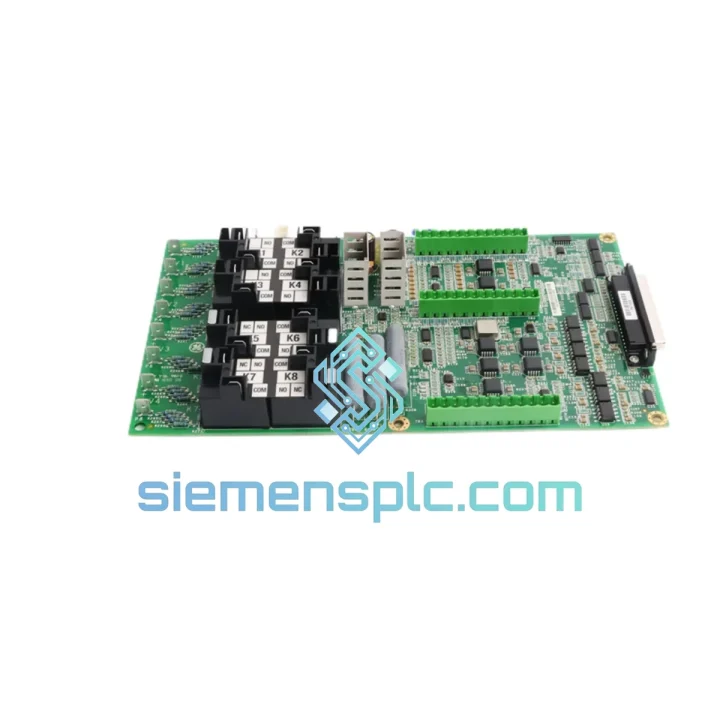
GE IS210AEAAH1BKE Excitation Control Module – Mark VI Series
Request verified availability, condition, replacement risk review, packing options and courier lead time for IS210AEAAH1BKE.
BrandGE
Part NumberIS210AEAAH1BKE
ConditionAvailability Check
Lead TimeRFQ Confirmation
DocumentsDatasheet / photos by RFQ
ShippingExport packing available
Auto-filled RFQ
IS210AEAAH1BKE
Click Request Quote and the part number is inserted into the inquiry form automatically.
- Reply by email: [email protected]
- WhatsApp / Tel: +86 18359268345
- Mon-Sat 9:00-18:00 GMT+8
Procurement Data
Key Product Information
Core fields for model confirmation and RFQ routing. Detailed product narrative remains below.
- Brand
- GE
- Primary Part Number
- IS210AEAAH1BKE
- Product Type
- Excitation Control Module
- Series / Family
- Mark VI
- Country of Origin
- US
- Catalog Category
- Communication
- Operating Temp.
- 0 °C to +60 °C continuous
- Warranty
- 12 months from shipment date
Model confirmed for inquiry
IS210AEAAH1BKE
Send quantity, destination and urgency. The RFQ form keeps this part number attached.
Request Quote
Product Overview
IS210AEAAH1BKE: Generator Excitation Interface Board in Mark VI Closed-Loop Voltage Regulation Architecture
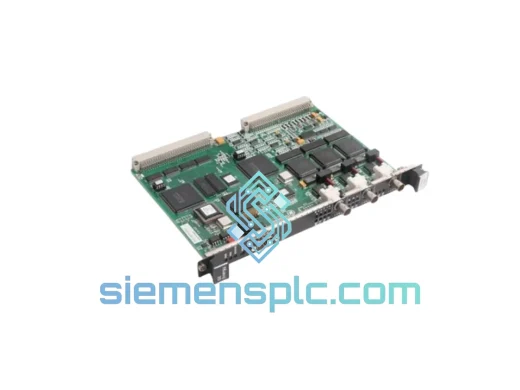
The IS210AEAAH1BKE is a VME 6U-format excitation interface board designed for integration within GE’s Mark VI and Mark VIe turbine control platforms. Its operational mandate is precise: regulate generator field current by processing real-time feedback from current transformers (CTs) and potential transformers (PTs) mounted at the generator terminals, then issue firing-angle commands to the downstream thyristor excitation bridge. This function sits at the intersection of electrical machine control and power electronics — a domain where microsecond-level timing errors translate directly into voltage instability, reactive power imbalance, or, in worst cases, generator trip events.
Within the Mark VI rack hierarchy, the IS210AEAAH1BKE occupies a dedicated I/O slot and communicates upstream to the deterministic Ethernet backbone. Unlike general-purpose analog I/O boards, this module’s signal path is purpose-built for excitation duty: differential analog inputs with 16-bit resolution accept CT secondary signals in the ±10 V range, while an onboard FPGA executes the PID compensation loop at a fixed scan rate independent of the host VME processor’s task scheduler. This hardware-level separation of the time-critical excitation loop from the general-purpose control CPU is the architectural decision that makes the IS210AEAAH1BKE suitable for grid-connected generation assets where AVR response time is a contractual grid-code parameter.
The board is deployed across gas turbine combined-cycle plants, steam turbine facilities, hydroelectric stations, and industrial co-generation installations. In each context, the IS210AEAAH1BKE serves as the hardware bridge between the digital control domain and the high-power analog excitation domain, absorbing the electrical noise and common-mode voltages inherent in generator terminal environments while delivering clean, latency-bounded control signals to the firing circuit.
📦 Real-time Stock & RFQ: [email protected] | WhatsApp: +86 18359268345
Technical Parameters
| Parameter | Specification |
|---|---|
| Part Number | IS210AEAAH1BKE |
| Compatible Platform | GE Mark VI / Mark VIe Turbine Control System |
| Module Classification | Generator Excitation Interface & AVR Control Board |
| Form Factor | VME 6U Rack-Mount PCB Assembly |
| Backplane Interface | VMEbus (Mark VI) / IONet Deterministic Ethernet (Mark VIe) |
| Logic Supply Voltage | 24 VDC via backplane P1 connector |
| Analog Input Type | Differential, ±10 V, 16-bit ADC resolution |
| Field-Side Isolation | 1500 V RMS galvanic (optocoupler, dual-stage) |
| Common-Mode Rejection | >80 dB at 50/60 Hz |
| Control Loop Execution | FPGA-based PID, <100 µs cycle time |
| Redundancy Support | TMR (Triple Modular Redundancy) capable |
| EMC Immunity — EFT | IEC 61000-4-4 Level 4 (4 kV) |
| EMC Immunity — Surge | IEC 61000-4-5 Level 3 (2 kV / 1 kV) |
| Operating Temperature | 0 °C to +60 °C continuous |
| Storage Temperature | −40 °C to +85 °C |
| Relative Humidity | 5% to 95% RH, non-condensing |
| Safety Certification | CE, UL, IEC 61508 SIL 2 |
| Compatible Excitation Systems | EX2100, EX2100e, LCI |
| Unit Weight | Approx. 520 g |
| Warranty | 12 months from shipment date |
Hardware Logical Analysis
Dual-Stage Optocoupler Isolation on Analog Inputs: Generator terminal environments present common-mode voltages that can reach several hundred volts during fault conditions and ground-loop currents that corrupt low-level analog signals. The IS210AEAAH1BKE addresses this with a two-stage isolation architecture on every analog input channel. The primary stage provides 1500 V RMS galvanic separation, blocking DC and low-frequency ground-loop currents entirely. The secondary stage applies active common-mode rejection circuitry achieving >80 dB CMRR at power frequency, ensuring that 50/60 Hz interference from adjacent power conductors does not degrade the 16-bit ADC conversion accuracy. The net result is that CT and PT secondary signals arrive at the ADC with signal integrity equivalent to a laboratory measurement environment, regardless of the electrical noise floor in the switchyard-adjacent control room.
FPGA-Resident PID Execution: The excitation PID algorithm runs entirely within the board’s FPGA fabric, not on the VME host processor. This is a deliberate architectural boundary. The VME CPU handles supervisory functions — setpoint management, alarm processing, communication with the HMI tier — all of which are subject to operating system scheduling jitter measured in milliseconds. The FPGA, by contrast, executes the PID loop in a deterministic hardware pipeline with a worst-case cycle time under 100 µs. Kp, Ki, and Kd gain registers are configurable via the backplane bus, allowing field engineers to tune the AVR response without modifying FPGA firmware. Anti-windup logic is implemented in hardware to prevent integrator saturation during excitation ceiling events.
Six-Layer PCB Stack-Up and Power Domain Separation: The board’s PCB employs a six-layer stack-up with dedicated ground planes isolating the analog signal domain, the FPGA digital domain, and the backplane power domain. Ferrite bead arrays on all power rails entering the analog section attenuate high-frequency switching noise generated by the thyristor firing circuits. This physical separation prevents digital switching transients from coupling into the analog signal path — a failure mode that manifests as ADC quantization noise and, at sufficient amplitude, as spurious excitation corrections that destabilize the AVR loop.
Hardware-Based TMR Voting Arbitration: In triple-redundant Mark VI configurations, three IS210AEAAH1BKE boards operate in parallel, each computing an independent excitation firing-angle command. A dedicated hardware voting circuit compares the three outputs and selects the median value for delivery to the thyristor bridge. If one board’s output deviates beyond a configurable threshold, the voting circuit isolates that board’s contribution without software intervention. The arbitration decision latency is bounded by gate propagation delay — measured in nanoseconds — ensuring that a CPU fault on one controller cannot delay the voting outcome and introduce a transient excitation disturbance.
Independent Watchdog Timer: A hardware watchdog monitors the FPGA control loop execution cycle. If the loop fails to complete within 2× the nominal period — indicating FPGA lockup or configuration corruption — the watchdog asserts a fault relay and forces the excitation output to a pre-configured safe fallback level. This prevents uncontrolled field current runaway during processor fault events, a failure mode that can result in generator overvoltage and stator insulation damage if left unmitigated.
System Integration Benefits
- Sub-100 µs AVR Loop Closure: FPGA-executed PID delivers excitation corrections to the thyristor bridge before generator terminal voltage deviates beyond AVR tolerance bands, maintaining ±0.5% steady-state voltage regulation under step-load transients typical of industrial bus switching events.
- Online Board Replacement Without Process Interruption: TMR hardware voting allows a faulted IS210AEAAH1BKE to be extracted and replaced while the remaining two boards maintain excitation control, eliminating the forced outage that single-redundancy architectures require for board-level maintenance.
- Native ToolboxST Diagnostic Visibility: The module populates the Mark VI diagnostic bus with structured health data — ADC channel status, FPGA heartbeat counter, isolation barrier integrity flag, and watchdog state — accessible in GE ToolboxST without additional instrumentation or custom scripting.
- Direct Slot-Compatible Replacement: The IS210AEAAH1BKE installs as a direct physical and electrical replacement in existing Mark VI and Mark VIe racks. No rack reconfiguration, firmware re-flashing, or I/O map remapping is required for like-revision substitutions, reducing MTTR to under 30 minutes for trained maintenance personnel.
- Broad Excitation System Interoperability: Native interface compatibility with EX2100, EX2100e, and LCI excitation systems covers the majority of GE-platform generation installations without supplemental signal conditioning hardware or custom interface modules.
- Documented I/O Map for Retrofit Validation: The board’s register set and I/O map are fully documented in GE Mark VI Application Manual GEH-6421, enabling system integrators to validate replacement boards against existing ToolboxST configurations without reverse-engineering original wiring or performing live signal tracing.
- Full-Range Thermal Operation Without Derating: Continuous operation to 60 °C ambient allows deployment in non-air-conditioned turbine control enclosures in tropical and desert climates, eliminating supplemental cooling requirements that add capital cost and maintenance burden to retrofit projects.
- Verified Spare Parts Supply Chain: siemensplc.com maintains confirmed stock of IS210AEAAH1BKE units sourced through traceable distribution channels, providing a reliable procurement path for plants operating Mark VI systems beyond OEM active production cycles where factory lead times are measured in months.
Quality Assurance & Global Logistics
Each IS210AEAAH1BKE unit shipped from our Xiamen, China operations center passes a structured pre-dispatch verification sequence. Physical inspection covers PCB surface condition, connector pin geometry, component seating torque, and revision label legibility against the purchase order specification. Functional verification applies 24 VDC backplane power and exercises the module’s built-in self-test routines, confirming FPGA heartbeat activity, ADC channel continuity, and communication interface handshake before the unit is cleared for packing.
Packaging follows IEC 61340-5-1 ESD protection requirements: each board is sealed in a conductive ESD bag, nested in 25 mm convoluted polyurethane foam, and enclosed in a double-wall corrugated carton rated for IATA air freight handling loads. Shipment documentation includes a packing list, pre-shipment inspection checklist, and — on request — a certificate of conformance and functional test report formatted for MRO records and insurance audit requirements. A 12-month warranty against manufacturing defects and functional failure under rated operating conditions accompanies every unit.
From Xiamen, DHL Express and FedEx International Priority services reach major industrial hubs across Europe, the Middle East, Southeast Asia, and the Americas within 3–5 business days under normal customs clearance conditions. Bulk BOM orders are accommodated via consolidated sea freight through Xiamen Port, with both FCL and LCL options available. All shipments carry cargo insurance and provide end-to-end tracking from dispatch confirmation to delivery receipt.
Contact Information
📧 Email: [email protected]
📱 WhatsApp: +86 18359268345
🌐 Web: siemensplc.com
📍 Location: Xiamen, China
© 2026 siemensplc.com. All rights reserved.
Ready to quote
[email protected]
Send This Part Number to Sales
RFQ workflow
Quality workflow ->
Confirmation Process
01Model confirmation
We check the full part number, brand, series and visible nameplate information before quotation.
02Availability reply
Sales confirms stock path, condition option, quantity and realistic lead time for export dispatch.
03Packing & courier
DHL, FedEx, UPS or buyer courier arrangements can be reviewed with packing requirements.
Continue sourcing
Browse full catalog ->
Related Automation Parts
Similar brand or category products for fast comparison and multi-item RFQ lists.