GE
RFQ Ready
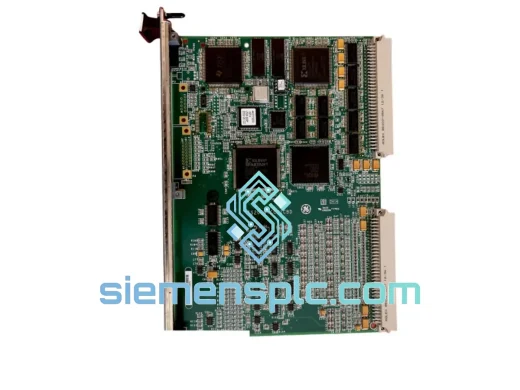
GE IS200VTCCH1CBD Thermocouple Processor Board – Mark VI IS200 Series
Mark VI
Origin US
Thermocouple Processor Board
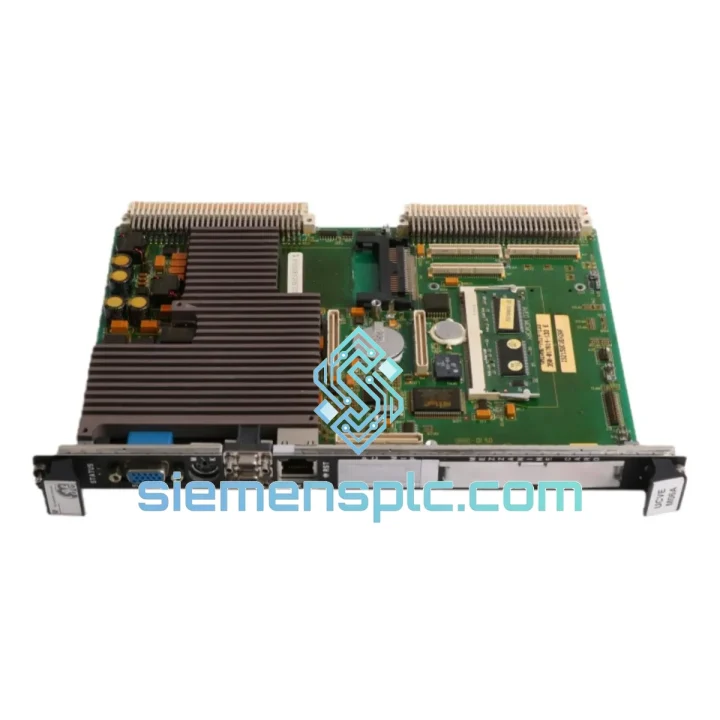
Request verified availability, condition, replacement risk review, packing options and courier lead time for IS215UCVEM01A.
Click Request Quote and the part number is inserted into the inquiry form automatically.
Core fields for model confirmation and RFQ routing. Detailed product narrative remains below.
Within GE’s Mark VI turbine control platform, the IS215UCVEM01A occupies a non-negotiable position in the power distribution and supervisory hierarchy. This module is responsible for generating, conditioning, and distributing the regulated control voltage rails that sustain every downstream I/O board, processor card, and communication interface within the Mark VI cabinet. Without a functioning UCV module, the entire control loop collapses — turbine protection logic goes dark, actuator command signals drop, and the unit trips. Understanding its internal architecture is therefore not an academic exercise; it is a prerequisite for any engineer responsible for turbine availability.
The IS215UCVEM01A belongs to GE’s IS215 series, a VME-format board family engineered for the Mark VI and Mark VIe control systems deployed across gas turbines (Frame 6B, 7EA, 7FA, 9E, 9FA), steam turbines, and combined-cycle power blocks. The module operates within both simplex and Triple Modular Redundancy (TMR) cabinet configurations, where three independent UCV channels vote on output validity before committing to the control bus — a design that eliminates single-point failure at the power distribution layer.
Real-time Stock & RFQ: [email protected] | WhatsApp: +86 18359268345
| Part Number | IS215UCVEM01A |
| Manufacturer | GE (General Electric) – Grid Solutions / Power Conversion |
| Series | Mark VI / Mark VIe Turbine Control System – IS215 Board Family |
| Module Function | Unit Control Voltage (UCV) Distribution & Supervisory Controller |
| Form Factor | VME 6U single-slot board module |
| Input Voltage Range | 18–32 V DC (nominal 24 V DC plant control bus) |
| Output Voltage Rails | +5 V DC, ±15 V DC, +24 V DC (regulated, isolated) |
| Output Current Capacity | Up to 10 A aggregate across regulated rails (application-dependent) |
| Isolation | Galvanic isolation between input bus and output rails; 500 V DC hipot rated |
| Operating Temperature | 0°C to +60°C (ambient, forced-air cooled cabinet) |
| Storage Temperature | -40°C to +85°C |
| Humidity | 5–95% RH, non-condensing |
| Vibration Rating | IEC 60068-2-6 compliant; suitable for turbine deck mounting |
| EMC Compliance | CE marked; meets EN 61000-4 series immunity levels |
| Communication Interface | VME backplane; internal IONet diagnostic reporting |
| Redundancy Support | TMR (Triple Modular Redundancy) and simplex configurations |
| Weight | Approx. 520 g |
| Country of Origin | United States |
| Warranty | 12 months from invoice date against manufacturing and functional defects |
| Lead Time | In-stock units: 1–3 business days; sourced/refurbished: 7–15 business days |
The IS215UCVEM01A is not a passive power supply board. Its internal architecture integrates active supervisory logic that continuously monitors output rail integrity and reports fault states to the Mark VI processor via the VME backplane. Several design decisions are worth examining in detail.
Regulated DC-DC Conversion with Isolation Barrier: The module employs a transformer-isolated DC-DC topology to generate the ±15 V and +5 V rails from the 24 V DC plant bus. This isolation barrier is critical in turbine environments where ground loops between the plant 24 V system and the sensitive analog signal conditioning circuits on I/O boards would otherwise introduce measurement errors in thermocouple, RTD, and 4–20 mA channels. The isolation rating of 500 V DC ensures that transient events on the plant bus — including load dump spikes from solenoid valve switching — do not propagate into the control electronics.
EMC Hardening at the Input Stage: The 24 V DC input passes through a multi-stage LC filter network before reaching the conversion stage. This filter attenuates conducted emissions in the 150 kHz–30 MHz range, preventing switching noise from the DC-DC converter from back-feeding into the plant control bus and corrupting signals on adjacent field devices. The filter design meets EN 61000-4-4 (electrical fast transient) and EN 61000-4-5 (surge) immunity requirements — both relevant in environments where large motors and switchgear operate in close proximity.
TMR Voting and Redundancy Arbitration: In a TMR Mark VI cabinet, three IS215UCVEM01A modules operate simultaneously, each fed from an independent 24 V source. The output rails from all three channels are compared by the Mark VI’s redundancy management logic. If one channel’s output deviates beyond a defined threshold — typically ±5% of nominal — the voting logic isolates that channel and flags a diagnostic alarm without interrupting turbine operation. This architecture means a single UCV module failure does not cause a turbine trip; it generates a maintenance alert, allowing planned replacement during the next scheduled outage window.
Thermal Management: The board layout places high-dissipation components — the switching transformer and output filter inductors — at the card edge, aligned with the forced-air flow path of the Mark VI cabinet’s cooling system. This positioning keeps junction temperatures within safe operating margins even at the upper end of the 0–60°C ambient range. The PCB uses a 4-layer stackup with internal ground planes that serve dual functions: thermal spreading and EMI shielding for the sensitive analog sections.
Diagnostic Transparency via IONet: The module reports real-time voltage rail status, input current draw, and fault codes to the Mark VI processor over the internal IONet communication path. These diagnostics are accessible through the Mark VI Toolbox software, enabling maintenance engineers to trend power supply health over time and identify degradation before it becomes a failure event.
Every IS215UCVEM01A unit offered through siemensplc.com undergoes a structured incoming inspection protocol before it is listed as available stock. Units are visually examined for PCB damage, component displacement, corrosion on edge connectors, and evidence of prior thermal stress. Functional units are bench-verified for output rail voltages within ±2% of nominal across the full load range. Each unit ships with a test record documenting measured output voltages, input current draw, and inspection findings.
Packaging follows IPC/JEDEC J-STD-033 guidelines: anti-static ESD shielding bag, foam-lined rigid carton, and humidity indicator card. For international shipments, units are declared accurately through Xiamen Customs under the applicable HS code for programmable controllers and control modules, ensuring clean customs clearance at destination ports in the EU, North America, Southeast Asia, and the Middle East.
Logistics are executed from our Xiamen, China operations hub. Xiamen’s port infrastructure and direct air freight connections to major global hubs — Frankfurt, Dubai, Los Angeles, Singapore — enable consistent transit times of 3–5 business days for DHL Express and FedEx International Priority shipments. For time-critical turbine recovery situations, same-day dispatch is available for orders confirmed before 14:00 CST. Multi-currency payment is supported: USD, EUR, HKD, and CNY via T/T bank transfer or trade finance instruments.
Email: [email protected]
WhatsApp: +86 18359268345
Web: siemensplc.com
Location: Xiamen, China
© 2026 siemensplc.com. All rights reserved.
We check the full part number, brand, series and visible nameplate information before quotation.
Sales confirms stock path, condition option, quantity and realistic lead time for export dispatch.
DHL, FedEx, UPS or buyer courier arrangements can be reviewed with packing requirements.
Similar brand or category products for fast comparison and multi-item RFQ lists.