GE
RFQ Ready
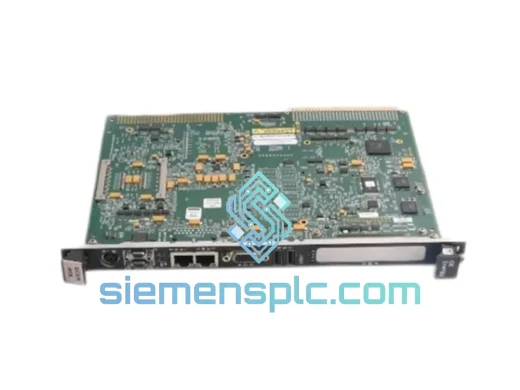
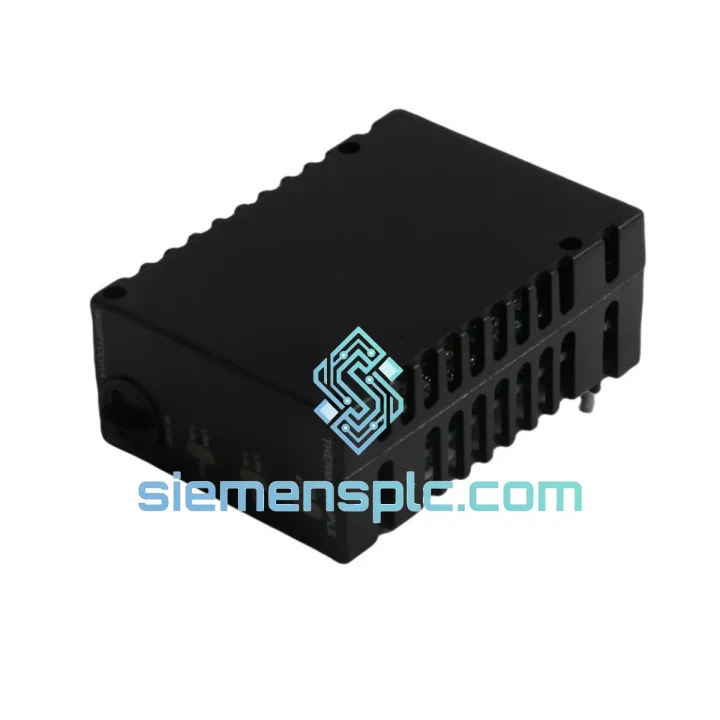
GE IS210MVRBH1A I/O Interface Board – Mark VIe Series
Mark VI
Origin US
I/O Interface Board
Request verified availability, condition, replacement risk review, packing options and courier lead time for IS220PTCCH1B.
Click Request Quote and the part number is inserted into the inquiry form automatically.
Core fields for model confirmation and RFQ routing. Detailed product narrative remains below.
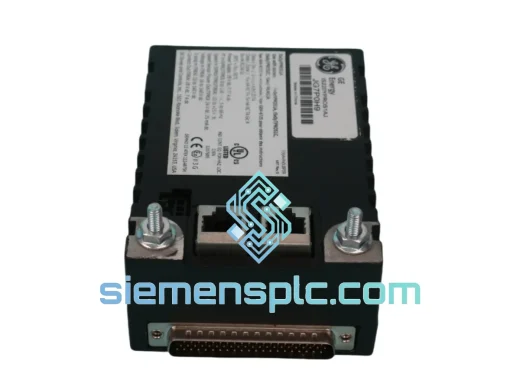
The IS220PTCCH1B is a thermocouple signal conditioning and digitization module engineered for deployment within GE’s Mark VIe distributed control system. It occupies a dedicated slot in the Mark VIe I/O pack assembly, interfacing directly with the PTCCH terminal board to acquire temperature data from up to 12 independent thermocouple circuits. The module converts millivolt-level thermoelectric signals into calibrated engineering-unit values transmitted over IONet — GE’s deterministic Ethernet-based I/O communication layer — to the Mark VIe controller for closed-loop turbine control and process protection logic.
In gas turbine applications, exhaust gas temperature (EGT) spread monitoring is a primary safety function. The IS220PTCCH1B supports this by delivering per-channel resolved temperature values at a scan rate consistent with Mark VIe’s real-time control cycle, enabling the controller to detect inter-combustor temperature deviations that indicate combustion anomalies or fuel nozzle degradation. Each of the 12 channels operates independently, so a single open-circuit or out-of-range thermocouple does not suppress data from the remaining channels — a critical design requirement for continuous turbine operation.
The module’s 16-bit analog-to-digital conversion architecture provides a resolution of approximately 0.015°C per LSB across the full measurement span, depending on thermocouple type and configured range. Internal cold junction compensation (CJC) is performed using an on-board precision temperature reference, eliminating the need for external isothermal terminal blocks in most installation configurations. Supported thermocouple types include J, K, T, E, R, S, B, and N, covering the full range from cryogenic process monitoring to high-temperature combustion measurement.
📩 Real-time Stock & RFQ: [email protected] | WhatsApp: +86 18359268345
| Parameter | Specification |
|---|---|
| Part Number | IS220PTCCH1B |
| Manufacturer | GE (General Electric) / Baker Hughes |
| Series | Mark VIe |
| Module Function | Thermocouple Signal Input & Digitization |
| Input Channels | 12 independent thermocouple channels |
| Supported TC Types | J, K, T, E, R, S, B, N (IEC 60584 / ANSI MC96.1) |
| ADC Resolution | 16-bit |
| Cold Junction Compensation | Automatic on-board CJC, precision reference |
| Communication Interface | IONet (100 Mbps Ethernet-based deterministic I/O bus) |
| Backplane Power Supply | 24 VDC via Mark VIe I/O pack backplane |
| Operating Temperature | 0 °C to +60 °C |
| Storage Temperature | −40 °C to +85 °C |
| Relative Humidity | 5% to 95% RH, non-condensing |
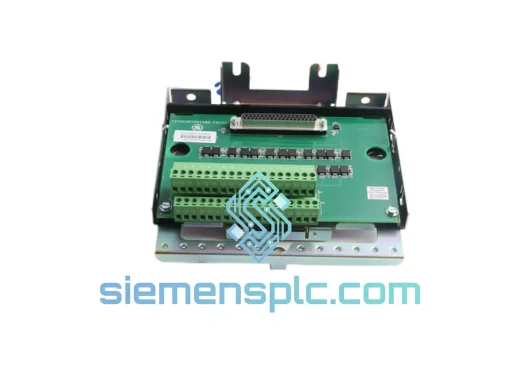
| Terminal Board | PTCCH (IS200PTCCH1A or equivalent) |
| Redundancy Support | Simplex, Dual, TMR (Triple Modular Redundancy) |
| Configuration Tool | GE ToolboxST |
| Certifications | CE, UL |
| Module Weight | Approx. 380 g |
| Warranty | 12 months from date of shipment |
The IS220PTCCH1B is built around a multi-stage signal chain designed to handle the characteristically low-amplitude, high-impedance output of thermocouple junctions in electrically noisy industrial environments. At the input stage, each channel passes through a differential instrumentation amplifier with a common-mode rejection ratio (CMRR) exceeding 100 dB at 50/60 Hz, which is the primary mechanism for suppressing ground-loop interference — a persistent problem in large turbine installations where thermocouple sheaths may be grounded at multiple points along cable runs spanning tens of meters.
Following amplification, the signal enters a sigma-delta ADC architecture. Unlike successive-approximation ADCs, sigma-delta conversion inherently applies digital filtering that attenuates high-frequency noise and power-line harmonics before the value is latched. This is particularly relevant in generator step-up transformer bays and switchgear rooms where radiated EMI from high-voltage switching events can couple into thermocouple wiring. The module’s EMC design complies with IEC 61000-4 series immunity requirements, including EFT/burst (IEC 61000-4-4) and surge (IEC 61000-4-5) tests.
Open-circuit detection is implemented per channel. When a thermocouple wire breaks or a connector becomes loose, the channel’s input floats to a defined rail voltage, which the firmware interprets as an open-circuit fault. This fault is reported as a discrete diagnostic bit in the IONet data frame, allowing ToolboxST and the Mark VIe controller to annunciate the specific channel number without requiring manual inspection of all 12 circuits. Out-of-range detection operates similarly — values exceeding the configured thermocouple type’s linearization table boundaries are flagged rather than clamped, preserving the integrity of the control system’s fault response logic.
The module’s firmware implements NIST-traceable thermocouple linearization polynomials for each supported TC type, stored in non-volatile memory. These polynomials convert the raw ADC count to ITS-90 temperature values in engineering units before transmission over IONet, offloading linearization computation from the Mark VIe controller CPU and reducing deterministic cycle time consumption.
Every IS220PTCCH1B unit supplied by siemensplc.com is sourced as genuine GE-manufactured hardware. Prior to dispatch, each module undergoes a structured inspection protocol: visual examination of the PCB, connector pins, and housing for mechanical damage; firmware version verification against the customer’s Mark VIe system revision; and functional power-on verification where test equipment is available. Units are shipped with full traceability documentation including inspection records and, where applicable, original GE packaging.
Logistics operations are based in Xiamen, China — a major international freight hub with direct access to DHL Express, FedEx International Priority, and UPS Worldwide Express services. Standard export documentation including commercial invoice, packing list, and certificate of origin is prepared for all international shipments. For customers in regions with specific import requirements, additional documentation such as ECCN classification statements or country-of-origin certificates can be provided upon request.
Transit times to major industrial regions: Southeast Asia 2–4 business days; Europe 3–5 business days; North America 3–5 business days; Middle East 4–6 business days. All shipments are fully insured and tracked from dispatch to delivery. A 12-month warranty covers manufacturing defects and functional failures under normal operating conditions, with advance replacement available for critical applications subject to prior arrangement.
📧 Email: [email protected]
📱 WhatsApp: +86 18359268345
🌐 Web: siemensplc.com
📍 Location: Xiamen, China
© 2026 siemensplc.com. All rights reserved.
We check the full part number, brand, series and visible nameplate information before quotation.
Sales confirms stock path, condition option, quantity and realistic lead time for export dispatch.
DHL, FedEx, UPS or buyer courier arrangements can be reviewed with packing requirements.
Similar brand or category products for fast comparison and multi-item RFQ lists.