GE
RFQ Ready
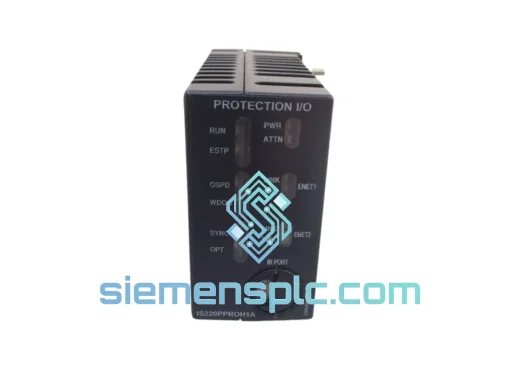
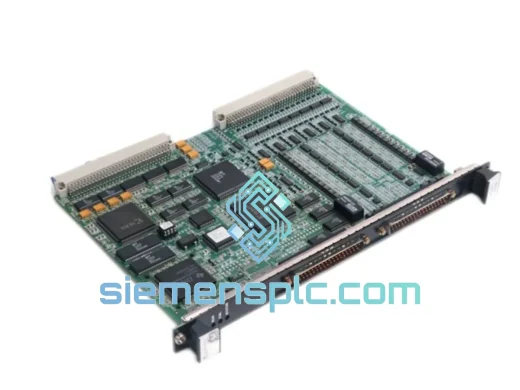
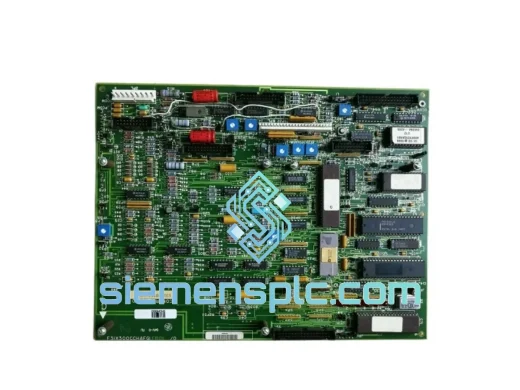
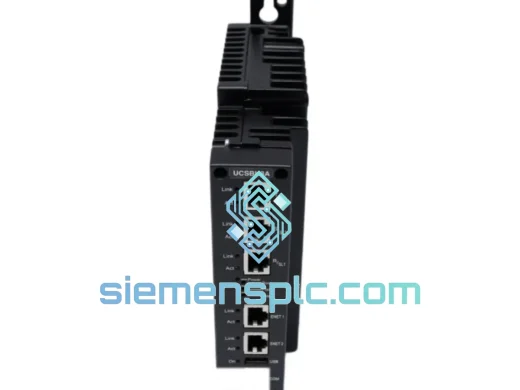
GE IS420UCSBH3A DCS Controller Module – Mark VIe
Mark VI
Origin US
DCS Controller Module
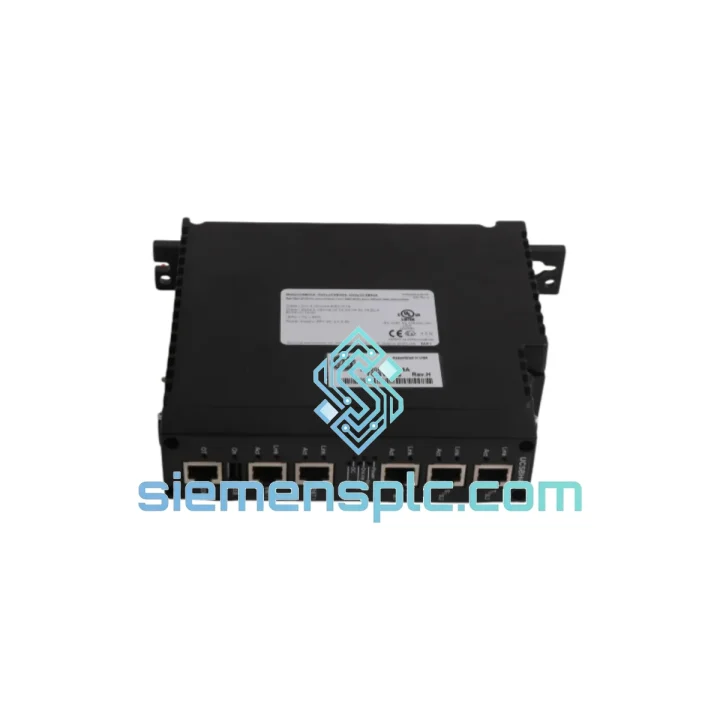
Request verified availability, condition, replacement risk review, packing options and courier lead time for IS420UCSBH4A.
Click Request Quote and the part number is inserted into the inquiry form automatically.
Core fields for model confirmation and RFQ routing. Detailed product narrative remains below.
Every minute a Mark VIe rack sits in fault state is a minute your generation output is zero. The IS420UCSBH4A UCSB controller is the brain of the Mark VIe platform — when it fails, nothing downstream works. No I/O pack communication. No turbine sequencing. No output. You’ve already done the diagnostics. You know what you need. The only question is how fast you can get it.
We stock verified GE IS420UCSBH4A units in Xiamen, China — physically inspected, export-ready, and sitting on the shelf. Not on order. Not inbound from a supplier. Here, now. Orders confirmed before 14:00 CST ship the same afternoon via DHL Express or FedEx International Priority. No broker chain. No re-export delays. Direct from our warehouse to your site.
This page exists for one reason: to cut the time between fault isolation and module-in-hand to the absolute minimum.
URGENT REQUIREMENT? Contact: [email protected] | WhatsApp: +86 18359268345
| Parameter | Specification |
|---|---|
| Part Number | IS420UCSBH4A |
| Manufacturer | GE / GE Vernova |
| Platform | Mark VIe Distributed Control System |
| Module Function | UCSB — Primary Plant / Turbine Controller |
| Processor Architecture | Dual-core real-time embedded CPU |
| IONet Interface | Dual-port 100 Mbps Ethernet |
| Legacy Bus Support | ARCNET (IS420-series I/O pack compatibility) |
| Compatible I/O Packs | IS420 PDIO, PTBA, PCCA, PPDA, PTUR |
| Backplane Supply | 24 VDC via Mark VIe controller rack |
| Operating Temperature | 0 °C to 60 °C continuous |
| Humidity | 5% – 95% RH, non-condensing |
| Redundancy Support | Simplex / Dual / TMR (Triple Modular Redundancy) |
| Configuration Software | GE ToolboxST v04.02 or later |
| Hardware Revision | H4A |
| Certifications | CE, UL — Mark VIe platform certified |
| Unit Weight | ~600 g |
| Availability | ✅ Ready to Ship — Xiamen Warehouse |
Field experience on Mark VIe systems reveals a consistent set of failure signatures that point directly to the IS420UCSBH4A. Here’s what actually matters when you’re standing in front of a faulted rack under pressure.
Fault Codes That Implicate the UCSB:
Replacement Sequence — What Field Engineers Actually Do:
Gas turbine control rooms are not benign environments. Sustained ambient temperatures of 50–60 °C, continuous low-frequency vibration from the turbine foundation, conductive particulate accumulation, and humidity swings from weather events — the IS420UCSBH4A is rated to operate through all of it without performance degradation.
The PCB assembly carries full conformal coating on all signal-critical traces. This is a measurable protection layer, not a marketing claim. It prevents humidity-induced leakage currents and condensation damage. Coastal power plants and offshore platforms with salt-laden air are environments where uncoated boards fail within 18 months. Conformal-coated boards run for years under the same conditions.
Vibration tolerance is validated to IEC 60068-2-6, covering 5–500 Hz at 1g continuous acceleration. Turbine foundations transmit vibration in the 10–50 Hz band at amplitudes that loosen connector contacts on lower-grade hardware over time. The IS420UCSBH4A’s backplane connector uses gold-plated contacts rated for 200+ insertion cycles, maintaining reliable electrical contact through the vibration environment and repeated maintenance interventions.
Thermal design supports continuous operation at 60 °C ambient without throttling or derating. Internal power regulation remains stable across the full operating voltage range of the Mark VIe backplane — relevant in installations where backplane supply voltage sags under high-load conditions.
Every unit we ship undergoes physical inspection before packing: connector pin condition, housing integrity, label authenticity, and PCB surface inspection for signs of prior damage or unauthorized repair. We do not ship modules with bent pins, cracked housings, burned components, or missing labels. Pre-shipment inspection reports are available on request at order confirmation.
Stock is held in our Xiamen warehouse — Fujian Province, one of China’s primary electronics export hubs with direct DHL, FedEx, and UPS international gateway access. This is physical shelf stock. When you order, the module is here, not inbound from a supplier.
For destinations with known customs complexity — Brazil, India, Nigeria — contact us before placing the order. We’ve shipped to 60+ countries and know where the friction points are. We can advise on the optimal carrier and documentation approach to avoid clearance holds.
📧 Email: [email protected]
📱 WhatsApp: +86 18359268345
🌐 Web: siemensplc.com
© 2026 siemensplc.com. All rights reserved.
We check the full part number, brand, series and visible nameplate information before quotation.
Sales confirms stock path, condition option, quantity and realistic lead time for export dispatch.
DHL, FedEx, UPS or buyer courier arrangements can be reviewed with packing requirements.
Similar brand or category products for fast comparison and multi-item RFQ lists.