Vibro-Meter
RFQ Ready
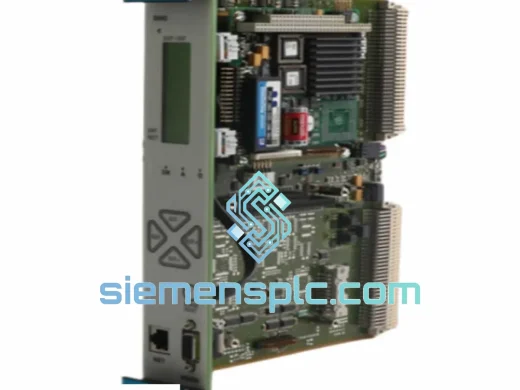
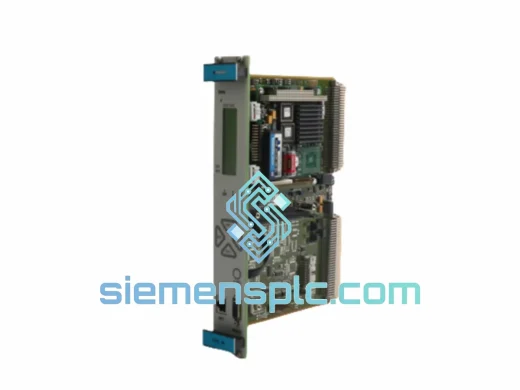
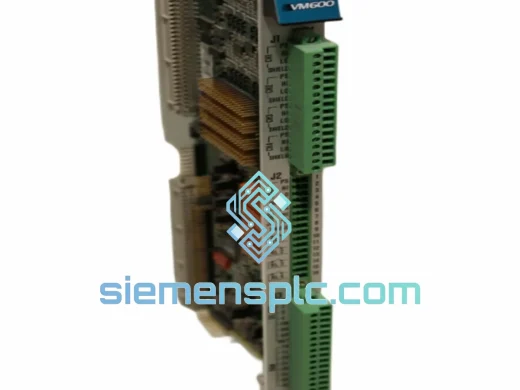
VIBRO-METER VM600 RLC16 200-570-000-014 Relay Output Card
Origin Switzerland
Relay Output Card
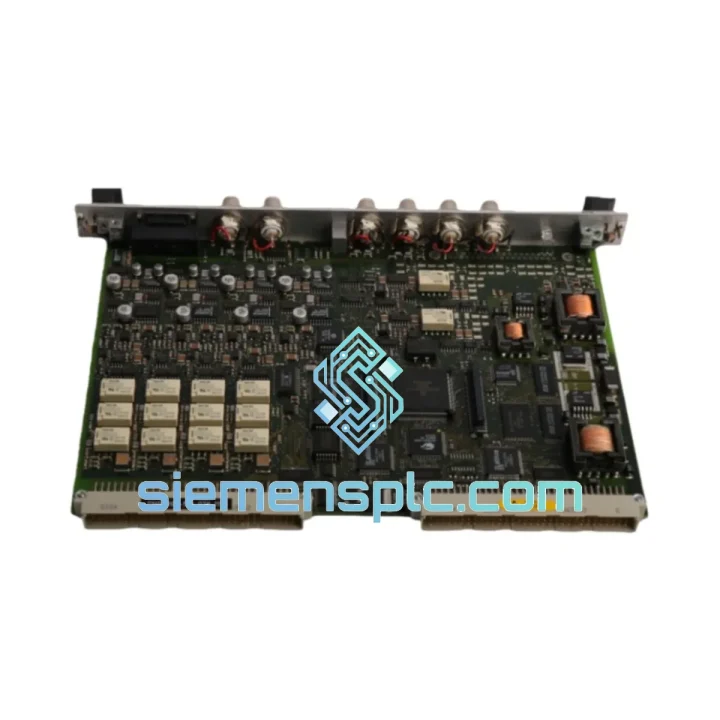
Request verified availability, condition, replacement risk review, packing options and courier lead time for VIBRO-METER.
Click Request Quote and the part number is inserted into the inquiry form automatically.
Core fields for model confirmation and RFQ routing. Detailed product narrative remains below.
The MPC4 200-510-078-115 is a four-channel mechanical protection card engineered for deployment within the VIBRO-METER VM600 modular rack system. Its primary function is to execute continuous, real-time protection logic across four independent measurement channels, each capable of processing signals from eddy-current proximity probes, velocity transducers, or piezoelectric accelerometers. In a turbomachinery protection architecture, the MPC4 sits at the intersection of transducer signal conditioning and relay-based trip logic — it receives raw analog signals from field-mounted sensors, applies configurable alarm and danger thresholds, and drives hardwired relay outputs that interface directly with the machine’s emergency shutdown (ESD) or distributed control system (DCS).
Unlike software-only monitoring solutions, the MPC4 executes its protection logic in dedicated hardware, ensuring that trip decisions are not subject to operating system latency, network congestion, or CPU scheduling delays. This deterministic behavior is a fundamental requirement in API 670-compliant machinery protection systems, where response time from signal exceedance to relay actuation must be documented and repeatable.
Real-time Stock & RFQ: [email protected] | WhatsApp: +86 18359268345
| Parameter | Specification |
|---|---|
| Manufacturer | VIBRO-METER (Meggitt SA, Switzerland) |
| Part Number | 200-510-078-115 |
| Model | MPC4 |
| Platform | VM600 Rack System |
| Protection Channels | 4 independent channels |
| Supported Input Types | Eddy-current (proximity), velocity (seismic), acceleration (ICP/charge) |
| Measurement Parameters | Vibration displacement (µm pk-pk), velocity (mm/s RMS), acceleration (g), shaft speed (RPM), axial position (mm) |
| Alarm Outputs | Configurable Alert and Danger relay per channel; normally energized (fail-safe) relay logic |
| Relay Contact Rating | Typically 30 V DC / 1 A resistive (refer to VM600 system documentation for exact rating) |
| Backplane Interface | VM600 proprietary rack bus; card-edge connector |
| Power Supply | Supplied via VM600 rack backplane (no external PSU required) |
| Configuration Interface | VM600 RPS (Rack Programming Software) via rack communication module |
| Form Factor | Single-slot plug-in card for VM600 standard or extended chassis |
| Operating Temperature | 0 °C to +60 °C (storage: -40 °C to +85 °C) |
| Humidity | 5% to 95% RH, non-condensing |
| Weight | Approx. 400 g |
| Compliance | CE marked; SIL-capable at system level per IEC 61508 |
| Warranty | 12 months from date of shipment |
Signal Path Architecture: Each of the four channels on the MPC4 200-510-078-115 implements a discrete analog signal chain. Incoming sensor signals pass through a front-end input conditioning stage that provides sensor power (where applicable, e.g., -24 V DC bias for eddy-current probes), signal buffering, and anti-aliasing filtering. The conditioned analog signal is then routed to an internal measurement processor that computes the required vibration parameter — whether peak-to-peak displacement, RMS velocity, or overall acceleration — using dedicated signal processing logic rather than a shared general-purpose DSP. This per-channel architecture eliminates cross-channel interference and ensures that a fault condition on one channel does not degrade measurement accuracy on adjacent channels.
EMC Design: The MPC4 card employs optical isolation at the boundary between the analog measurement circuitry and the digital backplane interface. This galvanic barrier prevents ground loop currents — common in large industrial installations where field equipment and control room equipment share different ground potentials — from corrupting measurement data or triggering spurious relay operations. The card’s PCB layout follows controlled-impedance routing practices, with analog and digital ground planes separated and joined at a single star point to minimize conducted noise coupling. Shield termination for coaxial sensor cables is handled at the IOC4T I/O card, maintaining a clean signal reference throughout the measurement chain.
Relay Logic and Fail-Safe Operation: The MPC4 implements normally energized relay logic for its protection outputs. Under normal operating conditions, the relay coil is energized and the contact is closed. A trip condition — whether caused by a genuine vibration exceedance, a sensor fault, or a loss of power to the card — de-energizes the relay and opens the contact. This fail-safe architecture ensures that a card failure or power interruption results in a protective trip rather than a masked fault, which is a mandatory requirement in API 670 and IEC 61511 functional safety frameworks.
Threshold Processing: Alert and Danger thresholds are stored in non-volatile memory within the card and are applied independently per channel. The MPC4 supports time-delay-to-trip (TDTT) configuration, which allows operators to define a minimum duration that a signal must exceed the Danger threshold before a trip relay is actuated. This prevents spurious trips caused by transient mechanical events such as startup transients or brief load spikes, while still ensuring that sustained dangerous conditions result in a protective shutdown within the configured time window.
Every MPC4 200-510-078-115 unit supplied by siemensplc.com is sourced as genuine VIBRO-METER / Meggitt original hardware. Prior to shipment, each card undergoes a functional bench test against VM600 system specifications, including channel measurement accuracy verification, relay actuation confirmation, and backplane communication integrity check. A test report and serial number traceability document accompany each unit.
Units are packaged in ESD-safe anti-static bags with foam-lined rigid cartons to protect the card-edge connector and surface-mount components during international transit. Export documentation — including commercial invoice, packing list, and certificate of origin — is prepared to facilitate customs clearance in major import markets including the EU, USA, Southeast Asia, and the Middle East.
Shipments originate from our warehouse in Xiamen, China. In-stock units are dispatched within 1–3 business days via DHL Express, FedEx International Priority, or UPS Worldwide Express. Transit times to major industrial hubs are typically 3–5 business days. Sea freight consolidation is available for bulk orders. All shipments are fully insured and tracked from dispatch to delivery confirmation.
A 12-month warranty covers manufacturing defects and functional failures under normal operating conditions. Warranty claims are processed with a replacement-first policy to minimize customer downtime.
Email: [email protected]
WhatsApp: +86 18359268345
Web: siemensplc.com
Location: Xiamen, China
© 2026 siemensplc.com. All rights reserved.
We check the full part number, brand, series and visible nameplate information before quotation.
Sales confirms stock path, condition option, quantity and realistic lead time for export dispatch.
DHL, FedEx, UPS or buyer courier arrangements can be reviewed with packing requirements.
Similar brand or category products for fast comparison and multi-item RFQ lists.