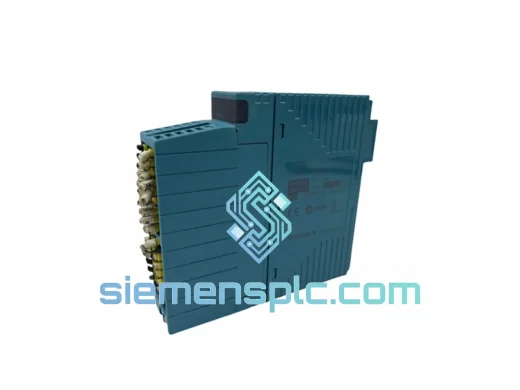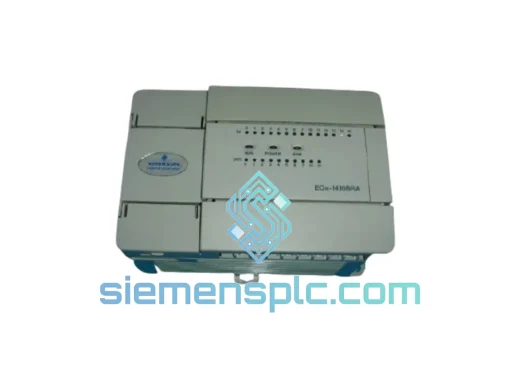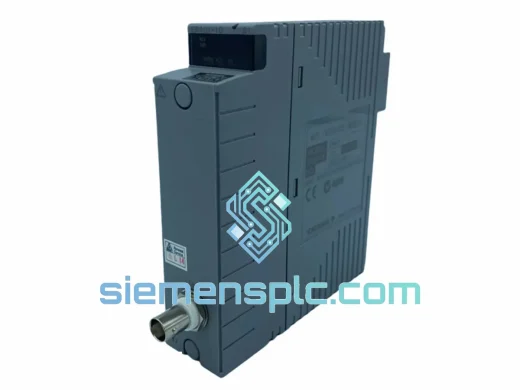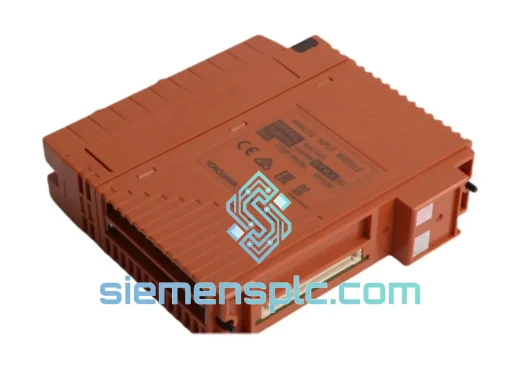
Yokogawa
RFQ Ready
Yokogawa SAI143-H63/PRP S3 DCS Analog Input Module
CENTUM VP
Origin JP
DCS Analog Input Module
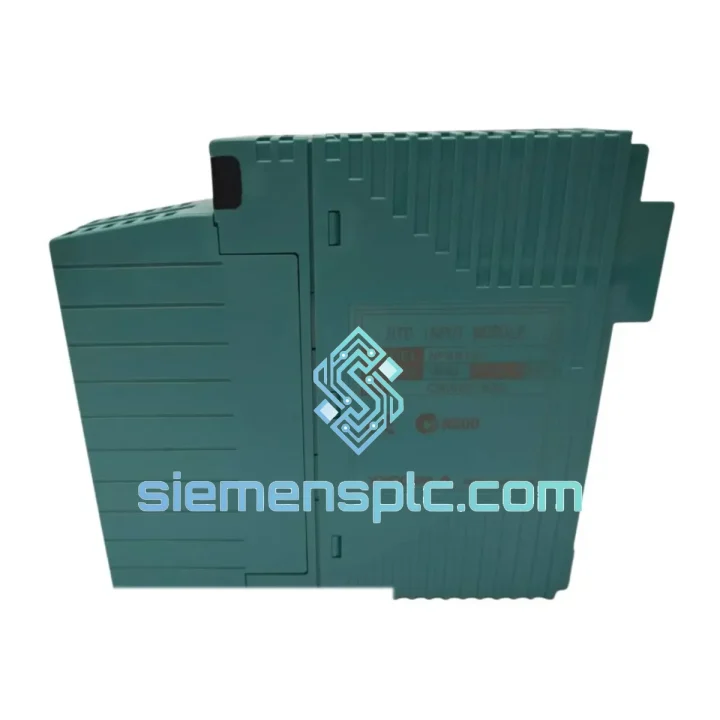
Request verified availability, condition, replacement risk review, packing options and courier lead time for NFAR181-S00.
Click Request Quote and the part number is inserted into the inquiry form automatically.
Core fields for model confirmation and RFQ routing. Detailed product narrative remains below.
Your CENTUM VP or CS 3000 Field Control Station just threw a fault. The NFAR181-S00 S2 analog input module is offline. Process signals are dead. The clock is running — and so is the cost. At siemensplc.com, we stock the YOKOGAWA NFAR181-S00 S2 for exactly this moment. Not next week. Not after a quote cycle. Now. We ship from Xiamen within 24 hours of order confirmation via DHL Express or FedEx Priority, reaching most destinations in Southeast Asia, the Middle East, and Europe within 3–5 business days. One call, one part, line back online.
URGENT REQUIREMENT? Contact: [email protected] | WhatsApp: +86 18359268345
| Parameter | Specification |
|---|---|
| Part Number / SKU | NFAR181-S00 S2 ✅ Ready to Ship |
| Manufacturer | YOKOGAWA Electric Corporation |
| Module Type | Analog Input Module (AI) |
| Compatible Platform | CENTUM VP / CS 3000 DCS — Field Control Station (FCS) |
| Series | NFAR / NFxx I/O Series |
| Signal Input Range | 4–20 mA / 1–5 V DC (field-selectable per channel) |
| Input Channels | 8 channels, isolated |
| Resolution | 16-bit A/D conversion |
| Communication Bus | ESB Bus (CS 3000) / Vnet/IP (CENTUM VP) |
| Power Supply | Backplane-fed via FCS / FCU chassis |
| Operating Temperature | 0°C to 55°C |
| Humidity | 10% to 90% RH, non-condensing |
| Vibration Resistance | IEC 60068-2-6 compliant |
| Approvals | CE, IEC 61131-2 |
| Weight | Approx. 250 g |
| Origin | Japan |
| Condition | New / Surplus (specify at inquiry) |
| Stock Status | ✅ Ready to Ship — Xiamen Warehouse |
Ten years of field work teaches you that swapping an NFAR181-S00 S2 is rarely just a pull-and-plug. Here is what actually matters on-site:
1. Confirm the fault before you pull the card. On CENTUM VP, navigate to HIS → FCS Maintenance → I/O Module Status. Look for ALM-IOM or IOM-FAIL alarms tied to the slot address. On CS 3000, use the Field Control Station Builder (FCBB) to read the slot diagnostic. A persistent IOM-FAIL with no field wiring fault almost always points to the module itself — not the transmitter loop.
2. Slot addressing — do not skip this. The NFAR181-S00 S2 uses automatic slot addressing via the ESB/Vnet backplane. There are no physical DIP switches on this module. However, the slot number is registered in the FCS database. Before inserting the replacement, verify the slot assignment in your FCS Builder project matches the physical slot position. A mismatch will cause the new module to come up as an unregistered node and generate a continuous IOM-COMM alarm.
3. Hot-swap procedure. CENTUM VP FCS supports hot-swap on non-redundant I/O slots, but you must inhibit the affected channels in the FCS Builder first (set to MAN mode at the function block level). Pulling a live module without inhibiting will trigger a cascade of downstream ALM-PV alarms across every tag wired to that card. Inhibit → pull → insert → verify LED status (green solid = normal, amber flash = initializing, red = fault) → release inhibit → confirm PV values in HIS.
4. Firmware revision matching. Check the firmware label on the module faceplate. CENTUM VP R5.x and above require NFAR181 firmware R2.xx or later. If you are running an older CS 3000 system, confirm compatibility with your FCS firmware version before installation. Mismatched firmware will result in the module initializing but failing channel-level communication — a subtle fault that wastes hours of debugging time.
5. Common fault codes decoded:
6. Post-replacement verification checklist: Confirm all 8 channel LEDs are green. Verify PV readings in HIS match field transmitter values. Run a loop check on at least 2 channels. Clear all inhibits. Document the replacement in your maintenance log with the new module serial number.
Process plants are not server rooms. The NFAR181-S00 S2 is engineered to operate where conditions are genuinely hostile. YOKOGAWA designs this module series to IEC 60068-2-6 vibration standards — it handles the continuous mechanical stress of compressor skids and pump stations without contact degradation. The operating range of 0°C to 55°C covers everything from an air-conditioned control room cabinet to a field junction box in a tropical refinery. Humidity tolerance up to 90% RH non-condensing means coastal and offshore installations are within spec.
The module’s isolated channel architecture provides an additional layer of protection: a ground fault or surge on one field loop does not propagate to adjacent channels or the backplane bus. In high-EMI environments — near variable frequency drives, large motors, or welding equipment — the isolation barrier maintains signal integrity where lesser modules fail. The conformal-coated PCB resists corrosive atmospheres common in chemical and petrochemical plants. This is not marketing language. These are the design parameters that determine whether your replacement module survives the next 5 years or fails again in 6 months.
Our Xiamen warehouse operates on a 24-hour dispatch cycle for in-stock items. The process is straightforward: order confirmed → unit pulled and inspected → ESD-safe packaging with foam inserts → commercial invoice, packing list, and certificate of origin prepared → handed to DHL Express or FedEx Priority courier same day or next morning.
Typical transit times from Xiamen: Southeast Asia (Singapore, Thailand, Malaysia, Indonesia) — 2–3 business days. Middle East (UAE, Saudi Arabia, Qatar) — 3–4 business days. Europe (Germany, Netherlands, UK, France) — 4–5 business days. North America (USA, Canada) — 5–7 business days. All shipments include a tracking number issued within 2 hours of pickup. For orders requiring export documentation for customs clearance — HS code declaration, end-user certificate, or CITES-exempt statement — our logistics team prepares these as standard. We have shipped YOKOGAWA DCS components to over 40 countries. Customs delays are rare; when they occur, we provide full documentation support to resolve them.
For genuinely critical shutdowns where air freight is not fast enough, contact us directly on WhatsApp. We have arranged same-day courier handoffs for customers facing production losses exceeding $50,000 per hour. We understand the math. We move accordingly.
📧 Email: [email protected]
💬 WhatsApp: +86 18359268345
🌐 Web: siemensplc.com
© 2026 siemensplc.com. All rights reserved.
We check the full part number, brand, series and visible nameplate information before quotation.
Sales confirms stock path, condition option, quantity and realistic lead time for export dispatch.
DHL, FedEx, UPS or buyer courier arrangements can be reviewed with packing requirements.
Similar brand or category products for fast comparison and multi-item RFQ lists.