Yokogawa
RFQ Ready
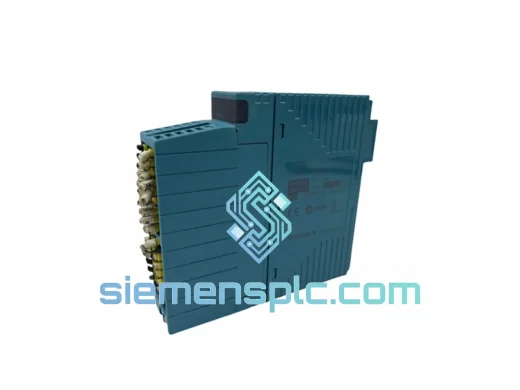
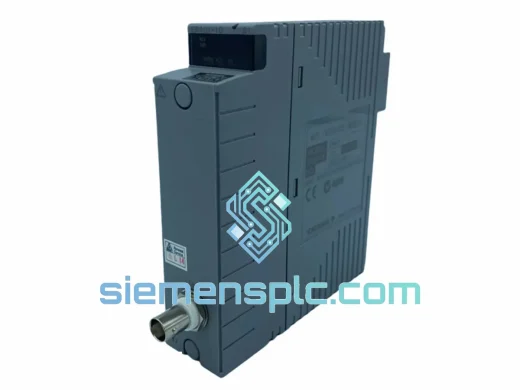
Yokogawa SAI143-H63/PRP S3 DCS Analog Input Module
CENTUM VP
Origin JP
DCS Analog Input Module
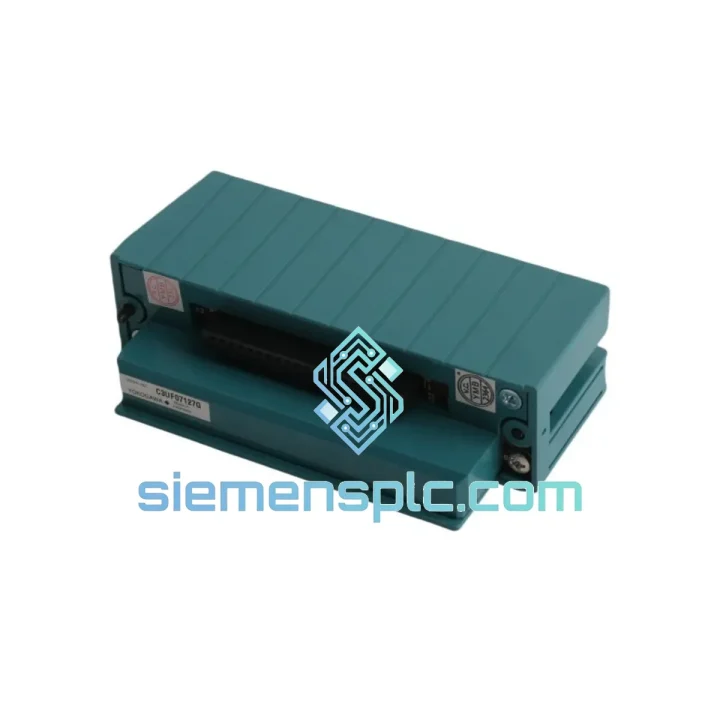
Request verified availability, condition, replacement risk review, packing options and courier lead time for NFTI3S-00.
Click Request Quote and the part number is inserted into the inquiry form automatically.
Core fields for model confirmation and RFQ routing. Detailed product narrative remains below.
The NFTI3S-00 S2 is a field-side terminal block module manufactured by YOKOGAWA Electric Corporation for use within the CENTUM VP Field Control Station (FCS) I/O subsystem. Its function is not decorative or supplementary — it is the physical boundary where field instrument cables terminate and transition into the DCS backplane signal path. Every analog loop, discrete input, and thermocouple circuit that enters a CENTUM VP FCS cabinet passes through a terminal block of this class. The S2 suffix designates the standard specification variant, confirming compatibility with the base CENTUM VP hardware revision without optional material upgrades or regional certification deviations.
In a typical CENTUM VP architecture, the FCS I/O subsystem is organized into Node Interface Units (NIU) and I/O modules (e.g., AAI141 for analog input, ADV151 for digital input). The NFTI3S-00 S2 mounts directly to the front face of these I/O cards, providing the physical conductor termination points that connect field cables to the card’s internal signal conditioning circuitry. This plug-in architecture allows the I/O card to be extracted for replacement or maintenance without disturbing field wiring — a critical operational requirement in continuous-process plants where loop integrity must be maintained during partial shutdowns.
Real-time Stock & RFQ: [email protected] | WhatsApp: +86 18359268345
| Part Number | NFTI3S-00 S2 |
| Manufacturer | YOKOGAWA Electric Corporation |
| Series | CENTUM VP FCS I/O Terminal Block |
| Suffix Code | S2 — Standard specification, base hardware revision |
| Module Function | Field-side conductor termination interface for CENTUM VP I/O cards |
| Connection Mechanism | Pressure spring clamp (tool-free insertion/extraction) |
| Conductor Cross-Section | 0.5 – 2.5 mm² (AWG 20–12), stranded or solid |
| Compatible I/O Cards | AAI141, AAI143, AAI841, ADV151, ADV161, ADV551, ADA551 (confirm per CENTUM VP hardware manual IM 33J01B30-01EN) |
| Mounting Method | Direct plug-in to CENTUM VP FCS I/O card front connector; DIN rail cabinet mounting per YOKOGAWA cabinet standard |
| Operating Temperature | 0 °C to +55 °C (storage: −25 °C to +70 °C) |
| Relative Humidity | 5% to 95% RH, non-condensing |
| Weight | Approx. 200 g |
| Country of Origin | Japan |
| Compliance | CE, RoHS; system-level IEC 61511, IEC 61508, NAMUR NE 21 |
| Quality Warranty | 12 months from date of dispatch, covering manufacturing defects |
The spring-clamp termination mechanism in the NFTI3S-00 S2 operates on a constant-force contact principle. Unlike screw-type terminals where contact pressure degrades over thermal cycling due to differential expansion between the screw, conductor, and terminal body, the spring clamp maintains a defined clamping force independent of temperature excursion. In process plant environments where cabinet temperatures fluctuate between ambient cold-start conditions and steady-state heat dissipation from densely packed I/O cards, this mechanical stability directly translates to consistent contact resistance — a parameter that becomes critical in millivolt-level thermocouple circuits where a 10 mΩ variation in termination resistance introduces measurable measurement error.
The plug-in architecture of the NFTI3S-00 S2 relative to the CENTUM VP I/O card implements a physical separation of the field wiring layer from the electronics layer. This is not merely a convenience feature — it is an EMC design strategy. By isolating the field cable termination block from the I/O card PCB, YOKOGAWA limits the conductive path through which transient energy from field cables (induced by nearby VFDs, motor starters, or lightning events) can reach the card’s analog front-end circuitry. The terminal block itself acts as a passive mechanical interface; the I/O card’s internal optocoupler or galvanic isolation stage handles the electrical barrier. This two-layer approach — mechanical separation at the terminal block, electrical isolation at the card — provides defense-in-depth against common-mode transients in industrial environments.
The NFTI3S-00 S2’s compact pitch design supports high-density I/O marshalling within standard 19-inch or 24-inch YOKOGAWA FCS cabinets. In a fully populated FCS node, multiple terminal blocks are mounted in adjacent slots, and the mechanical keying of the NFTI3S-00 S2 connector prevents mis-insertion into incompatible card types — a hardware interlock that eliminates a class of commissioning errors that would otherwise require loop-by-loop verification after any card swap.
Every YOKOGAWA NFTI3S-00 S2 unit dispatched from our Xiamen, China facility is sourced through verified supply channels with full part traceability. Pre-shipment inspection covers physical label authenticity, suffix code verification against the order specification, connector pin integrity, and anti-static packaging seal. Units are packed in moisture-barrier ESD bags with desiccant inserts, then placed in rigid outer cartons rated for international air freight handling — a packaging standard that reflects the sensitivity of precision connector components to mechanical shock and humidity ingress during transit.
From Xiamen, we support express air freight to major industrial hubs globally: Singapore, Rotterdam, Houston, Dubai, Mumbai, and Seoul are typical 3–5 business day destinations via DHL Express or FedEx International Priority. For urgent plant shutdown requirements, same-day dispatch is available for in-stock units when orders are confirmed before 14:00 CST. Export documentation — commercial invoice, packing list, certificate of origin, and MSDS where applicable — is prepared in-house and transmitted electronically prior to physical shipment to minimize customs clearance delays at destination.
All units carry a 12-month warranty from dispatch date covering manufacturing defects. Warranty claims are processed with a target response time of 48 hours from receipt of defective unit and supporting documentation.
Email: [email protected]
WhatsApp: +86 18359268345
Web: siemensplc.com
Location: Xiamen, China
© 2026 siemensplc.com. All rights reserved.
We check the full part number, brand, series and visible nameplate information before quotation.
Sales confirms stock path, condition option, quantity and realistic lead time for export dispatch.
DHL, FedEx, UPS or buyer courier arrangements can be reviewed with packing requirements.
Similar brand or category products for fast comparison and multi-item RFQ lists.