HEIDENHAIN
RFQ Ready
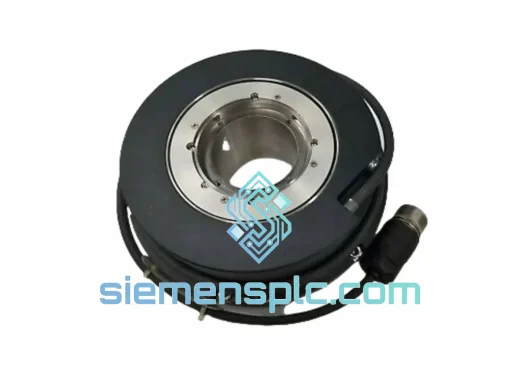
HEIDENHAIN RCN 223 16384 03S17-0D Absolute Rotary Encoder
RCN 200 Series
Origin DE
Absolute Rotary Encoder
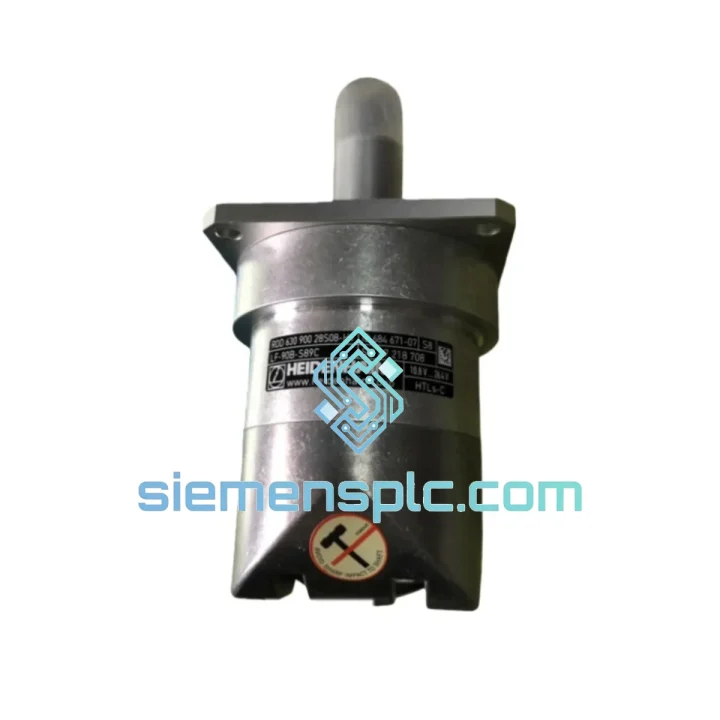
Request verified availability, condition, replacement risk review, packing options and courier lead time for ROD630 900 28S0.
Click Request Quote and the part number is inserted into the inquiry form automatically.
Core fields for model confirmation and RFQ routing. Detailed product narrative remains below.
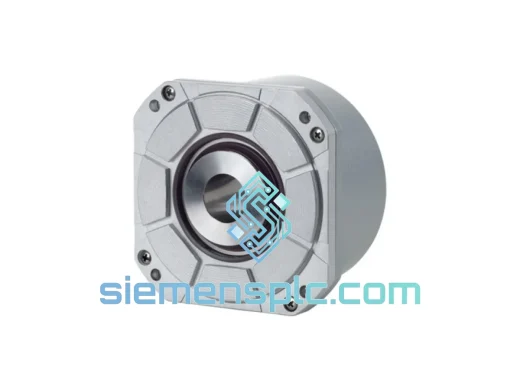
The HEIDENHAIN ROD630 900 28S0 is a modular incremental rotary encoder engineered for direct integration onto servo motor shafts in high-cycle industrial automation environments. Operating on a photoelectric scanning principle against a precision glass graduation disk, it generates 900 sinusoidal signal periods per revolution, which are internally processed into TTL-compatible square-wave outputs on channels A, B, and R (reference mark). The 28S0 designation specifies the stator coupling geometry — a synchro flange configuration with a nominal bore diameter of 28 mm and a defined angular tolerance for stator-side torque absorption, eliminating the need for external bearing support in the encoder assembly.
In a closed-loop servo axis, the encoder’s primary function is to supply the drive controller with two orthogonal position signals (A/B) phase-shifted by 90 electrical degrees, enabling quadrature decoding for direction discrimination and position accumulation. The reference pulse R, generated once per revolution at a defined angular position, provides the homing datum for absolute position recovery after power-on or E-stop events. At 900 lines per revolution, the native resolution before interpolation is 0.4° per line; with ×4 quadrature decoding standard in most servo drives, the effective resolution reaches 3,600 counts per revolution — sufficient for servo axes requiring positioning repeatability in the arc-minute range under normal mechanical coupling conditions.
The ROD 630 series occupies a well-established position in HEIDENHAIN’s modular encoder portfolio, designed specifically for OEM motor integration where the encoder housing mounts directly to the motor end-shield and the scanning head couples to the motor shaft via a precision collet or clamping hub. This architecture eliminates the shaft-coupling compliance errors inherent in separate-housing encoders and reduces the overall axial stack length of the motor-encoder assembly. The 28S0 stator coupling provides defined torsional stiffness to resist reaction torques from cable drag and vibration without transmitting bending loads to the motor bearing.
Real-time Stock & RFQ: [email protected] | WhatsApp: +86 18359268345
| Parameter | Value / Specification |
|---|---|
| Manufacturer | HEIDENHAIN (Dr. Johannes Heidenhain GmbH) |
| Part Number / SKU | ROD630 900 28S0 |
| Series | ROD 630 — Modular Incremental Rotary Encoder |
| Operating Principle | Photoelectric scanning, precision glass graduation disk |
| Signal Periods per Revolution | 900 lines/rev |
| Effective Counts/Rev (×4 decode) | 3,600 counts/rev |
| Output Signal Type | TTL square wave, differential (RS-422 compatible) |
| Output Channels | A, /A, B, /B, R, /R (6-channel differential) |
| Supply Voltage | 5 V DC ± 5% |
| Current Consumption | ≤ 150 mA (typical, no load) |
| Max. Shaft Speed | 12,000 rpm (mechanical limit) |
| Max. Signal Frequency | 180 kHz at 12,000 rpm |
| Mechanical Interface | 28S0 synchro flange, stator coupling |
| Shaft Bore Diameter | 28 mm nominal |
| Operating Temperature | 0 °C to +70 °C |
| Storage Temperature | −20 °C to +80 °C |
| Protection Class | IP40 (standard housing) |
| Weight | Approx. 180 g |
| Connector Type | HEIDENHAIN standard 12-pin flange connector |
| Warranty | 12 months against manufacturing defects |
| Country of Origin | Germany |
The ROD630 900 28S0 employs a structured-light photoelectric scanning architecture in which a collimated LED source projects through a scanning reticle onto a glass graduation disk with 900 radial line pairs. Four photodetector arrays, spatially offset by 90° of the graduation period, generate four sinusoidal analog signals (A+, A−, B+, B−) in quadrature. These signals are conditioned by an integrated ASIC that performs offset compensation, amplitude normalization, and phase correction before the comparator stage converts them to differential TTL square waves. This analog-to-digital conversion within the encoder head eliminates the need for external signal conditioning modules in most drive configurations, reducing BOM complexity and potential signal degradation over cable runs.
The differential output architecture (RS-422 line driver standard) provides inherent common-mode noise rejection. In industrial cabinet environments where servo drives, VFDs, and switching power supplies generate broadband EMI in the 150 kHz–30 MHz range, the differential pair transmission ensures that induced noise appears as common-mode voltage on both conductors simultaneously and is rejected at the drive’s differential receiver input. The practical result is signal integrity over cable lengths up to 100 m without repeaters, provided cable impedance is matched (typically 120 Ω characteristic impedance for encoder cables).
The 28S0 stator coupling is a precision-machined aluminum ring with defined radial compliance. Its torsional stiffness is engineered to be high enough to prevent angular slip between the scanning head and the motor end-shield under normal operating vibration (per IEC 60068-2-6 sinusoidal vibration profiles), while its radial compliance accommodates minor shaft eccentricity and thermal expansion differentials between the motor housing and encoder body. This mechanical design prevents the encoder from acting as a rigid constraint on the motor bearing, which would introduce additional radial loads and accelerate bearing wear — a failure mode common in rigidly mounted separate-housing encoders.
The glass graduation disk provides thermal stability superior to metal or plastic alternatives. The coefficient of thermal expansion of borosilicate glass (approximately 3.3 × 10⁻⁶ /°C) is significantly lower than aluminum (23 × 10⁻⁶ /°C), meaning that over a 70 °C operating range, the graduation pitch variation is less than 0.023%, preserving position accuracy across the full thermal envelope of the motor.
Every HEIDENHAIN ROD630 900 28S0 unit supplied by siemensplc.com is sourced through verified industrial supply channels with full traceability to authorized distribution networks. Prior to dispatch, each unit undergoes a structured inspection protocol: connector pin integrity check, housing condition assessment, label and date-code verification, and functional output signal verification where test equipment is available. Units are packed in anti-static foam-lined cartons with desiccant inserts to protect the precision optical assembly from humidity and electrostatic discharge during transit.
Logistics operations are managed from our warehouse in Xiamen, China — a major export hub with direct access to international express carriers including DHL Express, FedEx International Priority, and UPS Worldwide Expedited. Standard international delivery times are 3–7 business days to Europe and North America, 2–5 business days to Southeast Asia, and 1–3 business days to Hong Kong, Taiwan, and South Korea. For urgent production-down situations, same-day dispatch is available for orders confirmed before 14:00 CST. Full export documentation is provided with every shipment: commercial invoice, packing list, and certificate of conformity. Additional documentation including EUR.1 movement certificates, Form A (GSP), and CITES declarations can be arranged upon request for specific destination requirements.
All units are covered by a 12-month warranty against defects in materials and workmanship under normal operating conditions as defined in the HEIDENHAIN installation guidelines. Warranty claims are processed with a target response time of 2 business days from receipt of the defective unit.
Email: [email protected]
WhatsApp: +86 18359268345
Web: siemensplc.com
Location: Xiamen, China
© 2026 siemensplc.com. All rights reserved.
We check the full part number, brand, series and visible nameplate information before quotation.
Sales confirms stock path, condition option, quantity and realistic lead time for export dispatch.
DHL, FedEx, UPS or buyer courier arrangements can be reviewed with packing requirements.
Similar brand or category products for fast comparison and multi-item RFQ lists.