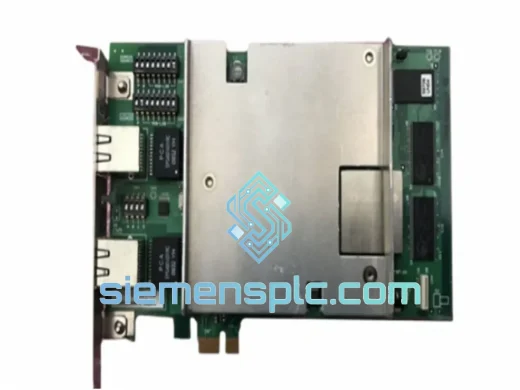
Product Overview
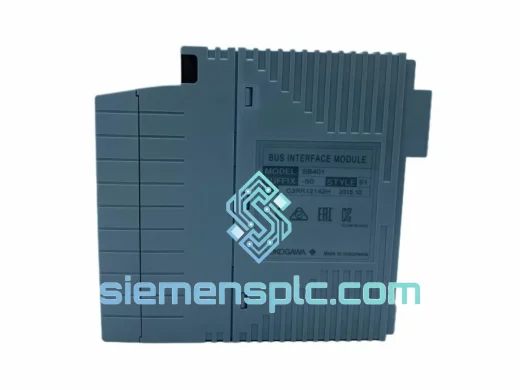
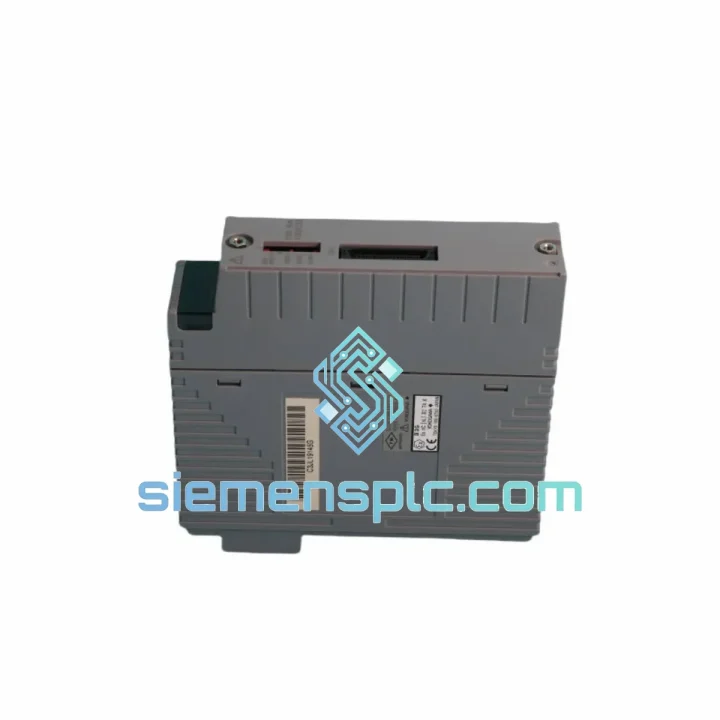
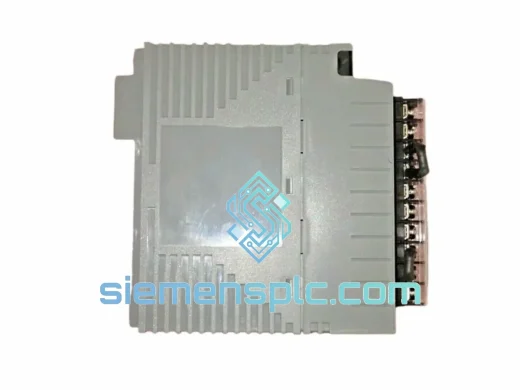
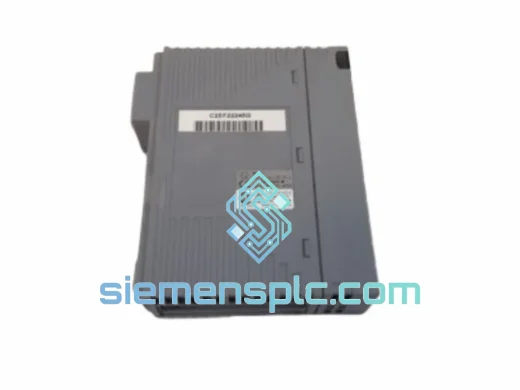
YOKOGAWA SB401-51-S1 CENTUM VP Bus Interface Module – Cut Downtime, Ship Today
Every hour your CENTUM VP field control station sits offline costs real money. A failed SB401-51-S1 bus interface module is one of the most disruptive single-point failures in a Vnet/IP architecture — it severs communication between the field control unit and the entire I/O nest, taking your process data blind in seconds. We stock the SB401-51-S1 in Xiamen and ship same-day via DHL Express or FedEx International Priority. From our warehouse to your plant gate, typically 2–5 business days anywhere in the world.
URGENT REQUIREMENT? Contact: [email protected] | WhatsApp: +86 18359268345
Quick Technical Datasheet
| Parameter |
Specification |
Status |
| Part Number / SKU |
SB401-51-S1 |
✅ Ready to Ship |
| Manufacturer |
YOKOGAWA Electric Corporation |
100% Original OEM |
| Series / Platform |
CENTUM VP |
– |
| Module Function |
ESB Bus Interface (Vnet/IP ↔ I/O Nest) |
– |
| Communication Protocol |
Vnet/IP (YOKOGAWA proprietary high-speed control bus) |
– |
| Mounting Style |
Single-slot nest mount, CENTUM VP field control station |
– |
| Power Source |
Backplane-supplied (station power rail) |
– |
| Operating Temperature |
0 °C to +55 °C |
– |
| Storage Temperature |
−20 °C to +70 °C |
– |
| Relative Humidity |
5 % – 95 % RH, non-condensing |
– |
| Unit Weight |
Approx. 300 g |
– |
| Country of Origin |
Japan |
– |
| Certifications |
CE, UL, RoHS |
– |
| Hot-Swap Support |
Yes – online replacement without station shutdown |
– |
| Redundancy |
Dual-redundant bus configuration supported |
– |
| Warranty (siemensplc.com) |
90-day functional warranty, extensions available |
– |
Troubleshooting & Replacement Tips
After ten years of field work on CENTUM VP systems, these are the failure patterns and swap pitfalls I see most often with the SB401-51-S1:
1. Confirm the fault is the SB401-51-S1, not the ESB cable or nest backplane.
Before pulling the module, check the Vnet/IP link LEDs on both the SB401-51-S1 and the corresponding ANB/ANR node interface unit. A solid red LINK LED on the SB401-51-S1 with a healthy LED on the node side almost always points to the module itself. If both sides show red, suspect the fiber/copper ESB cable first — a cracked ferrule or bent RJ-45 pin is a far cheaper fix.
2. Common fault codes to cross-reference in CENTUM VP HIS alarm list:
-
SB401 COMM ERR – Loss of Vnet/IP frame synchronization. Typically the module’s internal FPGA has locked up. Power-cycle the nest slot first; if the error persists after 60 seconds, the module is defective.
-
ESB BUS TIMEOUT – The field control unit is not receiving acknowledgment from the I/O nest. Swap the SB401-51-S1 before condemning the FCU — the bus interface is statistically the higher-failure component.
-
REDUNDANCY SWITCH alarm immediately after a module swap – Normal behavior. The system is re-electing the primary bus path. Allow 90 seconds for the redundancy manager to stabilize before raising a maintenance ticket.
3. Replacement procedure (condensed field checklist):
- Notify the control room operator — even with hot-swap, a brief bus re-synchronization event will appear in the alarm log.
- In CENTUM VP HIS, navigate to System View → Field Control Station → Bus Interface and confirm the redundant bus path is healthy before pulling the failed module. Never swap the primary bus interface while the redundant path is also degraded.
- Loosen the module latch, slide the SB401-51-S1 straight out — do not rock it sideways. The backplane connector is a 96-pin DIN 41612 type; lateral force will bend pins.
- Insert the replacement module, seat firmly until the latch clicks. The module performs self-initialization automatically — no DIP switches, no address jumpers on this model. Node address is inherited from the station configuration stored in the FCU EEPROM.
- Observe the LINK LED: green within 30 seconds confirms successful Vnet/IP re-synchronization.
- In HIS, acknowledge the REDUNDANCY SWITCH alarm and verify both bus paths show NORMAL status before closing the work order.
- Firmware version: the SB401-51-S1 carries embedded firmware. If your CENTUM VP system is running R6.06 or later, verify the replacement module’s firmware label matches your station’s qualified firmware revision. Mismatched firmware will not cause a hard fault but may suppress certain diagnostic features. Contact YOKOGAWA engineering support or your local FAE if a firmware update is required — field firmware flashing on this module requires the CENTUM VP engineering workstation and the correct tool package.
4. Redundant-bus configuration note:
If you are running dual SB401-51-S1 modules (primary + secondary bus), always replace one at a time. Confirm bus re-synchronization after the first swap before touching the second module. Pulling both simultaneously will cause a full I/O nest communication blackout — a hard process trip in most plant safety philosophies.
Reliability in Harsh Conditions
The SB401-51-S1 is not a commercial-grade board dressed up in an industrial enclosure. YOKOGAWA designed the CENTUM VP hardware family to survive the environments where process plants actually operate:
-
Vibration resistance: Qualified to IEC 60068-2-6 sinusoidal vibration profiles — relevant for compressor rooms and pump skids where structural vibration is continuous, not incidental. The module’s conformal-coated PCB and press-fit backplane connector resist micro-fretting that kills solder-joint reliability over time.
-
Thermal cycling: Rated for 0 °C to +55 °C continuous operation. In practice, CENTUM VP control rooms in tropical refineries routinely run at the upper end of this range during HVAC failures. The module’s thermal design includes copper heat spreaders on the main ASIC to prevent junction temperature exceedance during short-duration thermal events.
-
Humidity and condensation: The conformal coating on the SB401-51-S1 PCB provides protection against humidity ingress up to 95 % RH non-condensing. For installations in coastal or high-humidity environments, ensure the control cabinet maintains positive-pressure purging and that door seals are intact — the module’s coating is a last line of defense, not a substitute for proper enclosure IP rating.
-
EMC immunity: CE-marked to the EMC Directive. Tested for conducted and radiated immunity per IEC 61000-4 series. In plants with large VFD installations or arc furnaces nearby, ensure the Vnet/IP cable routing follows YOKOGAWA’s cable segregation guidelines (IM 33J01B10-01EN, Section 4) — the module’s immunity margin is real but not unlimited.
-
ESD handling: The SB401-51-S1 contains ESD-sensitive components. Always use a grounded wrist strap and anti-static mat during handling. Store in the original anti-static bag until the moment of installation. A single unprotected handling event can create a latent failure that manifests weeks after installation — the worst kind of fault to diagnose.
Global Express Logistics
Our Xiamen warehouse is positioned specifically for fast export to industrial customers across Asia-Pacific, the Middle East, Europe, and the Americas. Here is exactly how your order moves:
-
Order cut-off: Orders confirmed with payment before 14:00 CST ship the same business day. Orders after cut-off ship the following morning.
-
Carrier options: DHL Express Worldwide (typical transit 2–4 days to most destinations) and FedEx International Priority (2–5 days). For large or heavy shipments, we also offer FedEx International Economy and sea freight consolidation.
-
Export documentation: Commercial invoice, packing list, and certificate of origin are prepared as standard. For customers requiring FORM E (ASEAN-China FTA) or EUR.1 certificates, advise at time of order — we prepare these in-house, no delays.
-
Customs HS code: 8537.10 (boards, panels, consoles for electric control) — pre-declared on all shipments to minimize customs clearance delays. If your country requires a specific HS code variant, notify us and we will adjust the declaration accordingly.
-
Tracking: AWB number provided within 2 hours of dispatch. Real-time tracking link sent to your registered email. For urgent shipments, our logistics team monitors the consignment proactively and flags any customs holds immediately.
-
Packaging: Each SB401-51-S1 is individually wrapped in anti-static foam, placed in a rigid cardboard inner box, and packed in a double-wall outer carton with corner protectors. Drop-test compliant to ISTA 2A. The module arrives at your site in the same condition it left our warehouse.
Contact Information
Email: [email protected]
WhatsApp: +86 18359268345
Web: siemensplc.com
© 2026 siemensplc.com. All rights reserved.