Emerson
In Stock OK
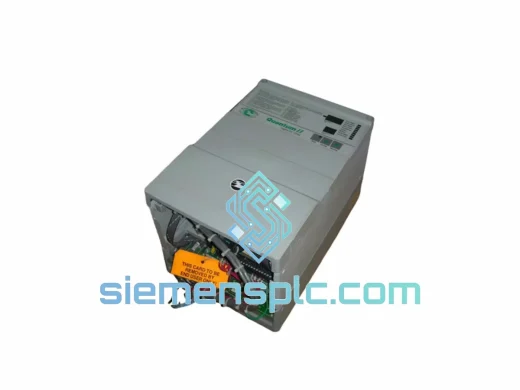
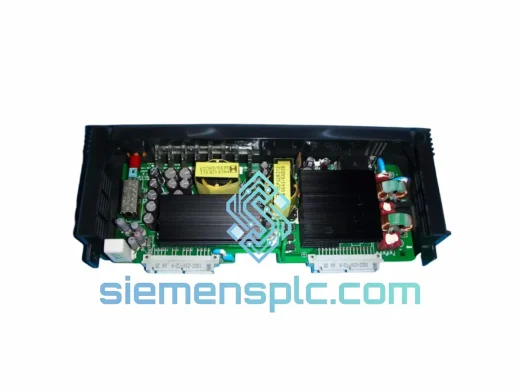
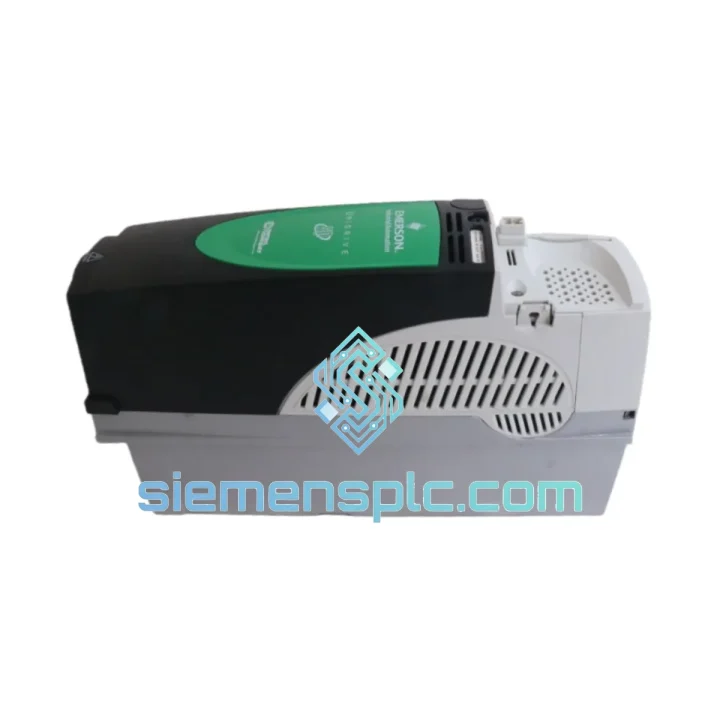
Emerson SP1406 Variable Frequency Drive – SP Series
Request verified availability, condition, replacement risk review, packing options and courier lead time for SP1406.
BrandEmerson
Part NumberSP1406
ConditionAvailability Check
Lead TimeRFQ Confirmation
DocumentsDatasheet / photos by RFQ
ShippingExport packing available
Auto-filled RFQ
SP1406
Click Request Quote and the part number is inserted into the inquiry form automatically.
- Reply by email: [email protected]
- WhatsApp / Tel: +86 18359268345
- Mon-Sat 9:00-18:00 GMT+8
Procurement Data
Key Product Information
Core fields for model confirmation and RFQ routing. Detailed product narrative remains below.
- Brand
- Emerson
- Primary Part Number
- SP1406
- Product Type
- Variable Frequency Drive
- Series / Family
- n SP1406 AC Drive SP Series
- Country of Origin
- US
- Catalog Category
- Motor Drives
- Warranty
- 12 months from date of shipment
Model confirmed for inquiry
SP1406
Send quantity, destination and urgency. The RFQ form keeps this part number attached.
Request Quote
Product Overview
Emerson SP1406 SP Series AC Drive — Flux Vector Control Architecture for Continuous Industrial Duty
The Emerson SP1406 is a three-phase variable frequency drive (VFD) belonging to the SP Series universal AC drive platform, developed under Emerson’s Control Techniques engineering division. The SP1406 is engineered for continuous-duty motor speed and torque regulation across load profiles that include constant-torque conveyors, variable-torque centrifugal pumps and fans, and dynamic-load winders. Its power conversion topology, DSP-based control engine, and modular fieldbus architecture make it a technically defensible selection for OEM machine builders and system integrators managing multi-site spare-part inventories in process and discrete manufacturing environments.
The drive’s three-stage power conversion path begins with an uncontrolled six-pulse diode rectifier bridge that converts incoming three-phase AC mains to a raw DC bus. A bulk electrolytic capacitor bank smooths the rectified voltage and provides short-term energy storage sufficient to sustain DC bus voltage during brief mains dips — a ride-through characteristic that prevents nuisance trips in facilities with marginal power quality. The IGBT-based three-phase inverter stage reconstructs a variable-frequency, variable-voltage AC output via sinusoidal PWM modulation, with a programmable switching frequency that allows engineers to trade acoustic noise reduction against thermal derating margins depending on the installation environment. This configurability is directly relevant in enclosed Motor Control Center (MCC) assemblies where thermal budget is a primary design constraint.
The DSP control processor executes flux vector algorithms in a deterministic interrupt-driven loop. In sensorless vector mode, the DSP continuously estimates rotor flux position using a mathematical motor model fed by real-time stator current and voltage measurements. This eliminates encoder hardware while maintaining torque accuracy within a few percent of rated torque at low speeds — sufficient for the majority of pump, fan, and conveyor applications. Closed-loop vector mode, when an incremental encoder is fitted, extends this to near-zero speed holding torque, which is required for hoist and winder applications where gravitational load must be held statically without mechanical braking.
The analog and digital I/O complement — including 0–10 V DC and 4–20 mA reference inputs, programmable relay outputs, and an RS485 Modbus RTU port — provides the signal interface density required for direct PLC integration without auxiliary signal conditioning hardware. Fieldbus expansion is addressed through a slot-in communications module architecture supporting PROFIBUS DP, DeviceNet, CANopen, and EtherNet/IP, enabling the SP1406 to participate in deterministic network topologies managed by Siemens S7, Allen-Bradley ControlLogix, or Schneider Modicon host controllers. This protocol agnosticism is a measurable advantage in brownfield retrofit projects where the host PLC platform is fixed and the drive must conform to the existing network standard without gateway hardware.
EMC compliance is achieved through an integrated input filter stage using common-mode chokes and X/Y capacitors that attenuate conducted emissions to EN 61800-3 Category C2 requirements, reducing the external filter bill-of-materials for CE-marked machine assemblies. The IGBT gate drive circuitry incorporates controlled slew-rate switching to limit dV/dt on the motor cable, reducing bearing current and winding insulation stress — a factor that becomes significant on screened cable runs exceeding 50 meters. A pre-charge circuit limits inrush current during power-up, protecting the capacitor bank and upstream fusing from repetitive charge-discharge stress in applications with frequent power cycling.
Thermal management relies on an internal heatsink with a temperature-monitored cooling fan. The drive’s thermal model tracks IGBT junction temperature estimates and triggers a controlled switching-frequency derating before reaching a fault threshold, preserving operation at reduced capacity rather than executing an abrupt trip — a behavior that improves process availability in continuous-production environments where unplanned stops carry significant cost.
Real-time Stock & RFQ: [email protected] | WhatsApp: +86 18359268345
Technical Parameters
| Parameter | Specification |
|---|---|
| Model / SKU | SP1406 |
| Brand | Emerson (Control Techniques) |
| Series | SP Series Universal Variable Speed AC Drive |
| Drive Type | Variable Frequency Drive (VFD) / AC Drive |
| Input Supply | Three-phase AC (voltage and current rating per variant suffix — confirm with datasheet) |
| Output Frequency Range | 0 – 1,000 Hz |
| Control Modes | V/Hz Open-Loop; Sensorless Flux Vector; Closed-Loop Flux Vector (encoder required) |
| Motor Compatibility | Standard 3-Phase AC Induction; PM motor support firmware-dependent |
| Switching Frequency | Programmable (refer to SP Series datasheet for derating curves) |
| Analog Inputs | 0–10 V DC, 4–20 mA (software-configurable) |
| Digital I/O | Programmable digital inputs; relay outputs |
| Serial Interface | RS485 Modbus RTU (native) |
| Fieldbus Options | PROFIBUS DP, DeviceNet, CANopen, EtherNet/IP (slot-in module) |
| Protection Rating | IP20 (panel-mount chassis) |
| EMC Standard | EN 61800-3 Category C2 (integrated filter) |
| Certifications | CE, UL (verify against specific variant nameplate) |
| Dynamic Braking | Internal transistor terminal; external resistor customer-supplied |
| DC Bus Ride-Through | Yes — capacitor bank sized for brief mains dip hold-up |
| Country of Origin | China |
| Warranty | 12 months from date of shipment |
Hardware Logical Analysis
The SP1406’s rectifier stage uses a six-pulse uncontrolled diode bridge, which produces a DC bus ripple at six times the mains frequency. The bulk capacitor bank is sized to hold the DC bus voltage above the minimum IGBT operating threshold during a mains dip of several milliseconds — a parameter that directly determines ride-through performance and must be evaluated against the site’s power quality survey data when specifying the drive for sensitive process applications.
The IGBT inverter stage operates under sinusoidal PWM with a programmable carrier frequency. Increasing the carrier frequency reduces audible motor noise by shifting harmonic content above the audible band, but increases switching losses in the IGBT modules and raises the thermal load on the heatsink. The SP1406’s thermal model compensates by automatically reducing carrier frequency when heatsink temperature approaches the derating threshold, maintaining continuous operation rather than tripping — a design decision that prioritizes process continuity over acoustic performance under thermal stress.
The sensorless vector algorithm relies on a real-time motor model that requires accurate motor nameplate data (rated voltage, current, frequency, speed, and power factor) entered during commissioning. The DSP uses these parameters to compute stator resistance and leakage inductance, which are then used to separate the stator current vector into flux-producing and torque-producing components. Errors in motor data entry degrade low-speed torque accuracy; the SP Series auto-tune routine measures stator resistance in situ to correct for cable resistance and winding temperature variation, improving model accuracy without manual calculation.
EMC design on the SP1406 addresses both conducted and radiated emission paths. The integrated common-mode choke presents high impedance to high-frequency common-mode currents generated by IGBT switching transients, reducing conducted emissions on the supply cable. The controlled gate drive slew rate limits the rate of voltage rise on the motor cable output, which reduces the capacitive displacement current that flows through motor bearing races — a mechanism responsible for premature bearing failure on long cable runs. For installations exceeding the recommended screened cable length, an output dV/dt filter or sine filter should be specified as an external accessory.
System Integration Benefits
- Deterministic Torque Step Response: Closed-loop flux vector mode delivers torque step response within milliseconds, supporting tension-control and positioning applications where speed transients must be bounded within defined limits.
- Protocol-Agnostic Fieldbus Architecture: Slot-in module design allows a single SP1406 SKU to be deployed across PROFIBUS DP, EtherNet/IP, CANopen, and Modbus RTU networks without hardware redesign, reducing procurement complexity on multi-protocol sites.
- Diagnostic Transparency: Onboard fault log with timestamped event history enables root-cause analysis without external data loggers; fault codes map directly to the SP Series parameter manual for rapid field diagnosis by maintenance personnel.
- Integrated Energy Metering: Built-in kWh accumulator provides motor energy consumption data accessible via Modbus, supporting ISO 50001 energy management reporting without additional metering hardware in the panel.
- Software-Configurable I/O: All analog and digital I/O functions are software-assignable, eliminating external signal conditioning relays in most standard applications and reducing panel wiring complexity.
- DC Bus Ride-Through: Capacitor bank sizing supports mains dip ride-through for brief supply interruptions, reducing nuisance trips in facilities with variable power quality and avoiding unplanned process stops.
- Parameter Cloning: Drive parameters can be uploaded to a keypad or PC commissioning tool and cloned to replacement units, reducing commissioning time on multi-drive installations from hours to minutes and standardizing configuration across a fleet.
- Safe Torque Off (STO) Compatibility: SP Series drives support STO safety function integration (verify per variant), enabling IEC 62061 / ISO 13849 compliant safety circuit design without external contactors on the motor output — reducing panel component count and simplifying safety validation documentation.
- Scalable Spare-Part Strategy: The SP Series universal platform architecture means a single drive model covers multiple power ratings within a frame size, allowing maintenance teams to hold fewer spare units while covering a wider installed base — a direct reduction in working capital tied up in spare inventory.
- Wide Ambient Operating Range: Rated for operation across standard industrial ambient conditions with published thermal derating curves, supporting deployment in non-climate-controlled plant environments without additional enclosure cooling infrastructure.
Quality Assurance & Global Logistics
Every Emerson SP1406 unit dispatched from our Xiamen, China facility is sourced through verified industrial distribution channels with full traceability to Emerson Control Techniques manufacturing records. Incoming inspection covers nameplate authentication, packaging seal integrity, and functional power-on verification where applicable. Genuine Emerson holographic labels and serial numbers are cross-referenced against manufacturer records upon request — a service available at no additional charge for critical infrastructure procurement projects.
Export documentation is prepared as standard: commercial invoice, packing list, certificate of origin, and material safety data where required by the destination country’s customs authority. Shipping is executed via DHL Express, FedEx International Priority, or sea freight consolidation depending on order volume and destination lead-time requirements. Typical air freight transit times from Xiamen to major industrial hubs in Europe, Southeast Asia, and the Middle East are 3–7 business days. All shipments are insured against transit damage, and replacement or credit procedures are initiated within 48 hours of a confirmed damage claim supported by photographic evidence.
The 12-month warranty covers manufacturing defects and component failures under normal operating conditions as defined in the SP Series installation manual. Warranty claims are processed directly through our Xiamen technical team, with advance replacement available for qualified accounts to minimize production downtime. Test reports and certificates of conformity are available upon request for projects requiring documented quality evidence for end-customer or regulatory submission.
Contact Information
Email: [email protected]
WhatsApp: +86 18359268345
Web: siemensplc.com
Location: Xiamen, China
© 2026 siemensplc.com. All rights reserved.
Ready to quote
[email protected]
Send This Part Number to Sales
RFQ workflow
Quality workflow ->
Confirmation Process
01Model confirmation
We check the full part number, brand, series and visible nameplate information before quotation.
02Availability reply
Sales confirms stock path, condition option, quantity and realistic lead time for export dispatch.
03Packing & courier
DHL, FedEx, UPS or buyer courier arrangements can be reviewed with packing requirements.
Continue sourcing
Browse full catalog ->
Related Automation Parts
Similar brand or category products for fast comparison and multi-item RFQ lists.
Emerson
RFQ Ready
Emerson SP2403 Variable Frequency Drive – EV Series
EV Series
Origin US
Variable Frequency Drive