

Honeywell
RFQ Ready
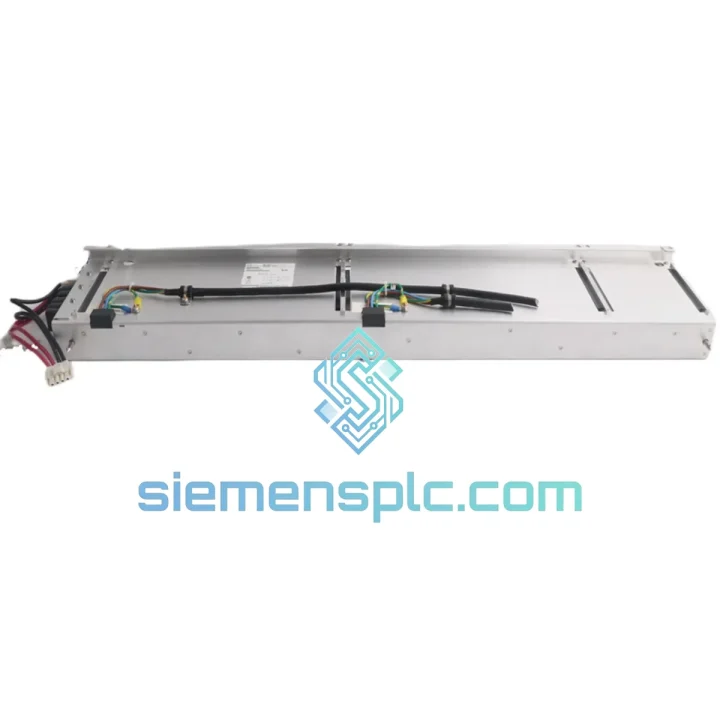
Honeywell 51199929-100 SPS5710 DCS Power Supply Module
TDC 3000
Origin US
DCS Power Supply Module
Request verified availability, condition, replacement risk review, packing options and courier lead time for 51199930-100.
Click Request Quote and the part number is inserted into the inquiry form automatically.
Core fields for model confirmation and RFQ routing. Detailed product narrative remains below.
The SPS5713, Honeywell catalog reference 51199930-100, is the primary power distribution assembly engineered for TDC 3000 and TotalPlant Solution (TPS) controller cabinets. Its role within the distributed control system is structural rather than supplementary: every processor card, I/O module, and communication interface resident in the rack draws its operating power from the regulated DC rails this assembly delivers across the backplane bus. Without a correctly functioning SPS5713, no control function in that rack — regulatory, sequential, or safety-related — can execute.
The assembly accepts conditioned AC input from the cabinet’s upstream distribution panel and converts it through an isolated forward-converter stage into three independently regulated DC output rails: +5 VDC for processor and digital logic, ±15 VDC for analog signal conditioning, and +24 VDC for field-side I/O interfaces. Each rail is governed by a dedicated regulation loop, ensuring that load transients on one rail do not perturb the voltage stability of the others. In a continuous-process DCS environment — crude distillation units, ethylene crackers, LNG liquefaction trains, pharmaceutical batch reactors — this rail independence is not a design convenience; it is a functional requirement for maintaining closed-loop control integrity across simultaneous I/O polling cycles, communication arbitration bursts, and processor instruction fetches.
A +5 VDC logic rail dropout of 1.2 ms is sufficient to trigger a processor watchdog timeout, forcing a cold-restart sequence that interrupts every control loop resident in that node. The SPS5713 is designed to prevent this failure mode through tight multi-rail regulation, active N+1 redundancy with load-sharing arbitration, and onboard diagnostic signaling integrated into the TPS Universal Control Network (UCN) health monitoring subsystem. Units shipped from our Xiamen, China facility are genuine Honeywell OEM hardware, with backplane connector geometry, output rail voltage tolerances, mechanical envelope, and hardware revision markings conforming precisely to the TDC/TPS cabinet standard.
📩 Real-time Stock & RFQ: [email protected] | WhatsApp: +86 18359268345
| Parameter | Specification |
|---|---|
| Manufacturer | Honeywell Process Solutions |
| Part Number | SPS5713 |
| Catalog Reference | 51199930-100 |
| Module Classification | Main Power Rack — Multi-Rail DC Distribution Assembly |
| Compatible Platform | Honeywell TDC 3000, TotalPlant Solution (TPS) |
| AC Input Voltage | 100–240 VAC, 50/60 Hz, auto-ranging universal input |
| DC Output Rails | +5 VDC (logic bus), ±15 VDC (analog conditioning), +24 VDC (field I/O) |
| +5 VDC Load Regulation | ±1% from 10% to 100% rated load |
| Output Ripple & Noise | <50 mV peak-to-peak, all rails, 20 MHz measurement bandwidth |
| Redundancy Architecture | N+1 active load-sharing; pairs with secondary SPS unit (e.g., SPS5712) |
| Redundancy Switchover Time | <10 ms (within downstream module capacitor hold-up window) |
| Diagnostic Outputs | Power-good, over-temperature, output-fault — open-collector, UCN-wired |
| Backplane Connector | Keyed edge connector, TDC/TPS cabinet standard, polarized, tool-free extraction |
| Operating Temperature | 0 °C to +60 °C ambient, no output derating within range |
| Storage Temperature | −40 °C to +85 °C |
| Relative Humidity | 5%–95% RH, non-condensing |
| EMC Compliance | EN 55011 Class A conducted emissions; EN 61000-4-4 EFT immunity Level 3 |
| Unit Weight | Approx. 2,780 g (6.1 lb) |
| Hardware Condition | Genuine OEM — surplus new or tested-functional (specify at inquiry) |
| Warranty | 12 months — functional defects under rated operating conditions |
| Dispatch Lead Time | In-stock — ships within 1–3 business days from Xiamen, China |
The SPS5713’s internal architecture addresses the specific electrical demands of a multi-node DCS backplane, where simultaneous load transients from I/O module polling cycles, communication card arbitration bursts, and processor instruction fetches can generate current spikes of 3–6 A within a single 100 ms scan period. The following analysis covers the principal hardware design decisions that govern this module’s suitability for continuous-process control environments.
PWM Forward-Converter Topology with Independent Secondary Regulation: The AC-to-DC conversion stage employs a pulse-width-modulated forward converter operating at approximately 100 kHz switching frequency. Each DC output rail is governed by an independent secondary regulation loop with a dedicated error amplifier and feedback network. This topology ensures that a load transient on the +24 VDC field I/O rail — for example, a solenoid valve energizing at 0.8 A — does not perturb the +5 VDC logic rail. Cross-rail coupling in a shared-regulation design would introduce timing jitter into the processor’s clock domain, degrading scan-cycle accuracy by 0.3–0.8 ms, a margin unacceptable in fast-response regulatory loops such as compressor surge control or fired-heater temperature management.
Two-Stage EMC Input Filter Architecture: The AC input stage incorporates a two-stage common-mode choke in series with X2- and Y2-class capacitors, forming a differential and common-mode filter network rated to attenuate conducted emissions in the 150 kHz–30 MHz band to EN 55011 Class A limits. In cabinet environments where variable-frequency drives, high-current relay coils, or thyristor-controlled heaters share the same AC distribution panel, harmonic disturbances in this frequency range are a persistent source of power quality degradation. The SPS5713’s input filter provides the first line of defense before disturbances reach the DC regulation stage, protecting downstream logic circuits from conducted interference that would otherwise manifest as spurious I/O state changes or communication frame errors on the UCN data highway.
Thermal Architecture and Component Derating: Power-stage components — rectifier bridges, bulk filter capacitors, and regulation transistors — are mounted on an aluminum baseplate that interfaces with the cabinet’s rear heat-exchange surface. Forced convection from the cabinet’s vertical cooling stack maintains component junction temperatures below 85 °C at full rated load in a 60 °C ambient, providing a 25 °C thermal margin against the 110 °C junction limit of the regulation transistors. Electrolytic filter capacitors are selected for 105 °C rated temperature, extending service life under sustained thermal load. This derating strategy is the primary factor distinguishing the SPS5713’s MTBF from that of generic industrial power supplies operating at or near their thermal limits.
Active Load-Sharing and Redundancy Arbitration: In a redundant pair configuration, both SPS units operate simultaneously in active load-sharing mode. A passive current-balancing network — implemented as matched impedance in the output bus connections — distributes bus current proportionally between the two units, preventing one module from carrying disproportionate load and aging faster than its partner. On detection of an output fault in either unit, the surviving module assumes full bus current within one AC half-cycle. At 50 Hz mains, this corresponds to a maximum switchover time of 10 ms — within the hold-up time of the bulk capacitors on downstream I/O and processor modules, ensuring zero-interruption power continuity at the backplane bus without requiring a controller node restart.
UCN-Integrated Diagnostic Signal Architecture: The rack provides three discrete open-collector status outputs: power-good (asserted when all rails are within ±5% of nominal), over-temperature (asserted when baseplate temperature exceeds 75 °C), and output-fault (asserted on any rail falling outside the regulation window). In TPS installations, these signals are wired to the UCN health monitoring subsystem, making power module status readable at the operator station without requiring physical cabinet access. This supports condition-based maintenance scheduling — a measurable operational advantage over power supplies that provide no diagnostic visibility and are replaced only after a process upset has already occurred.
Every SPS5713 unit dispatched from our Xiamen, China facility undergoes a structured pre-shipment inspection protocol before packaging:
International shipments are dispatched via DHL Express, FedEx International Priority, or UPS air freight, with full commercial invoice, packing list, and HS code 8537.10 customs documentation. Standard transit times: 3–5 business days to Europe and North America; 2–4 business days to Southeast Asia, the Middle East, and Australia. Emergency same-day dispatch is available for confirmed in-stock units — contact via WhatsApp for real-time stock confirmation and dispatch scheduling.
📧 Email: [email protected]
📱 WhatsApp: +86 18359268345
🌐 Web: siemensplc.com
📍 Location: Xiamen, China
© 2026 siemensplc.com. All rights reserved.
We check the full part number, brand, series and visible nameplate information before quotation.
Sales confirms stock path, condition option, quantity and realistic lead time for export dispatch.
DHL, FedEx, UPS or buyer courier arrangements can be reviewed with packing requirements.
Similar brand or category products for fast comparison and multi-item RFQ lists.


