Weidmuller
RFQ Ready
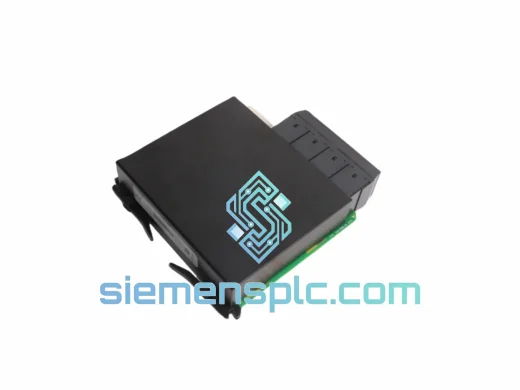
WEIDMULLER DRM270024L DC/DC Converter Interface Module – DRM Series
DRM Series
Origin DE
DC/DC Converter Interface Module
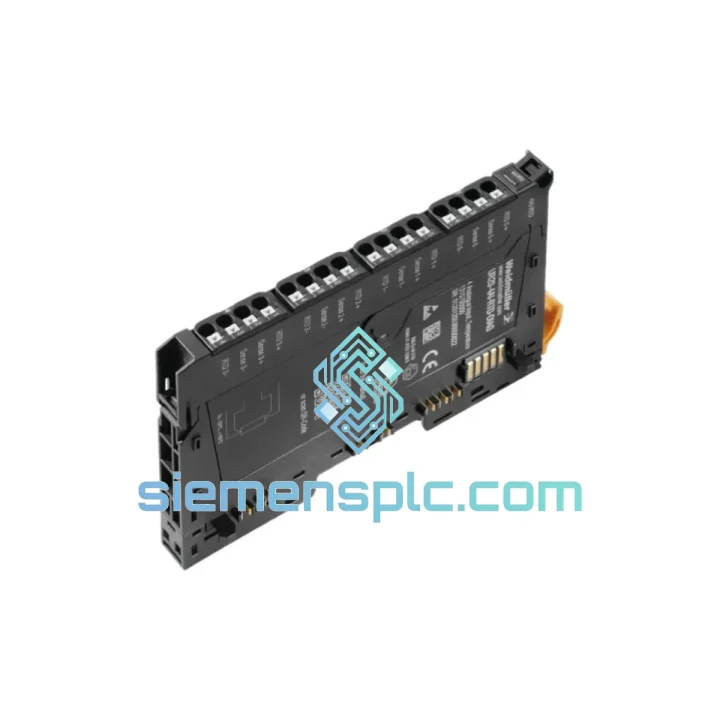
Request verified availability, condition, replacement risk review, packing options and courier lead time for UR20-4AI-RTD-DIAG.
Click Request Quote and the part number is inserted into the inquiry form automatically.
Core fields for model confirmation and RFQ routing. Detailed product narrative remains below.
Channel fault on the RTD rack. Alarm on the HMI. Production stopped. You have already pulled the module and confirmed it: Weidmuller UR20-4AI-RTD-DIAG — failed. The question is not what broke. The question is how fast you can get a verified replacement in your hands.
At siemensplc.com, we hold physical stock of the UR20-4AI-RTD-DIAG in our Xiamen warehouse — not a broker promise, not a lead-time estimate. The unit is on the shelf. Orders confirmed before 14:00 CST ship same day via DHL Express or FedEx International Priority. You get a tracking number within two hours of dispatch. That is the difference between a four-hour outage and a four-day one.
Every module we ship is 100% original Weidmuller — inspected for connector integrity, housing condition, label authenticity, and date code before it leaves our facility. No grey-market risk. No refurbished units passed off as new.
⚡ URGENT REQUIREMENT? Contact: [email protected] | WhatsApp: +86 18359268345
| Parameter | Specification |
|---|---|
| Part Number | UR20-4AI-RTD-DIAG |
| Manufacturer | Weidmuller |
| Series | u-remote® UR20 |
| Module Function | 4-Channel Analog Input — RTD & Thermocouple |
| Supported RTD Types | PT100, PT200, PT500, PT1000, Ni100, Ni120, Ni1000, KTY81/82 |
| Supported TC Types | Type J, K, E, N, R, S, T, B, C |
| Measurement Range | −200 °C to +1820 °C (sensor-dependent) |
| Resolution | 16-bit | 0.1 °C |
| Per-Channel Diagnostics | Wire-break detection, short-circuit detection |
| Supply Voltage | 24 V DC via UR20 backplane bus |
| Current Draw | ≈ 90 mA |
| Protection Class | IP20 |
| Operating Temperature | −25 °C to +60 °C |
| Mounting | DIN rail snap-on to UR20 coupler / head station |
| Weight | 91 g |
| Certifications | CE, UL, cULus |
| Country of Origin | Germany |
| Availability | ✅ Ready to Ship — Xiamen Warehouse |
After a decade of emergency callouts, the UR20-4AI-RTD-DIAG fails in predictable ways. Know the pattern before you pull the module — you may save yourself an unnecessary parts order.
Fault 1 — Diagnostic LED solid red, HMI shows channel alarm. Do not condemn the module yet. Log into the head station web server or go online in TIA Portal and check diagnostics at the channel level, not the module level. A single open-circuit PT100 lead will generate a channel fault that looks like a module failure on the alarm summary. Disconnect the sensor on the suspect channel. If the fault clears, your module is intact — the problem is in the field wiring or the sensor itself. Measure sensor resistance at the terminal: PT100 at 0 °C reads 100 Ω; at 100 °C reads 138.5 Ω. Anything outside the expected curve points to a failed sensor, not the module.
Fault 2 — Module appears as “unknown” after head station firmware update. The UR20-4AI-RTD-DIAG carries its own embedded firmware that must be version-compatible with the head station. After updating a UR20-FBC-PN-IRT or UR20-FBC-EIP coupler, open the u-remote® Configuration Software and check for module firmware mismatch warnings. A mismatch prevents the module from passing process data — it will sit in the I/O map as an unrecognized device. Push the correct module firmware via the head station’s built-in web interface. Weidmuller’s firmware archive is indexed by head station version; match them exactly.
Fault 3 — Replacement module not recognized, slot fault persists. The UR20 rack uses automatic slot addressing based on physical position. If your project’s GSDML or hardware configuration was built with a specific slot order, the new module must occupy the identical physical slot as the failed one. Swapping it into an adjacent slot — even temporarily — will generate a configuration mismatch fault. In TIA Portal: go online → Hardware Detection → compare expected vs. actual. Correct the slot position first, then re-download the hardware configuration if needed.
Step-by-step replacement procedure:
Common diagnostic codes when using a Siemens S7 controller via PROFINET head station:
0x0E01 — Wire break, channel X: check sensor continuity; PT100 minimum resistance is ~18 Ω at −200 °C0x0E02 — Short circuit, channel X: measure terminal-to-terminal resistance; below 10 Ω on PT100 indicates a shorted sensor or cable0x0E10 — Module not present / slot mismatch: verify physical slot matches GSDML configuration0x0E20 — Firmware incompatibility: update module firmware via head station web interfaceThe UR20-4AI-RTD-DIAG was not engineered for a climate-controlled server room. It was built for the panel bolted three meters from a hydraulic press, running 24/7 in an environment that swings from 5 °C on a winter startup to 55 °C when the furnace hits full load.
The PCB carries a conformal coating that resists condensation and airborne contaminants — a practical necessity in food processing, chemical dosing, and pharmaceutical environments where cleaning agents and process vapors reach the control panel. The snap-on DIN rail mount with positive locking tab maintains backplane contact integrity under sustained vibration that would loosen screw-terminal alternatives over months of operation.
Operating temperature range: −25 °C to +60 °C. Storage: down to −40 °C. A module pulled from a cold warehouse and installed immediately will not suffer thermal shock damage. The 16-bit ADC holds its ±0.1 °C accuracy specification across the full operating temperature band — not just at the 25 °C reference point that some datasheets use to inflate their accuracy claims.
Vibration resistance: 10–150 Hz, 1 g continuous, per IEC 60068-2-6. Shock resistance: 15 g at 11 ms per IEC 60068-2-27. These are the same qualification standards applied to railway traction equipment and offshore platform instrumentation. In ten years of field work across automotive stamping, petrochemical, and food processing plants, mechanical failure of a properly mounted UR20 module has never been the root cause of a callout.
Every unit shipped from our Xiamen facility passes a pre-dispatch physical inspection: connector pin alignment, housing latch function, label authenticity verification, and date code review. A module with a cracked housing, corroded connector, or missing label does not ship — regardless of whether it passes a functional test. You are not buying a tested-as-good refurb. You are buying a factory-condition original.
Our warehouse is in Xiamen, Fujian — one of China’s primary export hubs with direct access to DHL Express, FedEx International Priority, and UPS Worldwide Express gateways. Stock is physically on our shelves. This is not a drop-ship or broker arrangement.
Emergency shipment workflow:
For import duty-sensitive destinations, we provide accurate declared value documentation and can assist with customs queries. We have shipped industrial electronics to over 40 countries and understand the import requirements for most major markets.
If your facility is in a free trade zone, a bonded warehouse area, or a remote location with specific customs routing requirements, contact us before placing the order. We will confirm the optimal carrier and routing to prevent clearance delays that would negate the benefit of express shipping.
Need delivery to a freight forwarder in Shenzhen or Shanghai? Domestic China delivery is handled via SF Express — same-day or next-day service to all major cities.
📧 Email: [email protected]
💬 WhatsApp: +86 18359268345
🌐 Web: siemensplc.com
© 2026 siemensplc.com. All rights reserved.
We check the full part number, brand, series and visible nameplate information before quotation.
Sales confirms stock path, condition option, quantity and realistic lead time for export dispatch.
DHL, FedEx, UPS or buyer courier arrangements can be reviewed with packing requirements.
Similar brand or category products for fast comparison and multi-item RFQ lists.