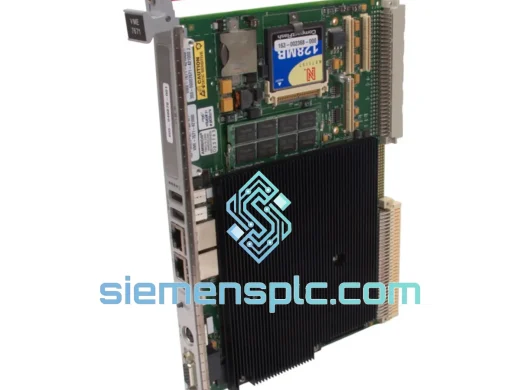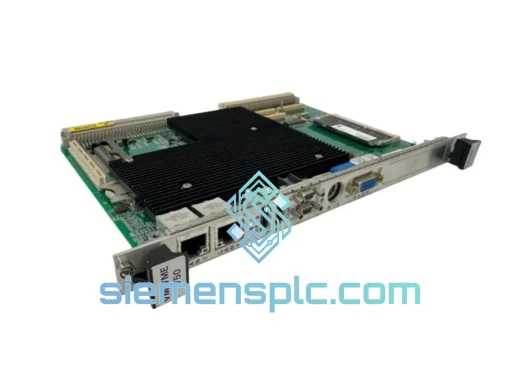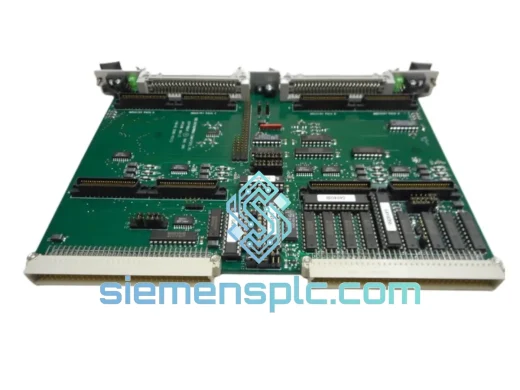
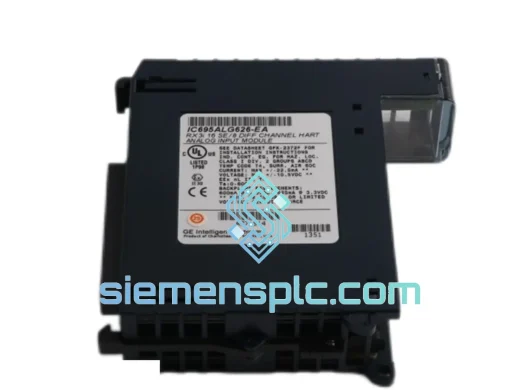
GE Intelligent Platforms
RFQ Ready
GE IC695ALG626 HART Analog Input Module
PACSystems
Origin US
PLC Analog Input Module
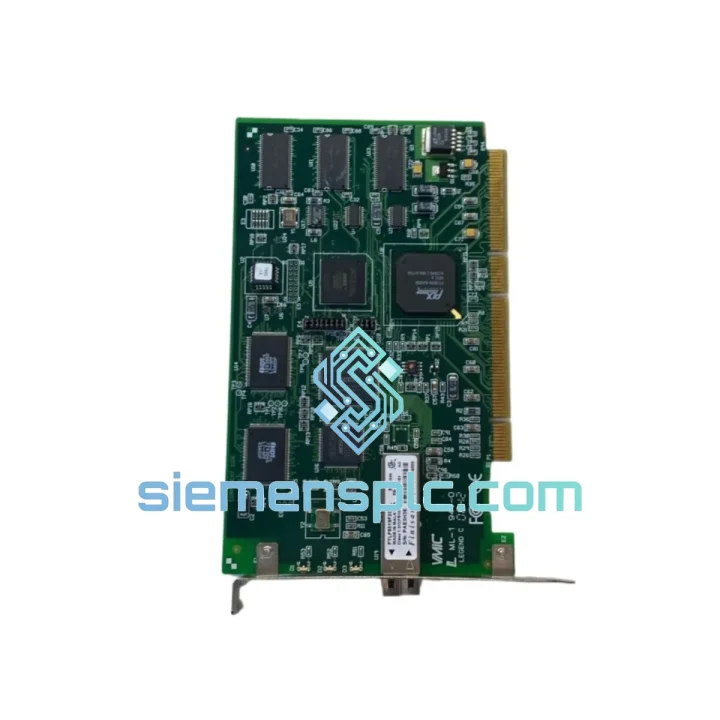
Request verified availability, condition, replacement risk review, packing options and courier lead time for VMIPCI-5565-110000.
Click Request Quote and the part number is inserted into the inquiry form automatically.
Core fields for model confirmation and RFQ routing. Detailed product narrative remains below.
In distributed control architectures where multiple computing nodes must maintain a coherent, synchronized view of shared process data, conventional communication stacks — TCP/IP, Modbus, PROFIBUS — impose protocol overhead, variable latency, and software arbitration that are fundamentally incompatible with hard real-time requirements. The GE VMIPCI-5565-110000 addresses this constraint at the hardware level. It implements a reflective memory architecture: a 64 MB SRAM block that is simultaneously readable and writable by the local host CPU while being continuously broadcast across a fiber-optic ring to all peer nodes. Any write to the local memory window propagates to every node on the ring within a deterministic, bounded propagation delay — no handshaking, no acknowledgment cycles, no protocol stack involvement.
This model belongs to GE Intelligent Platforms’ PCI-5565 series, the PCI bus implementation of the VMIC reflective memory product line. The -110000 suffix designates the standard fiber-optic variant with 64 MB memory depth, ST-connector multimode fiber ports, and full interrupt generation capability. It occupies a single 32-bit PCI slot (3.3 V or 5 V universal keying) and enumerates as a memory-mapped device, requiring no custom communication middleware in the host application layer. The fiber-optic physical layer provides galvanic isolation between nodes, eliminating ground loop interference and common-mode noise coupling — a critical property in high-voltage industrial environments where copper-based interconnects would require extensive shielding.
The ring topology is unidirectional: each node receives data from its upstream neighbor and retransmits to its downstream neighbor, with the originating node’s data completing the loop. This architecture scales to 256 nodes on a single ring with a maximum ring circumference of 10 km using standard 62.5/125 µm multimode fiber. Sustained node-to-node transfer rates reach 174 MB/s, sufficient to support high-resolution waveform data, coordinated multi-axis motion profiles, and dense process variable arrays without bandwidth saturation.
📩 Real-time Stock & RFQ: [email protected] | WhatsApp: +86 18359268345
| Parameter | Specification |
|---|---|
| Part Number | VMIPCI-5565-110000 |
| Manufacturer | GE Intelligent Platforms (formerly VMIC) |
| Series | PCI-5565 Reflective Memory Node |
| Bus Interface | 32-bit PCI, 33/66 MHz, Universal 3.3 V / 5 V |
| Shared Memory Depth | 64 MB SRAM |
| Physical Layer | Fiber-optic ring, multimode 62.5/125 µm, ST connectors |
| Sustained Transfer Rate | 174 MB/s (node-to-node) |
| Ring Topology | Unidirectional fiber-optic ring |
| Maximum Nodes per Ring | 256 |
| Maximum Ring Circumference | 10 km (multimode fiber) |
| Interrupt Support | Network interrupt + local interrupt generation |
| Operating Temperature | 0 °C to +55 °C |
| Storage Temperature | -40 °C to +85 °C |
| Power Consumption | +5 V @ 2.5 A (typical) |
| PCB Form Factor | Standard PCI half-length card |
| OS Support | Windows, Linux, VxWorks, LynxOS, QNX, Solaris |
| Driver SDK | GE RFM2g (Windows / Linux) |
| Weight | 380 g |
| Warranty | 12 months from shipment date |
The VMIPCI-5565-110000’s memory architecture is built around a dual-port SRAM array. The local PCI bus master accesses one port through the standard PCI memory-mapped BAR (Base Address Register) window, while the reflective memory controller occupies the second port, continuously scanning the memory array and serializing write transactions for transmission onto the fiber-optic ring. This dual-port design ensures that local CPU read/write operations and ring transmission occur without bus contention — the host processor never stalls waiting for network arbitration.
The fiber-optic physical layer operates at a fixed serial bit rate with 8b/10b line encoding, providing DC balance and embedded clock recovery at each node receiver. This eliminates the need for external clock distribution across the ring — each node independently recovers the clock from the incoming optical signal, making the architecture inherently tolerant of fiber length asymmetry between node pairs. The ST-connector multimode fiber interface supports both 850 nm VCSEL and LED transmitters, with a link budget sufficient for 300-meter node-to-node segments at standard multimode fiber attenuation specifications.
EMC performance is a direct consequence of the fiber-optic physical layer: the optical link carries no conducted emissions and is immune to radiated electromagnetic fields. In environments with variable-frequency drives, high-current bus bars, or arc welding equipment — all common in heavy industrial installations — the VMIPCI-5565-110000 maintains bit-error-free operation where copper-based communication interfaces would require ferrite chokes, shielded cable, and careful ground plane management. The PCI card itself incorporates decoupling capacitors at the power supply pins and ground plane segmentation to suppress conducted interference from the host backplane.
Interrupt generation is implemented in hardware: when a remote node writes to a designated interrupt address range within the shared memory, the receiving node’s reflective memory controller asserts a PCI interrupt line (INTA#) without software polling. This mechanism allows real-time operating systems to implement interrupt-driven control loops with sub-microsecond response latency from data arrival to ISR execution, a capability that software-polled communication interfaces cannot match.
Every VMIPCI-5565-110000 unit supplied by siemensplc.com is sourced as genuine GE Intelligent Platforms hardware. Units are inspected against GE reference documentation covering PCB revision markings, component date codes, fiber-optic transceiver part numbers, and firmware revision labels. Functional verification includes PCI bus enumeration in a test chassis, memory read/write integrity across the full 64 MB address range, and fiber-optic loopback testing to confirm transmit and receive path continuity.
Shipments originate from Xiamen, China — a major export hub with direct access to DHL Express, FedEx International Priority, and UPS Worldwide Express services. Standard delivery times are 3–5 business days to Europe and North America, 2–4 business days to Southeast Asia, and 5–7 business days to the Middle East and South America. All shipments include commercial invoice, packing list, and certificate of testing. Export classification and HS code documentation are prepared for each shipment to facilitate customs clearance. ESD-safe anti-static packaging with foam cushioning and moisture barrier bags is used for all electronic components. A 12-month warranty covers functional defects from the shipment date.
📧 Email: [email protected]
💬 WhatsApp: +86 18359268345
🌐 Web: siemensplc.com
📍 Location: Xiamen, China
© 2026 siemensplc.com. All rights reserved.
We check the full part number, brand, series and visible nameplate information before quotation.
Sales confirms stock path, condition option, quantity and realistic lead time for export dispatch.
DHL, FedEx, UPS or buyer courier arrangements can be reviewed with packing requirements.
Similar brand or category products for fast comparison and multi-item RFQ lists.