Honeywell
RFQ Ready
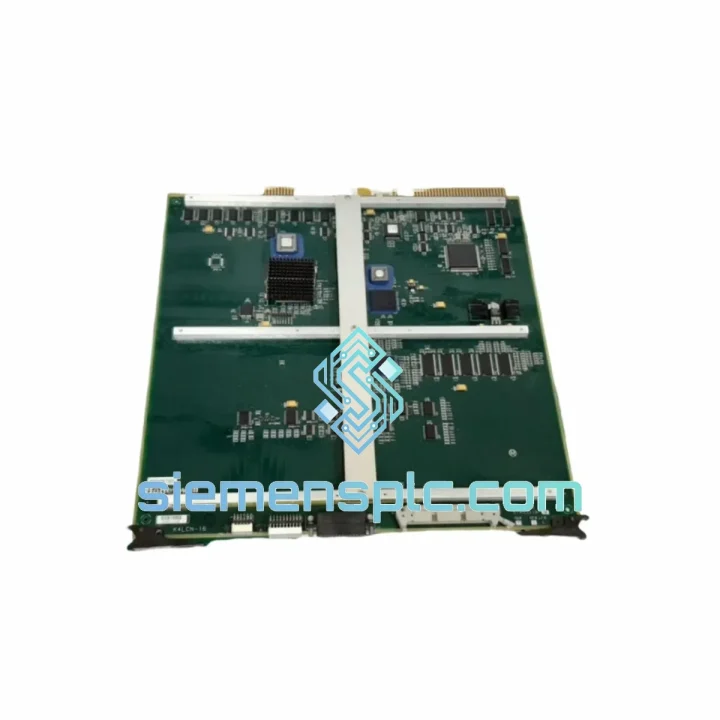
Honeywell K2LCN-4 51402615-400 LCN Interface Board
TDC 3000
Origin US
LCN Interface Board
Request verified availability, condition, replacement risk review, packing options and courier lead time for 51401946-100.
Click Request Quote and the part number is inserted into the inquiry form automatically.
Core fields for model confirmation and RFQ routing. Detailed product narrative remains below.
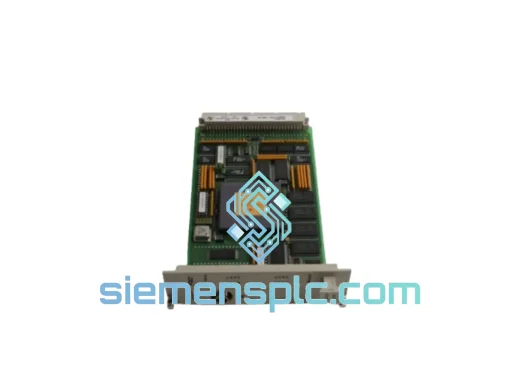
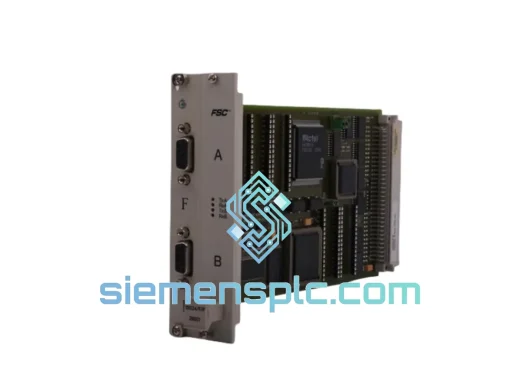
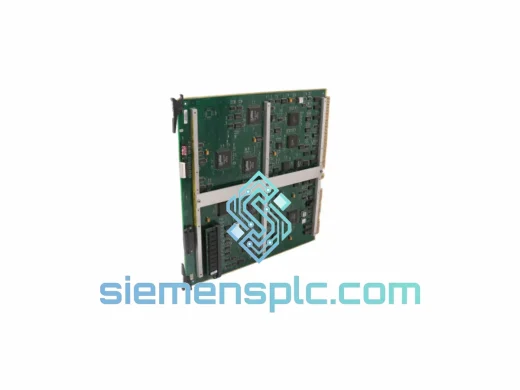
The Honeywell 51401946-100 K4LCN is the central memory and processing card within a TDC 3000 Local Control Network (LCN) node. Each LCN node functions as a peer-level intelligent device on the coaxial LCN highway, executing its own control strategy, maintaining its own database, and communicating with other nodes without relying on a central arbitration host. The K4LCN card carries the node’s RAM, EPROM firmware, and the processor subsystem that drives all of these functions.
In a TDC 3000 architecture, the LCN operates at 5 Mbit/s over a dual-redundant coaxial cable pair. Each node on the network — whether a History Module (HM), Application Module (AM), Universal Station (US), or Network Interface Module (NIM) — contains a K4LCN or equivalent memory processor card as its computational core. The 51401946-100 revision specifically addresses the memory capacity and firmware compatibility requirements of mid-to-late generation TDC 3000 deployments, supporting the expanded database structures introduced in TDC 3000 software releases R500 and above.
From a control-loop perspective, the K4LCN executes Honeywell’s proprietary Control Language (CL) programs and maintains the point database that defines each process variable, setpoint, output, and alarm limit. Scan rates for regulatory control blocks are typically 0.5 s or 1.0 s, with fast-scan capability down to 0.1 s for critical loops. The module’s processor handles all arithmetic, logic, and sequencing operations locally, ensuring that a communication fault on the LCN highway does not interrupt ongoing control execution — a fundamental design principle of the TDC 3000 distributed architecture.
Real-time Stock & RFQ: [email protected] | WhatsApp: +86 18359268345
| Parameter | Specification |
|---|---|
| Part Number | 51401946-100 |
| Model Designation | K4LCN |
| Manufacturer | Honeywell Process Solutions |
| Platform | TDC 3000 / Local Control Network (LCN) |
| Module Function | Memory Processor Module (node CPU + RAM + firmware) |
| LCN Data Rate | 5 Mbit/s (dual-redundant coaxial highway) |
| Supported Scan Rates | 0.1 s (fast), 0.5 s, 1.0 s (standard regulatory) |
| Operating Voltage | +5 VDC, ±12 VDC (supplied via LCN rack backplane) |
| Operating Temperature | 0 °C to +60 °C |
| Humidity | 5% to 95% RH, non-condensing |
| Form Factor | Single-width PCB card, rack-mounted (LCN node chassis) |
| Firmware Compatibility | TDC 3000 R500 and above |
| Weight | Approx. 200 g |
| Condition | Genuine Honeywell OEM; functionally tested |
| Warranty | 12 months — covers functional defects in materials and workmanship |
Processor Subsystem and Memory Architecture
The K4LCN card integrates a 16/32-bit processor core with dedicated address and data buses isolated from the LCN backplane interface logic. This separation prevents bus contention between local computation and network I/O operations. The onboard RAM holds the active point database and CL program image; EPROM stores the node’s boot firmware and self-diagnostic routines. At power-up, the node executes a structured self-test sequence — RAM parity check, EPROM checksum verification, and backplane communication handshake — before asserting its presence on the LCN highway.
EMC Design and Signal Integrity
The PCB layout follows Honeywell’s internal EMC guidelines for industrial environments: ground planes are continuous beneath all high-frequency signal traces, decoupling capacitors are placed within 2 mm of each IC power pin, and the LCN interface transceiver is galvanically isolated from the processor logic via transformer coupling. This isolation prevents ground-loop currents — common in large industrial facilities with multiple earthing points — from corrupting LCN data frames. The card meets IEC 61000-4-2 (ESD), IEC 61000-4-4 (EFT/burst), and IEC 61000-4-6 (conducted RF immunity) requirements as part of the TDC 3000 system certification.
Redundancy and Fault Arbitration
The LCN highway itself is dual-redundant; the K4LCN’s network interface logic continuously monitors both cable paths and switches to the secondary path within one token-passing cycle (typically <1 ms) upon detecting a primary cable fault. The module also participates in Honeywell’s node-level redundancy scheme: when a redundant node pair is configured, the standby K4LCN maintains a synchronized shadow database updated at each scan cycle, enabling bumpless transfer with zero control-loop interruption upon primary node failure.
Watchdog and Diagnostic Logic
An independent hardware watchdog timer monitors the processor’s execution cycle. If the main processor fails to service the watchdog within the configured timeout window (typically 100–500 ms), the watchdog asserts a hardware reset and forces the node into a safe output state before attempting a controlled restart. This mechanism operates entirely in hardware, independent of the operating system or CL program, ensuring fail-safe behavior even under software lockup conditions.
Every Honeywell 51401946-100 K4LCN unit dispatched from our Xiamen, China facility undergoes a structured pre-shipment verification protocol. Functional testing is performed using Honeywell-compatible LCN node test fixtures: the card is powered via a calibrated bench supply, inserted into a test chassis, and exercised through a full node initialization sequence including RAM parity verification, EPROM checksum validation, and LCN transceiver loopback test. Only units that complete this sequence without fault codes are released for sale.
Physical inspection covers PCB trace integrity, connector pin condition (gold-plated edge connectors inspected under 10× magnification for fretting corrosion or mechanical damage), component seating, and housing integrity. Serial numbers and EPROM revision codes are recorded against each unit’s shipment documentation, providing full traceability from our inventory to the customer’s installation record.
Packaging follows IEC 61340-5-1 ESD protection requirements: cards are sealed in anti-static poly bags with humidity indicator cards, placed in foam-lined inner cartons, and packed in double-wall corrugated outer cartons rated for international air freight handling. For urgent plant shutdowns, DHL Express and FedEx International Priority services from Xiamen Gaoqi International Airport deliver to most industrial hubs in North America, Europe, and Southeast Asia within 3–5 business days. Sea freight consolidation is available for multi-unit orders where lead time permits.
All units are covered by a 12-month functional warranty from the date of shipment, covering defects in materials and workmanship under normal operating conditions. Warranty claims are processed with a target response time of 1 business day; replacement units are dispatched from stock where available.
📧 Email: [email protected]
📱 WhatsApp: +86 18359268345
🌐 Web: siemensplc.com
📍 Location: Xiamen, China
© 2026 siemensplc.com. All rights reserved.
We check the full part number, brand, series and visible nameplate information before quotation.
Sales confirms stock path, condition option, quantity and realistic lead time for export dispatch.
DHL, FedEx, UPS or buyer courier arrangements can be reviewed with packing requirements.
Similar brand or category products for fast comparison and multi-item RFQ lists.