Yokogawa
RFQ Ready
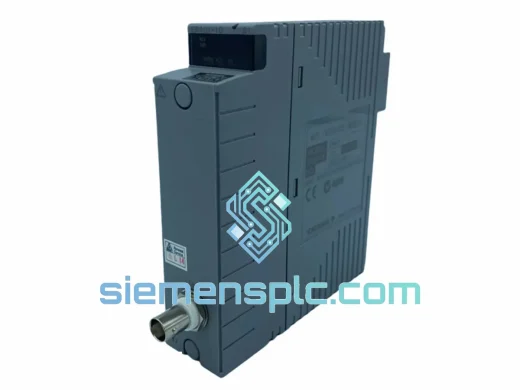
Yokogawa SAI143-H63/PRP S3 DCS Analog Input Module
CENTUM VP
Origin JP
DCS Analog Input Module
Request verified availability, condition, replacement risk review, packing options and courier lead time for AMM22T.
Click Request Quote and the part number is inserted into the inquiry form automatically.
Core fields for model confirmation and RFQ routing. Detailed product narrative remains below.
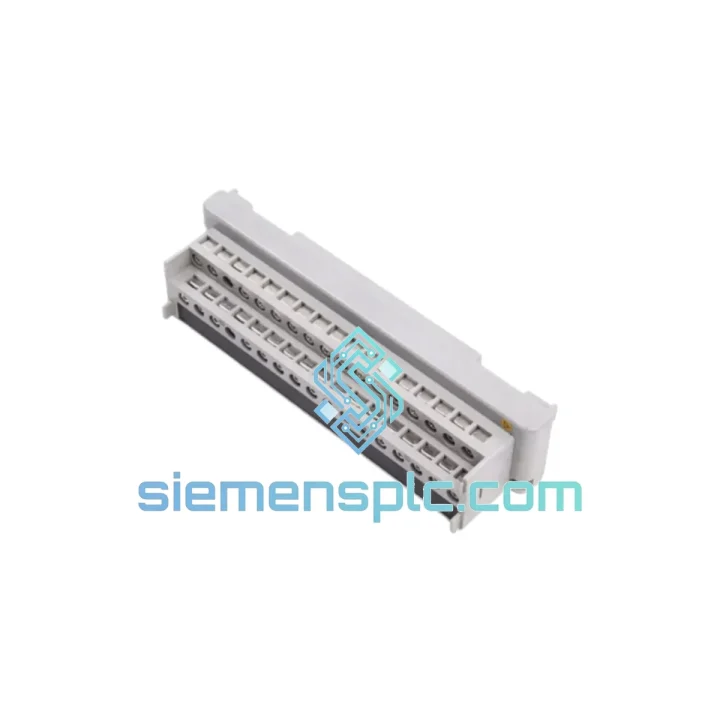
The AMM22T occupies a single I/O slot within a YOKOGAWA CENTUM VP or CS 3000 Field Control Station (FCS) baseplate and delivers 16 independently conditioned thermocouple input channels to the control loop. Unlike discrete transmitter-per-point architectures, the AMM22T consolidates signal acquisition, cold junction compensation, linearization, and V-net/ER bus communication into one module, reducing both cabinet real estate and the number of active components that can introduce failure modes into a temperature measurement loop.
In a typical FCS node, the AMM22T interfaces directly to the Node Interface Unit (NIU) or Field Control Unit (FCU) backplane via the high-speed V-net/ER bus. The FCS controller scans all 16 channels within each defined control period — nominally 0.5 s or 1.0 s — ensuring that every temperature value presented to the PID or cascade control block is synchronized to the same execution cycle. This deterministic scan behavior is a prerequisite for multi-zone temperature control strategies such as fired heater pass balancing or distillation column tray profiling, where inter-channel timing skew would introduce systematic bias into the control calculation.
Real-time Stock & RFQ: [email protected] | WhatsApp: +86 18359268345
| Parameter | Specification |
|---|---|
| Model Number | AMM22T |
| Manufacturer | YOKOGAWA Electric Corporation |
| Compatible Platform | CENTUM VP, CENTUM CS 3000 (FCS I/O) |
| Module Function | Thermocouple (TC) Input Multiplexer |
| Number of Input Channels | 16 channels (time-division multiplexed) |
| Supported TC Types | J, K, E, T, R, S, B, N (IEC 60584 / JIS C 1602) |
| Measurement Range (K-type) | −200 °C to +1372 °C |
| Measurement Range (R/S-type) | 0 °C to +1768 °C |
| Measurement Range (B-type) | +400 °C to +1820 °C |
| Basic Accuracy | ±0.1% of span (typical, at 25 °C reference) |
| Cold Junction Compensation | Built-in automatic CJC (hardware reference junction) |
| Channel Isolation | Channel-to-channel and channel-to-backplane bus isolation |
| Backplane Communication | V-net / ER Bus (CENTUM FCS internal bus) |
| Module Power Source | Backplane-supplied (no external 24 VDC wiring required) |
| Operating Temperature | 0 °C to +55 °C |
| Storage Temperature | −25 °C to +70 °C |
| Relative Humidity | 5% to 95% RH, non-condensing |
| EMC Compliance | CE Marking — EMC Directive 2014/30/EU |
| Safety Certification | UL/cUL Listed (UL 508) |
| RoHS Status | Compliant — Directive 2011/65/EU |
| Country of Origin | Japan |
| Warranty | 12 months from date of dispatch |
Multiplexing Architecture and Scan Integrity
The AMM22T employs time-division multiplexing (TDM) across its 16 input channels. A single high-resolution analog-to-digital converter (ADC) — rather than 16 discrete ADCs — is shared across all channels via an analog multiplexer switch matrix. This design choice is deliberate: a single precision ADC eliminates inter-channel gain and offset mismatch that would otherwise require per-channel calibration trimming. The trade-off is that all 16 channels must complete their conversion sequence within one FCS control period. At a 1.0 s control period, each channel receives approximately 62.5 ms of ADC acquisition time, which is sufficient for the low-bandwidth thermocouple signal (DC to ~1 Hz) to settle to within the specified ±0.1% accuracy window.
Cold Junction Compensation (CJC) Implementation
Thermocouple measurement accuracy is fundamentally dependent on accurate knowledge of the reference junction temperature. The AMM22T integrates a precision resistance temperature detector (RTD) element at the terminal block interface — the physical point where the thermocouple extension cable terminates. This RTD continuously measures the terminal block temperature and applies a real-time correction to each channel’s raw millivolt reading before linearization. The CJC correction is applied in firmware using the NIST ITS-90 polynomial coefficients for each supported TC type, ensuring that the compensated temperature output conforms to IEC 60584 reference tables across the full operating temperature range of 0 °C to +55 °C ambient.
EMC Design and Signal Integrity
Industrial field wiring environments expose thermocouple extension cables to conducted and radiated interference from variable frequency drives (VFDs), high-current motor starters, and RF sources. The AMM22T’s input stage incorporates differential input topology with common-mode rejection ratio (CMRR) exceeding 120 dB at 50/60 Hz, suppressing power-line frequency interference that would otherwise appear as a DC offset error on the measured temperature. Input filtering with a defined cutoff frequency attenuates high-frequency noise above the thermocouple signal bandwidth without introducing phase lag that would affect the CJC correction algorithm. The module housing and backplane connector are designed to maintain chassis ground continuity, providing a low-impedance return path for shield currents from screened thermocouple cables.
Open-Circuit and Short-Circuit Detection
Each channel implements hardware-level burnout detection. When a thermocouple wire breaks or a connection becomes intermittent, the input stage drives the affected channel to a defined upscale or downscale burnout value (configurable per CENTUM FCS parameter settings). This forces the associated control block into a defined fault state — typically driving the output to a safe position — rather than allowing the controller to act on a frozen or erroneous temperature value. Short-circuit detection identifies when two thermocouple wires are shorted together, which would produce a reading equal to the CJC temperature rather than the process temperature. Both fault conditions generate module-level diagnostic alarms visible in the CENTUM HIS operator station without requiring a field inspection.
Every YOKOGAWA AMM22T unit dispatched from our Xiamen, China facility is a genuine factory-original module sourced through verified supply channels. Prior to dispatch, each unit undergoes a structured pre-shipment inspection protocol: physical label authentication against YOKOGAWA’s current part numbering convention, visual inspection of the PCB edge connector and module locking mechanism for mechanical integrity, and firmware revision verification where applicable. Units are packed in ESD-safe anti-static bags with foam-lined cartons rated for international air freight handling per ISTA 2A transit testing standards.
Logistics from Xiamen reach major industrial hubs efficiently: DHL Express and FedEx International Priority services provide 3–5 business day delivery to Europe and North America; TNT and SF International cover Southeast Asia and the Middle East within 2–4 business days. All shipments include a commercial invoice with accurate HS code classification (8537.10 for programmable controllers and associated I/O modules), a packing list, and a Certificate of Conformance (CoC) upon request. For project orders requiring multiple line items, consolidated shipment with a single customs entry is available to reduce import clearance complexity at the destination port.
A 12-month warranty covers manufacturing defects and functional failures under normal operating conditions as defined in YOKOGAWA’s published environmental specifications. Warranty claims are processed with a target response time of 2 business days from receipt of the defective unit at our Xiamen facility.
Email: [email protected]
WhatsApp: +86 18359268345
Web: siemensplc.com
Location: Xiamen, China
© 2026 siemensplc.com. All rights reserved.
We check the full part number, brand, series and visible nameplate information before quotation.
Sales confirms stock path, condition option, quantity and realistic lead time for export dispatch.
DHL, FedEx, UPS or buyer courier arrangements can be reviewed with packing requirements.
Similar brand or category products for fast comparison and multi-item RFQ lists.