GE
RFQ Ready
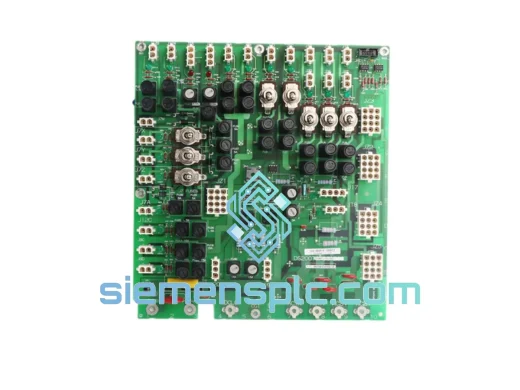
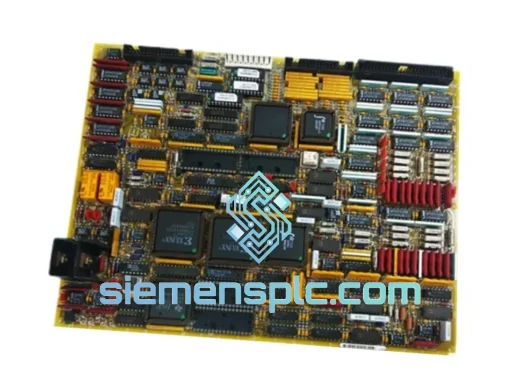
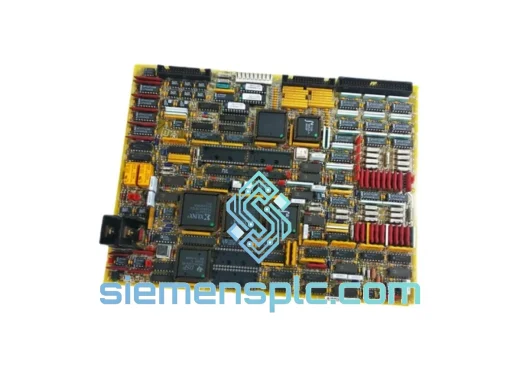
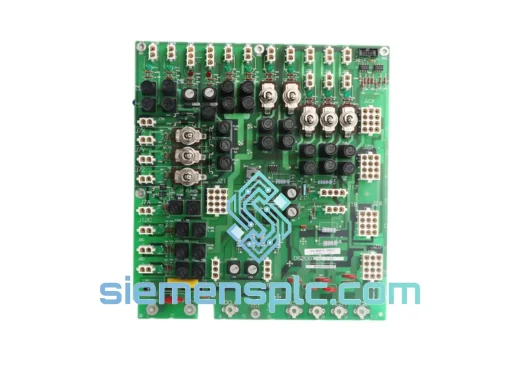
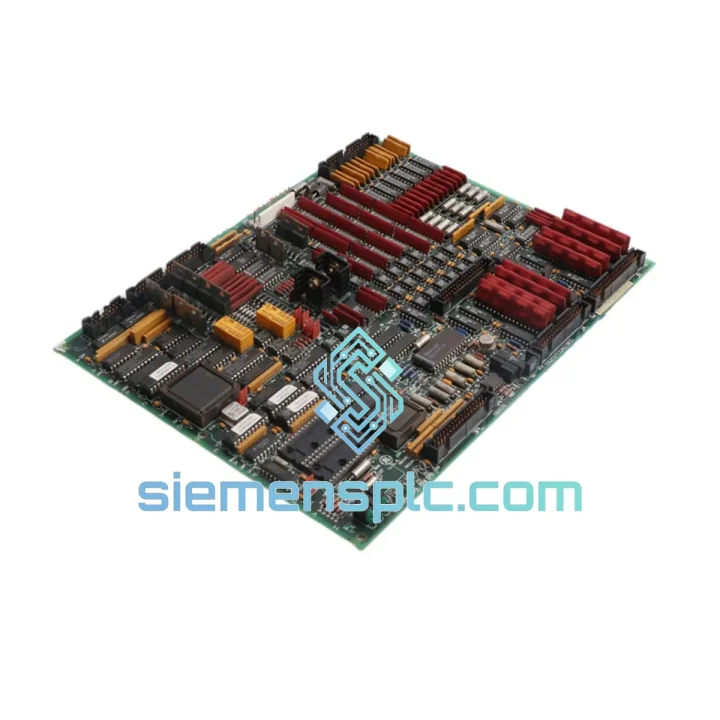
GE DS200TCQCG1BKG Turbine Control Module – Mark V Series
Mark V
Origin US
Turbine Control Module
Request verified availability, condition, replacement risk review, packing options and courier lead time for DS215TCQAG1BZZ01A.
Click Request Quote and the part number is inserted into the inquiry form automatically.
Core fields for model confirmation and RFQ routing. Detailed product narrative remains below.
The DS215TCQAG1BZZ01A occupies a structurally critical position within the GE Mark V Speedtronic™ distributed control platform. As a dedicated analog input/output signal conditioning board, it serves as the primary interface layer between field instrumentation — thermocouples, RTDs, pressure transmitters, and valve positioners — and the deterministic processing cores of the Mark V controller racks. Without accurate, low-noise analog signal acquisition at this stage, the upstream CPU boards cannot execute turbine protection logic with the sub-millisecond fidelity that continuous-duty rotating equipment demands.
This board is not a passive terminal block. It performs active signal conditioning: amplification of low-level thermocouple millivolt signals, linearization compensation for RTD non-linearity, current-to-voltage conversion for 4–20 mA transmitter loops, and digital-to-analog reconstruction for actuator drive outputs. Each of these functions is executed within a galvanically isolated signal path, ensuring that field-side ground faults, common-mode transients, and inductive kickback from solenoid valves do not propagate into the Mark V logic domain.
📦 Real-time Stock & RFQ: [email protected] | WhatsApp: +86 18359268345
| Parameter | Specification |
|---|---|
| Part Number | DS215TCQAG1BZZ01A |
| Manufacturer | General Electric (GE) |
| Control Platform | Mark V Speedtronic™ Turbine Control System |
| Board Function | Analog Input / Output Signal Conditioning |
| Analog Input Signal Types | 4–20 mA current loop; 0–10 VDC voltage; Type J/K/T thermocouple; 2-wire / 3-wire RTD (Pt100) |
| Analog Output Signal Types | 4–20 mA current output for valve positioner / actuator drive |
| ADC Resolution | 12-bit (4096 counts), typical for Mark V I/O class |
| DAC Resolution | 12-bit, monotonic output |
| Input Isolation | Galvanic isolation, field-to-logic; isolation voltage ≥500 VDC |
| Supply Voltage | +5 VDC logic rail; ±15 VDC analog rail (Mark V backplane-supplied) |
| Operating Temperature | 0 °C to +60 °C |
| Storage Temperature | −40 °C to +85 °C |
| Relative Humidity | 5% to 95% RH, non-condensing |
| Form Factor | PCB card, Mark V rack-mount format (TCQA series rack) |
| Backplane Interface | Mark V VME-derivative parallel bus |
| Approx. Board Weight | 600 g |
| Compliance Standard | GE Speedtronic Mark V system design specification |
| Warranty | 12 months from date of shipment |
Galvanic Isolation Architecture
The DS215TCQAG1BZZ01A implements transformer-coupled and optocoupler-based galvanic isolation barriers between every field-side signal entry point and the board’s internal logic domain. This dual-barrier approach addresses two distinct failure modes: high-frequency conducted EMI from variable-frequency drives and motor starters sharing the same cable trays, and low-frequency common-mode voltage differentials arising from ground potential differences across large plant structures. The isolation barrier sustains a minimum 500 VDC withstand rating, which exceeds the typical common-mode voltage encountered in IEC 61000-4-5 surge immunity testing at installation category II.
Thermocouple Cold-Junction Compensation
For thermocouple inputs, the board integrates an on-board cold-junction compensation (CJC) reference sensor — typically a precision thermistor or bandgap reference IC — mounted at the terminal interface point. The CJC reading is sampled by the same ADC pipeline as the thermocouple signal and applied in firmware to correct the Seebeck voltage measurement. This eliminates the systematic error that would otherwise accumulate when ambient temperature at the control panel deviates from the 25 °C calibration reference, a condition that is routine in outdoor turbine enclosures subject to solar loading.
EMC Design and Shielding
The PCB layout follows a segregated ground plane strategy: the analog signal ground, digital logic ground, and chassis ground are connected at a single star point, preventing digital switching noise from the backplane bus from coupling into the high-impedance analog input stages. Input filter networks — typically RC low-pass structures with cutoff frequencies in the 10–100 Hz range — attenuate high-frequency interference before the signal reaches the ADC sample-and-hold stage. This is consistent with IEC 61000-4-3 radiated immunity requirements for industrial control equipment operating in environments with high-power RF sources such as two-way radios and welding equipment.
Redundancy Arbitration Interface
Within a fully redundant Mark V configuration (R, S, T triple-redundant controllers), the DS215TCQAG1BZZ01A participates in the voted I/O scheme. Each of the three controller racks reads the same field signal through its own TCQA-series terminal board and DS215TCQAG1BZZ01A instance. The three digitized values are passed to the Mark V voting logic, which applies a 2-out-of-3 median select algorithm. A single board failure — producing an out-of-range or frozen output — is detected and annunciated without causing a spurious trip, provided the remaining two channels remain within tolerance. This architecture directly supports IEC 61511 SIL 2 functional safety requirements for turbine overspeed and flame-out protection loops.
Every DS215TCQAG1BZZ01A unit offered through siemensplc.com is sourced as genuine General Electric original manufacture. Units are procured from documented plant decommissions, authorized surplus distributors, and OEM-certified channel partners with full chain-of-custody traceability. No third-party remanufactured, counterfeit, or remarked components are accepted into inventory.
Incoming Inspection Protocol: Each board undergoes a structured incoming inspection sequence: visual examination under magnification for burnt components, cracked solder joints, corroded traces, and connector pin damage; dimensional verification of the backplane edge connector against OEM tolerance specifications; and where test fixtures are available, powered functional screening of analog input and output channels against known reference signals.
ESD-Safe Handling and Packaging: Boards are handled exclusively at grounded ESD workstations. Final packaging consists of a conductive anti-static bag heat-sealed around the board, followed by closed-cell polyethylene foam cushioning inside a double-wall corrugated export carton. Carton markings include part number, serial number (where available), inspection date, and handling instructions.
Global Logistics from Xiamen, China: Our warehouse and logistics hub is located in Xiamen, Fujian Province — a major international port city with direct access to DHL Express, FedEx International Priority, and UPS Worldwide Express services. Typical transit times: Southeast Asia 1–3 business days; Europe 3–5 business days; North America 3–5 business days; Middle East and Africa 4–7 business days. All shipments include full tracking, commercial invoice, packing list, and Certificate of Conformance. Export classification and customs documentation are handled by our in-house trade compliance team.
Warranty: 12 months from date of shipment against manufacturing defects and latent failures. DOA units are replaced or credited within 5 business days of confirmed return receipt.
📧 Email: [email protected]
📱 WhatsApp: +86 18359268345
🌐 Web: siemensplc.com
📍 Location: Xiamen, China
© 2026 siemensplc.com. All rights reserved.
We check the full part number, brand, series and visible nameplate information before quotation.
Sales confirms stock path, condition option, quantity and realistic lead time for export dispatch.
DHL, FedEx, UPS or buyer courier arrangements can be reviewed with packing requirements.
Similar brand or category products for fast comparison and multi-item RFQ lists.